

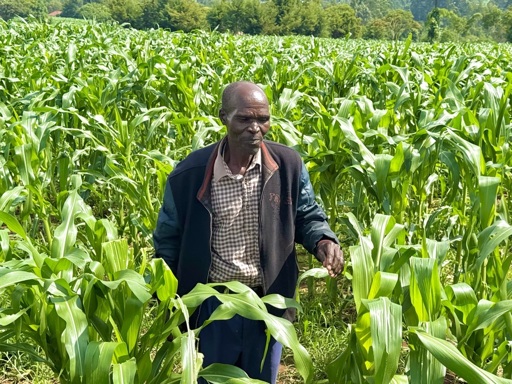
Philip Kitur walks through a neat row of maize stalks, with budding leaves painting a picture of a bountiful harvest. The 71-year-old has a 41-acre parcel at Kipkeikei village in Trans-Nzoia County. However, hidden behind Kitur’s smile is the fear of losing a significant yield if he does not access fertilizer. “The crop is due for top dressing, but I have not accessed urea, without which I may lose up to 30% of my harvest,” he told Mongabay. Mutahi Kagwe, Kenya’s Cabinet Secretary for Agriculture, says the country has adequate stocks of fertilizer, including 2 million bags for top-dressing. He says Kenya is working around finding alternative sources for the fertilizer to ensure food security in spite of global shocks triggered by the tension between Iran and USA. “While we cannot preempt or predict how long the conflict in the Middle East will take, we have had conversations on sourcing Urea from Algeria and fertilizer from Morocco,” Kagwe told Mongabay in an interview done virtually. A maize farm belonging to Dennis Chemonges, a farmer in Cherengani, in Kenya’s Trans-Nzoia. The crop is due for top dressing. Photo by Achieng’ Otieno. Key food basket Trans-Nzoia is one of Kenya’s food baskets, especially for maize, which is a staple food. According to the Kenya National Bureau of Statistics’ 2025 National Agriculture Production Report, Trans-Nzoia accounted for 423,156 (10.5%) of the 4,028,320 tons of maize produced in 2024. However, there has been immense strain in Kenya’s ability to sustain its maize production over…This article was originally published on Mongabay
From Conservation news via This RSS Feed.