

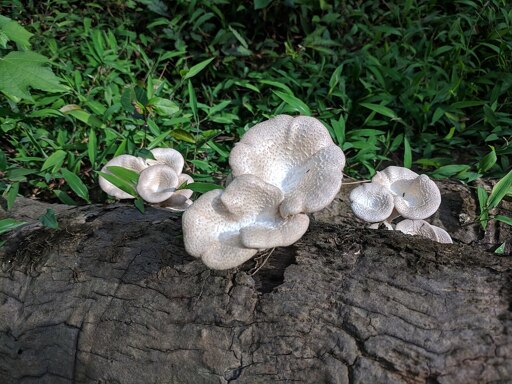
Researchers in Nigeria have cultivated a wild mushroom species using sawdust, an agricultural waste product. This could help develop farming of local mushrooms in Nigeria and other parts of Africa, they report in a recent study. Lentinus squarrosulus is a wild mushroom that typically grows on decaying logs in wild habitats across tropical forests, including in eastern Nigeria. This mushroom is both edible and has medicinal value, and is at risk of becoming scarce in the wild because of habitat destruction. If domesticated, however, this mushroom could be an inexpensive and reliable source of protein, mushroom researcher Chiemeziem Agbonma Onyeka told Mongabay by email. “Mushroom farming in Africa is still developing,” Onyeka said. “In many regions, there is still limited awareness that mushrooms can be cultivated as a reliable year-round agricultural crop rather than only collected from the wild during specific seasons.” Onyeka set out to learn how to cultivate L. squarrosulus for her doctoral work at the Federal University of Technology in Owerri, Nigeria. Her goal was to find a way to provide a year-round crop that people could grow, reliably and safely, using waste as a growing material or substrate. Onyeka and her colleagues collected wild L. squarrosulus and tried cultivating them on sawdust from three different types of wood: mango (Mangifera indica), African breadfruit (Treculia Africana) and African pear (Dacryodes edulis). Sawdust is a common byproduct of agriculture and forestry waste. The researchers found that L. squarrosulus mushrooms grew fastest and generated the greatest number of fruiting…This article was originally published on Mongabay
From Conservation news via This RSS Feed.