

This article by Darylh Rodríguez originally appeared in the July 2, 2026 edition of Contralínea, an independent Mexican investigative journalism magazine.
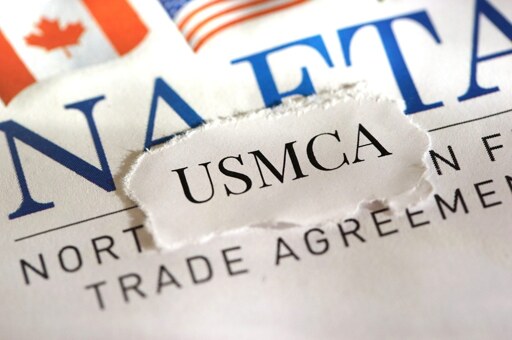
Officially, the United States refused to renew the Free Trade Agreement it holds with Mexico and Canada (USMCA) for an additional 16 years, so the agreement will maintain its current term until 2036 under a scheme of annual reviews, whose first stage will begin next July 20, reported the head of the Ministry of Economy, Marcelo Ebrard.
After the meeting held between the officials responsible for the negotiating tables of the three nations that make up the trade agreement, the secretary explained that one of the central issues was the review mechanism provided for in the USMCA. However, he clarified that the United States’ position does not put the treaty’s validity at any risk, but rather modifies the frequency of its evaluation.
As he detailed, the US government refused to automatically extend the agreement from 2036 to 2042 and, instead, proposed maintaining its current term with annual reviews, arguing concerns over the “trade deficit” it holds with Mexico and Canada. Ebrard noted that this scheme is not unusual, since in recent years both parties have already reviewed dozens of commercial matters, in addition to the fact that there is a protectionist policy on the part of Donald Trump’s government.
“Certainly, over the last two years we have lived through a period in which we have practically reviewed many issues, as you know. So, it is not so unusual that they raised that review with us. That is to say, last year they raised 54 matters with us, of which Mexico has resolved a good part, the greater part. And this year they raised roughly 10, 11 additional matters that they had not raised with us before, already fewer than last year,” he stated.
As will be recalled, last year the United States published the National Trade Estimate Report on Foreign Trade Barriers, a document in which it identified around 54 tariff and non-tariff barriers in the trade relationship with Mexico. Among the main points raised were the restrictions on private investment in the energy sector, the ban on transgenic corn, the limitations on fracking and open-pit mining, the nationalization of lithium, the reduction of permits for planting transgenic cotton, and the restrictions on the importation of fresh potatoes.
For this year, the government led by President Donald Trump modified its observations in a new edition of the report, in which issues such as customs barriers and trade facilitation, market access obstacles for medical devices, supplies, and pharmaceutical products, regulations on pesticides and agricultural chemicals, as well as technical obstacles related to the Quality Infrastructure Law, absorption testing requirements, railway safety standards, and good manufacturing practices for medical devices could gain relevance.
Now, the Mexican official –who participated in the negotiating tables alongside the United States Trade Representative, Jamieson Greer, and Canada’s Minister of Trade, Dominic LeBlanc– noted that the US government’s main concerns are concentrated on the trade deficit it holds with Mexico and Canada, the loss of industrial jobs, and the growing economic dependence on other regions, particularly Asia.
And the fact is that, despite Mexico and Canada proposing to extend the treaty’s term until 2042, with a six-year review, the United States rejected that proposal, but decided to maintain the current calendar, accompanied by annual evaluations. With this, the USMCA will remain in force until 2036, as planned, while the formal review process will start this month with the first technical meeting between the two delegations.
In that regard, Ebrard announced that next July 20 Mexico will receive the US delegation to define the objectives, scope, and mechanisms of these periodic reviews, in order to address each country’s commercial concerns. Among the priority issues for Mexico, he highlighted the reduction of the tariffs imposed by the United States under Section 232, a measure outside the treaty that has generated tensions in the bilateral relationship.
“We are interested in reducing those tariffs. And so on, there is a series of issues we want to raise. So, for those watching us: what changed today compared to yesterday? It is the same Treaty, it has not been modified. We do not expect substantive modifications in the upcoming conversations, except for what I have already described at this time, the points that are already known.”
Despite the differences among the three nations, the Secretary of Economy maintained that Mexico retains favorable trade conditions within the USMCA, noting that more than 80 percent of Mexican exports to the United States remain free of tariffs. In that regard, he assured that the agreement has not undergone substantive modifications and that the main objective of the meeting –scheduled for July 20– will be to preserve the current conditions of commercial exchange.
Among the issues that could be addressed at the next meeting is also the evolution of the rules of origin, a key component for strategic sectors such as the automotive industry. In this regard, Marcelo Ebrard explained that any modification must be analyzed with caution, due to the impact it could have on production costs and on regional competitiveness against other markets.
With this, the official recalled that the automotive sector already operates under strict rules of origin, which require that at least 75 percent of a vehicle’s value be produced in North America to access the treaty’s benefits. “Our work has been to reduce the impact of tariffs on the automotive industry,” he said.
Likewise, he noted that another of the possible axes of discussion will be a new chapter on economic security, focused on strategic issues such as rare earths, critical inputs, and the protection of supply chains. Despite this, Ebrard assured that he does not identify substantive differences among Mexico, the United States, and Canada that would prevent reaching agreements.
-
People’s Mañanera July 2
July 2, 2026
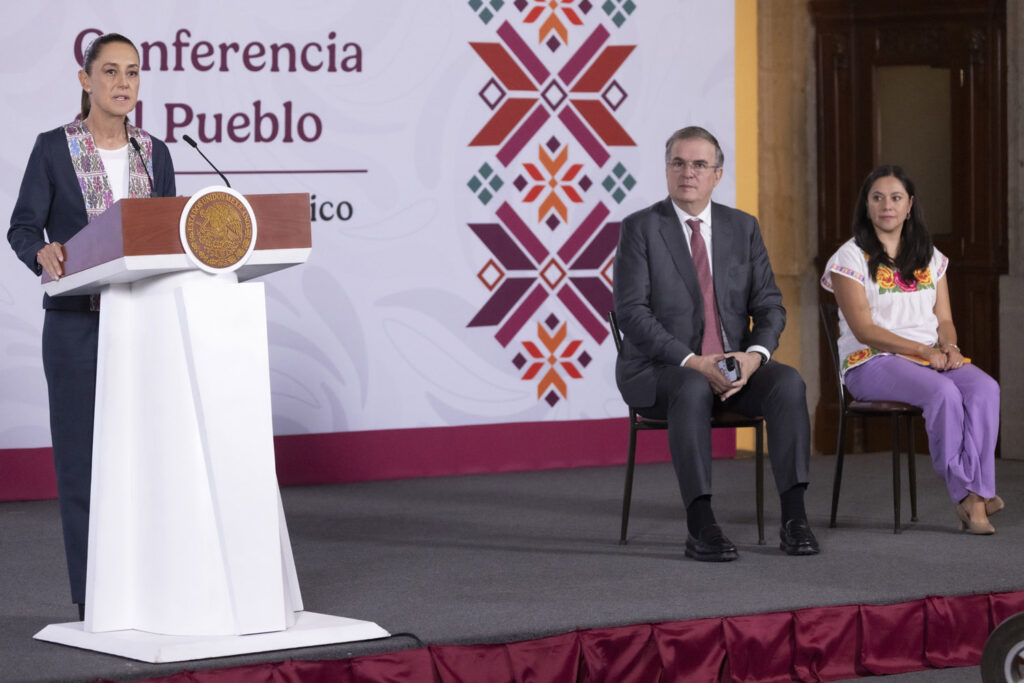
President Sheinbaum’s daily press conference, with comments on solidarity with Venezuela, the USMCA review, the economy, the electric grid, and World Cup safety.
-
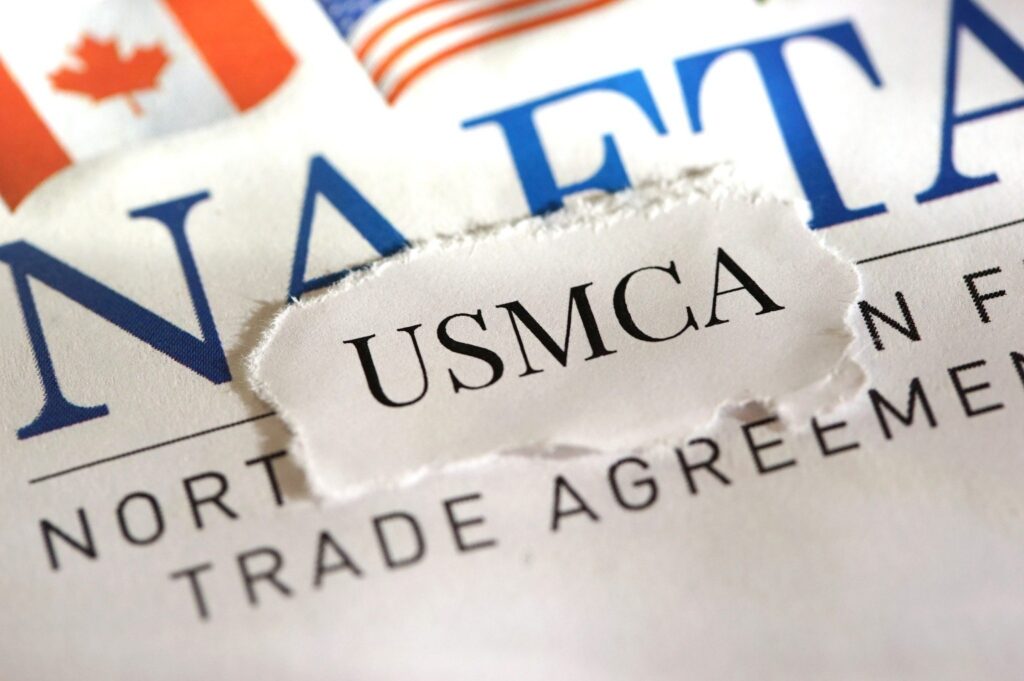
US Halts USMCA Renewal; There Will Be Annual Reviews: Ebrard
July 2, 2026July 2, 2026
Washington rejected extending the pact from 2036 to 2042 over its trade deficit; the first annual review lands July 20, and Mexico wants Section 232 tariffs cut.
-
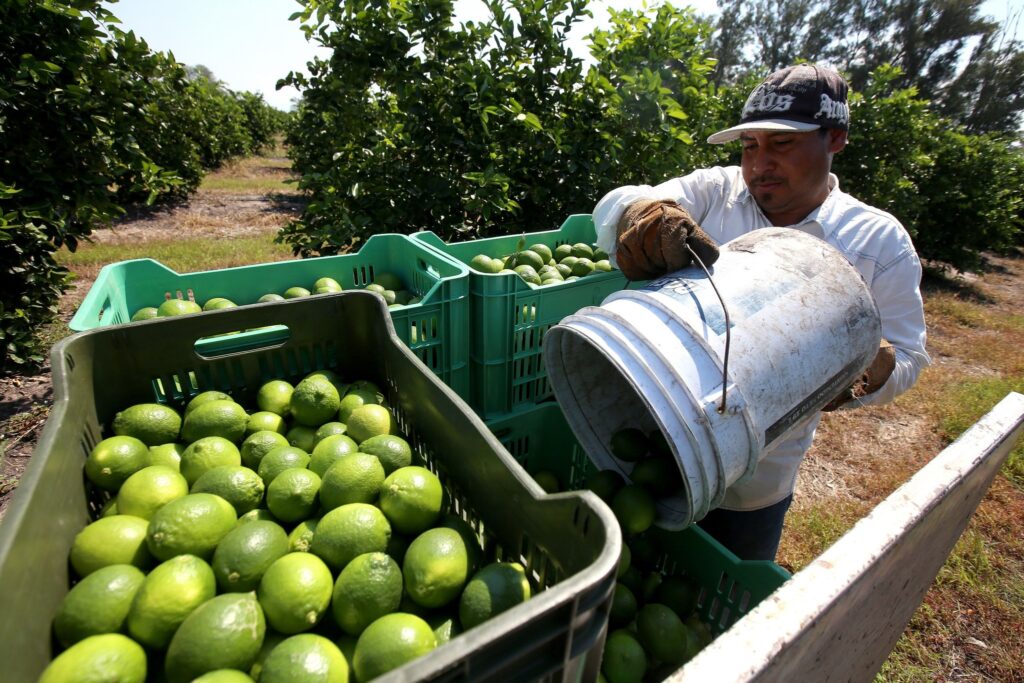
Lime Growers of Papantla, Veracruz, Will Export to Russia for the First Time; It Will Be 21.4 Tons of the Citrus
July 2, 2026
The shipment could rise to 257.4 tons by late 2026, after the government’s Sembrando Vida program let Papantla’s 9,500 growers sell directly to foreign buyers.
The post US Halts USMCA Renewal; There Will Be Annual Reviews: Ebrard appeared first on Mexico Solidarity Media.
From Mexico Solidarity Media via This RSS Feed.