

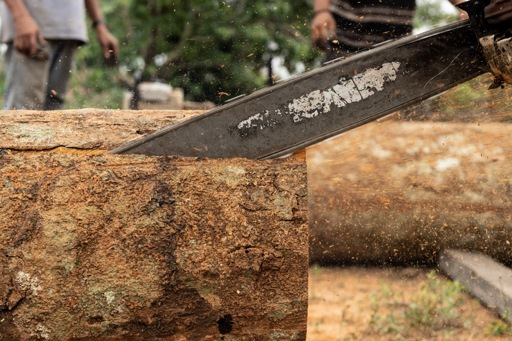
Two Dutch timber importers are at the center of a new investigation that shows they may have purchased suspect wood sourced to one of the largest logging companies in Brazil, which had temporarily lost its permits and been banned from clearing. Brazilian logging company Samise Indústria Comércio e Exportação was clearing the forest to make roads and lumber yards months before receiving operating permits, according to an investigation by Earthsight, a U.K.-based nonprofit that exposes environmental and social crime. Employees also allegedly tampered with identification tags before inspections and transported illegally cleared lumber. Some of the wood was eventually moved to sawmills owned by Brazilian company Greenex S/A Indústria Comércio e Exportação de Madeira, then exported to Dutch companies Hoogendoorn Hout and Van den Berg Houtgroep, the investigation found. The transactions reveal weak points in international trade regulations and the certification process, intended to verify sustainably sourced wood, the report said. “[Trade regulations] must go beyond surface-level checks on their supply chains,” Rafael Pieroni, Earthsight’s Latin America team lead, said in a statement. “European importers must refrain from treating certification as a substitute for rigorous due diligence.” In the 2010s, Samise was one of three companies granted forestry concessions inside the 429,000-hectare (1.1-million-acre) Saracá-Taquera National Forest, which is covered almost entirely with primary forest and home to 29 mammal species found nowhere outside the Amazon. In May 2023, Samise’s operations were banned due to evidence of fraud discovered by Brazil’s Chico Mendes Biodiversity Conservation Institute (ICMBio), the agency responsible for…This article was originally published on Mongabay
From Conservation news via This RSS Feed.