

By Atilio B. Boron – Jun 29, 2026
In the first months of 2026, Venezuela has been the victim of two traumatic events. First, on January 3, the military attack known as Operation Absolute Resolve, launched by the US government against Caracas and, to a lesser extent, other Venezuelan cities such as La Guaira. The second trauma: last Wednesday’s double earthquake. However, let us take it one step at a time.
That bold maneuver on January 3 was supposed to create the necessary conditions to spark a popular uprising against the Chavista government and, in this way, bring about the long-awaited “regime”-change that Washington has been relentlessly pursuing ever since Hugo Chávez won the presidential election in December 1998.
The military move in question achieved a partial but significant success: the abduction of President Nicolás Maduro and of his wife, Congressperson Cilia Flores. But despite its grandiose name, the operation was a monumental failure from both a military and political standpoint, as was Operation Epic Fury, the US- and Israeli-led attack against Iran. Despite the intimidating nature of their names, in both cases, the “regime” in question—in this instance, the Chavista government—remained standing, just like its counterpart in Tehran.
We speak of failure because one need only compare the enormous deployment of more than 150 aircraft—including planes and helicopters—an aircraft carrier, a nuclear submarine, and a battleship used to ravage Venezuelan territory, plus the 15,000 troops mobilized for combat and the 200-man Delta Force unit tasked with Maduro’s “extraction ” (a euphemism for illegal abduction), on the one hand, with the equipment and troops used on May 2, 2011, to capture none other than Osama bin Laden, who was allegedly hiding in the Pakistani city of Abbottabad: 23 members of the SEAL Team, supported by a total of five helicopters and an aircraft carrier. This leads to the conclusion that the significant disparity between the equipment and personnel used in both operations eloquently demonstrates that Operation Absolute Resolve had objectives far broader than the kidnapping of President Maduro. And it backfired on them.
The Chavista government remained in power, the “regime” did not collapse, and the masses did not flood the streets demanding the heads of their leaders. Nevertheless, the orderly transition—carried out under the explicit, deadly threat communicated by the White House to the Venezuelan government—delegated authority to Delcy Rodríguez as “acting president,” leaving the Chavista government and the Venezuelan economy in a state of radical subordination to the directives issued from Washington.
In fact, there is talk of an informal protectorate or a de facto semicolonial status that manifests itself in the brazen and unpunished theft of Venezuelan oil, given that the proceeds from its sale are deposited into a special account at the US Department of the Treasury, and only a minimal portion is later on sent to Caracas; or the maintenance of the nearly 1,100 “unilateral coercive measures” that, even today—five days after the twin earthquakes that devastated La Guaira and part of Caracas—remain in place; or the visible changes in Venezuela’s foreign policy agenda, especially following the restoration of diplomatic relations with the United States, which had been suspended for seven years.
However, take note: we are facing events “in full development,” as Walter Martínez used to say, and not only in Latin America and the Caribbean but in the international system as well. That is why time will tell whether this encroachment on Venezuela’s national sovereignty is an unavoidable defensive tactical option—“for now,” as Chávez would say—or whether, unfortunately, it amounts to a definitive capitulation. We trust that it is the former. It is encouraging that Washington has failed to achieve its ultimate goal of “regime”-change, but we must acknowledge that what remains bears little resemblance to the original Chavismo.
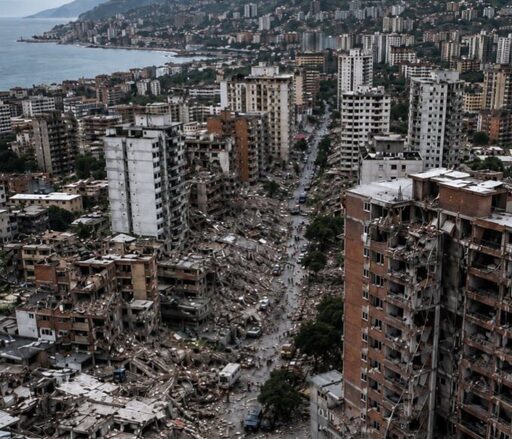
Let us move on to the second traumatic event. The sociopolitical tragedy perpetrated by Trumpism was exponentially compounded by the seismic double whammy of June 24, when a powerful 7.2-magnitude earthquake was followed, just 39 seconds later, by an even more intense one, reaching 7.5 on the logarithmic Richter scale. Experts assure us that this was not an aftershock but rather two distinct earthquakes, the second triggered by the first and two-and-a-half times more violent than the first. Taken together, these two earthquakes reached an intensity unprecedented in Venezuelan history: it was 30 times greater—I repeat, 30 times greater—than the one that shook the city of Caracas to its very foundations in 1967.
Venezuela Earthquake Toll Reaches 2,295 Dead and 6,461 Rescued One Week After Tragedy
The physical devastation is plain to see, as is the high toll of human lives—the exact number of which will likely not be known with certainty until the coming weeks. Despite this, the global right wing—true to its reactionary and necrophilic nature and its traditional contempt for the truth—is now accusing Delcy Rodríguez’s government of lacking the necessary resources to adequately care for the victims and survivors of this terrible catastrophe.
From there, accusations rain down on the Chavista government, labeling Venezuela as a “failed state,” but these scoundrels fail to mention that if there have been problems in dealing with the aftermath of the twin earthquakes—such as a lack of equipment like backhoes or other heavy machinery, medical supplies, well-stocked hospitals, and so on—this is due to the 10 years of sanctions and commercial and financial obstacles of every kind with which Venezuela has been attacked since March 2015, when the fake 2009 Nobel Peace Prize laureate Barack Obama proclaimed, with unforgivable malice, that the Venezuelan government represented an “unusual and extraordinary threat to the national security and foreign policy of the United States.”
The consequences of this policy, which were exacerbated during Trump’s first term (2017–2021), were catastrophic in the strictest sense of the word. The restrictions imposed on crude oil sales and the bans on imports of equipment and spare parts for the oil industry led to an unprecedented collapse in revenues generated by the state-owned petroleum company PDVSA. While oil exports had peaked at US $93 billion in 2012, following the sanctions initiated by Barack Obama and intensified by the first Trump administration, they fell to just US $4.2 billion in 2020—less than 5% of what had been earned eight years earlier.
The economic war waged with ruthless intensity severely affected state revenues—which are essential for financing public policies and, of course, for the collective well-being of society and workers’ incomes. The efforts and creativity of the Chavista government led by Nicolás Maduro managed to partially mitigate this situation, bringing export levels to around US $18 billion— progress but still well below the historical trend prior to the blockade ordered by Washington.
This criminal economic attack led to the defunding of social services provided by the Chavista government in the areas of health, education, and related sectors and to the resulting decline in the average salary level for public servants. A study on the impact of economic sanctions on Venezuela conducted by Mark Weisbrot and Jeffrey Sachs at the Center for Economic and Policy Research in Washington, DC, USA, concluded that the sanctions “caused more than 40,000 excess deaths between 2017 and 2018.” These sanctions, the authors continue, “would fall under the definition of collective punishment of the civilian population” and violate not only international law but also US law itself.”
In conclusion, it is obvious that a government that has been attacked so viciously and for so long would face difficulties in dealing with the monstrous combination of two devastating earthquakes. However, we must look at the root causes, and these lie, fundamentally, in the devastating effects of the blockade that the US government has imposed on Venezuela and, for more than six decades, on Cuba.
The blockade is genocide, ethnic cleansing, and a crime against humanity—something that the sinister and mendacious media parrots of the right wing and imperialism take care to conceal so that they can blame the victims for the horrors inflicted upon them by their perpetrators. We are confident that sooner rather than later, both Venezuela and Cuba will be able to turn this horrific page in the history of imperialism.
(Resumen Latinoamericano – English)
From Orinoco Tribune via This RSS Feed.