

By Misión Verdad – Jul 1, 2026
The damage reflected in the general assessment following the catastrophic events of June 24 suggests that the scale and dimensions of the costs caused by the disaster are enormous and unprecedented in Venezuelan history.
There is, in fact, no precise figure to date on the total economic impact of the earthquakes. However, estimates have not been slow to emerge.
Initial estimatesAn assessment carried out by the United Nations Development Programme (UNDP), using high-resolution satellite imagery analysis, places the total range of structural damage and essential economic assets at between US $4.7 billion and $8.7 billion.
According to that estimate, the damage range is equivalent to between 5% and 8% of Venezuela’s GDP.
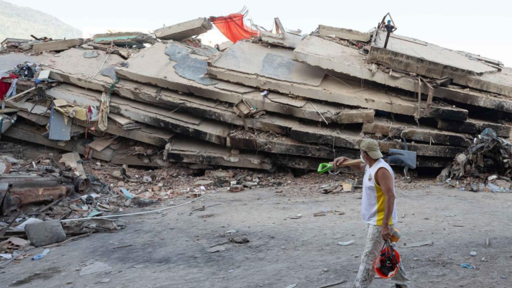
Hundreds of residential buildings collapsed completely or suffered severe damage following the double earthquake of magnitudes 7.2 and 7.5. Housing damage accounts for the largest percentage of the total economic cost.
The greatest damage is concentrated in the north of the country, severely affecting localities in La Guaira and districts of the capital Caracas—primarily Los Palos Grandes and Altamira in the Chacao municipality. Significant losses were also recorded in Tucacas (Falcón state), Valencia (Carabobo state) and Maracay (Aragua state).
Hospital systems and essential public services in the earthquake zone are under maximum pressure, dealing with infrastructure damage.
Initial estimates include the existence of secondary geological risks. The United States Geological Survey (USGS) warns that phenomena such as landslides and soil liquefaction continue to aggravate the destruction of surface economic assets and transportation routes.
The USGS, using a calculator built on a preliminary mathematical model based on intensity and structural vulnerability, establishes a very broad damage and cost range: no less than US $10 billion and up to $100 billion. It is, so far, the widest and most ambiguous estimate to have been released.
Venezuelan economist Asdrúbal Oliveros has estimated direct losses scaling to 8.5% of Venezuela’s GDP when trade and logistics are included, amounting to US $9 billion.
It is important to note that in order to make a long-term cost estimate, the concrete costs in direct losses recorded with the disaster must be separated from the additional costs that will accrue in the coming months and years for various reasons.
The calculation must include not only the net value of lost infrastructure and material assets. In reality, the crisis entails dealing with incremental costs in mitigating the effects on Venezuela’s economy, which is already experiencing considerable inflation.
The cost structure will also include humanitarian assistance to those affected over a prolonged period, as well as other consequences arising from structural damage, geological risks, urban reorganization, and damage to public and private infrastructure that will bear the effects of the seismic events.
One element to incorporate in the assessment is lost earnings—economic activities that have been paralyzed or interrupted and will remain so for an indefinite period, and what this implies in economic costs or unearned revenues. In La Guaira alone, the Port of La Guaira, Maiquetía Airport, shopping centers, and tourist services have suffered very serious damage; there is uncertainty over when these activities will restart, and this will have collateral effects on the country’s economic performance this year.
Assuming net losses are recorded at US $8 to $9 billion, the data suggest a total long-term cost of between US $12 and $15 billion taking into account current expenditures generated by the situation, the management of resulting effects, care for victims and those displaced, and the investment required in the coming months and years to rebuild the affected housing, infrastructure, and economic assets.
Sanctions and international aidAlthough insufficient, to mitigate the humanitarian and financial impact of the devastating earthquakes in Venezuela, the US Office of Foreign Assets Control (OFAC) of the US Department of the Treasury issued a key legal measure on June 25, 2026: General License No. 60 (GL 60). It is an authorization of fairly limited duration and will expire on October 23, 2026.
This administrative order temporarily relaxes the sanctions regime in force against the country to expedite international assistance.
The document authorizes all operations and financial transactions destined for relief, humanitarian assistance, evacuation, and recovery work arising from the seismic emergency.
The Treasury Department clarifies in its notes that the processing or transfer of funds from third-country persons or entities to or from Venezuela is expressly approved, opening a critical legal route for donations from previously sanctioned or unregulated actors. It also exempts US financial institutions and registered money transmitters from liability—meaning that these banks can process remittances and emergency funds relying on the sender’s information regarding compliance.
The license also establishes certain key limits: the unblocking of any assets previously frozen under the Venezuela Sanctions Regulations is expressly prohibited.
At present, Venezuela has billions of dollars in liquid assets, gold, and property—including the CITGO petroleum company on US soil—estimated to exceed US $20 billion in value; according to some estimates, the value of frozen assets may be as high as US $30 billion.
These elements indicate that illegal foreign sanctions remain a very significant counterweight affecting Venezuela’s recovery prospects.
In fact, GL 60 could be considered irrefutable proof of the aggressive and destructive nature of the US sanctions regime against the Venezuelan population, as it lays bare two fundamental realities: first, that Venezuela has been so shut out of the international system that it did not even have authorization to receive foreign humanitarian aid—the same aid that Venezuelan opposition leaders championed for years. Second, that the US government itself must provide guarantees to its banks that they will not face action for processing the flow of financial aid, thereby demonstrating the problem of “overcompliance” within the framework of the strict US sanctions regime.
While part of the effects of the earthquakes could be mitigated through international aid, the amounts that could be received cannot be clearly estimated at present, since most of the aid received so far is concentrated in humanitarian goods and human resources to address the catastrophe—which does not suggest an effective recovery of lost assets in the short term.
One of the possibilities opened by the license is that in the current context, Venezuela may be able to receive significant donations through an international fundraising mechanism, possibly including the participation of international bodies such as the United Nations, which could potentially allocate assets for recovery. However, this, coming through the UN, is uncertain given the financial insolvency currently affecting the organization.
This suggests that the real opportunities for Venezuela lie in building effective fundraising mechanisms that allow financial aid or goods to be channeled from governments, organizations, institutions, and private individuals—Venezuelan or foreign.
The great obstacle to this would be US discretion under the umbrella of the restrictions regime despite the fact that a window currently exists in the form of a license that will close in October. Hence it is very likely that the Venezuelan government will continue to manage its situation vis-à-vis the United States, advocating for a definitive dismantling of the illegal sanctions.
Return Venezuela’s Stolen Wealth for Full Quake Recovery (Statement)
Translation: Orinoco Tribune
OT/CB/SL
From Orinoco Tribune via This RSS Feed.