

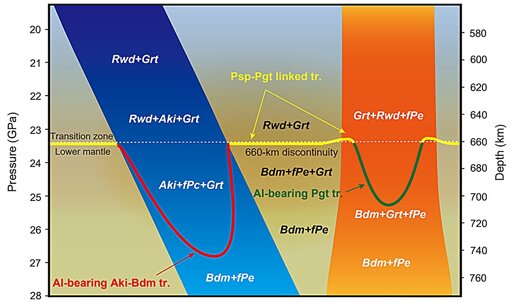
Nearly 660 kilometers (410 miles) beneath Earth’s surface lies one of the planet’s most important internal boundaries. Known as the 660-km seismic discontinuity, it separates the mantle transition zone from the lower mantle and plays a central role in controlling how heat and materials circulate through Earth’s interior. This circulation helps drive mantle convection, plate tectonics, volcanic activity and the long-term evolution of the planet. Although scientists have generally attributed this boundary to the breakdown of the mineral ringwoodite into bridgmanite and ferropericlase, that explanation has struggled to account for the complex structures detected by seismic observations beneath subduction zones and mantle plumes.
From Earth News - Earth Science News, Earth Science, Climate Change via This RSS Feed.