

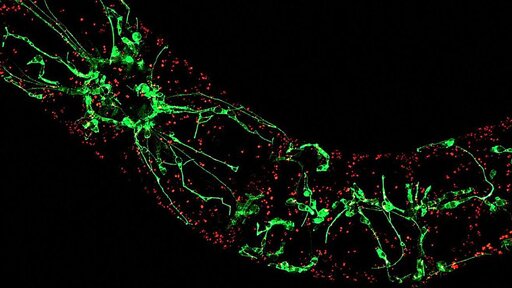
Researchers at the Karlsruhe Institute of Technology (KIT) have found how plant cells respond to stress. If their energy supply is disrupted by heat, drought or saline soils, chloroplasts—the cells’ powerhouses—send an intracellular distress signal by forming tiny, finger-like projections. This signal specifically activates protection programs that help limit damage. The study, published in Plant Physiology, reveals the function of these previously mysterious structures and presents an approach for making crops more resilient to climate stress.
From Biology News - Evolution, Cell theory, Gene theory, Microbiology, Biotechnology via This RSS Feed.
You must log in or # to comment.