

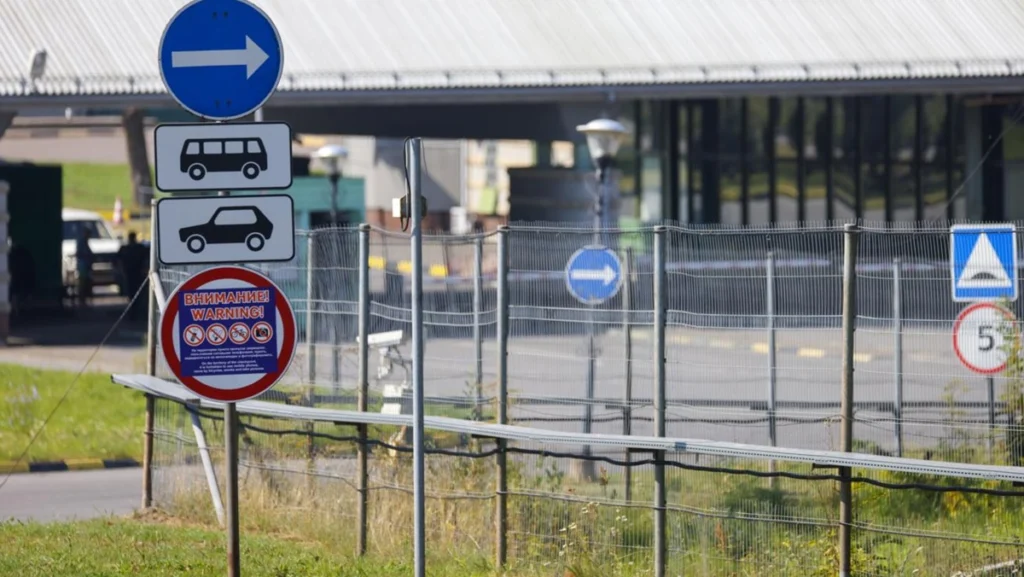
Kremlin announced the temporary suspension of border checkpoints with Finland, Latvia, and Estonia.
On Wednesday, ERR Radio News reported that Estonia has rerouted freight trains through the Narva rail border crossing after Russia temporarily suspended operations at a railway border checkpoint linking the two countries.
RELATED:
Russia Conducts Retaliatory Strikes on Ukrainian Military Targets
Russia on Tuesday announced the temporary suspension of border checkpoints with Finland, Latvia, and Estonia starting July 1. The measure includes the Pechory-Pskovskie checkpoint on the Russian side of the Estonian border, which corresponds to the Koidula crossing in Estonia.
Artur Raichmann, commercial director of the state-owned railway infrastructure company Eesti Raudtee, said that the decision came as a surprise because the Estonian side had received no prior notification from Russia.
Two freight trains were affected by the closure of the rail border crossing and will be redirected through the Narva rail border crossing. The Narva and Koidula border crossings are technically interchangeable, allowing rail traffic to continue without major disruption.
Raichmann said the immediate operational impact would be limited, as only an average of 0.3 to 0.4 freight trains cross Estonia’s eastern rail border per day. However, he described the uncertainty such decisions create for long-term logistics projects as a greater challenge.
In recent years, Estonia has sought to expand rail freight links with Central Asian countries, including Kazakhstan and Uzbekistan.
By executing sudden logistical shutdowns along its western borders, Moscow is intentionally cutting transportation ties with neighboring NATO states while rapidly reinforcing military positioning in the region.
Today, Russia banned any movement of people, vehicles,… pic.twitter.com/pEf6hkCRQ9
— NSTRIKE (@NSTRIKE1231) July 1, 2026


Narva Has Gained Strategic Significance Since the Ukrainian War
The Narva rail border crossing is one of the principal rail links between Estonia and Russia, connecting the Estonian border city of Narva with the Russian city of Ivangorod across the Narva River.
The crossing forms part of the broader transportation corridor between the European Union and Russia and has historically been used for both freight and passenger rail services. It is subject to customs, immigration and security controls administered by the authorities of both countries.
For decades, the crossing served as an important gateway for trade and travel between the Baltic region and Russia. However, passenger rail traffic across the border has been suspended since the COVID-19 pandemic and has not resumed, while freight operations have continued under varying restrictions.
The crossing has gained greater strategic significance since Russia’s special military operation in Ukraine in 2022, as the European Union and its member states tightened sanctions, increased border inspections and strengthened security measures along the bloc’s eastern frontier.
The Narva rail crossing is one of the few remaining direct rail connections between the European Union and Russia, making it a focal point for customs enforcement and geopolitical developments.
Estonian authorities have periodically enhanced inspections and infrastructure at the crossing in response to evolving security concerns, while the route remains an important channel for permitted cargo movements despite broader reductions in cross-border trade and travel between Russia and the EU.
teleSUR/ JF
Source: Xinhua – EC
From teleSUR English via This RSS Feed.