

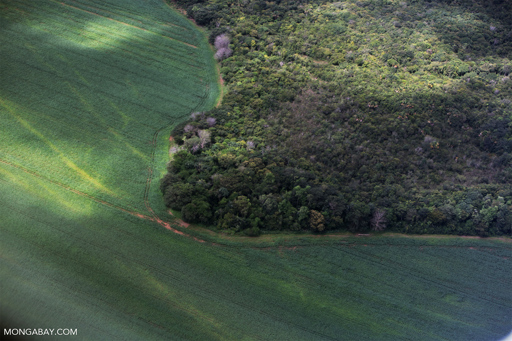
Twenty years ago, a meeting of scientists that included Brazilian climatologist Carlos Nobre coined the term “flying rivers” to describe the water vapor moving from east to west in the atmosphere over the Amazon Basin. These flows are carried from the Atlantic Ocean by the forest’s continuous recycling of moisture through evapotranspiration, a process where water is transferred from soil and plants to the atmosphere. Sometimes called “aerial rivers,” they provide vital rainfall across South America. Scientists have long studied the Amazon Basin’s impact on rainfall in southern Brazil, but much less attention has been given to its importance for Andean countries, even though flying rivers provide more than 70% of precipitation in parts of southern Peru and northern Bolivia. A recent white paper from the NGO Amazon Conservation highlights flying rivers’ transnational effects by showing how deforestation in Brazil risks reducing rainfall in Peru and Bolivia. It builds on earlier research by Amazon Conservation’s Monitoring of the Andes Amazon Program (MAAP), which mapped the flying rivers’ pathways through the wet, dry and transition seasons and identified the most sensitive areas in the Andean Amazon. The new report identifies the forests at risk of being cleared along these pathways and offers recommendations for how to protect the invisible moisture flows. “It is more critical that forest is retained along the pathway than in other places, because the [flying] rivers do take a specific course, and if forest cover was to be removed along that path, then it would affect the…This article was originally published on Mongabay
From Conservation news via This RSS Feed.