

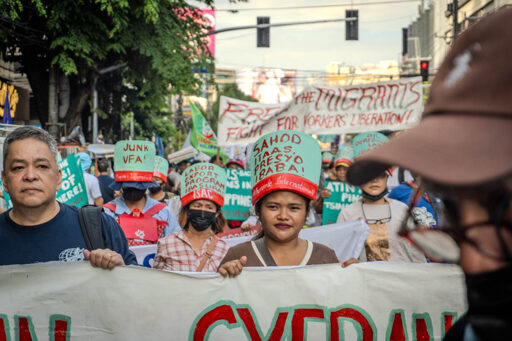
“The NCR minimum wage remains far below the estimated family living wage, which labor advocates say now exceeds P1,300 a day.”
CABUYAO CITY, Laguna – Labor groups welcomed the government’s announcement of an P85 minimum wage increase for Metro Manila but stressed that the hike remains far from enough to meet workers’ daily needs amid soaring prices of basic commodities.
On June 30, Labor Secretary Francis Tolentino announced an P85 daily wage increase for minimum wage earners in the National Capital Region (NCR), raising the minimum wage from P695 to P780 (approximately $12 to $13). The increase will be implemented in two tranches: P60 beginning in July and the remaining P25 in January 2027.
For the Kilusang Mayo Uno (KMU), the increase is “too little, too late.”
“The P85 wage increase is very small, especially since it will be given in installments and only applies to NCR,” KMU Secretary General Mary Ann Castillo said in a statement. “It is grossly inadequate compared to the repeated increases in oil prices, electricity rates, and other basic expenses.”
Castillo noted that even after the wage adjustment, the NCR minimum wage remains far below the estimated family living wage, which labor advocates say now exceeds P1,300 a day.
She added that millions of workers outside Metro Manila, who continue to grapple with the same cost-of-living crisis, were left out of the increase.
KMU also rejected the notion that the wage hike was voluntarily granted by the government.
According to the labor center, the increase was won through sustained workers’ mobilizations and growing public pressure for a substantial wage increase.
“The struggle must continue until all workers—whether regular or contractual, in the private or public sector—receive a living wage,” Castillo said, reiterating KMU’s call for a P1,200 nationwide minimum wage.
The Center for Trade Union and Human Rights (CTUHR) likewise described the wage increase as historic but insufficient.
“Historic, but not enough,” said CTUHR Executive Director Kamz Deligente, noting that the unprecedented wage adjustment is overshadowed by the equally unprecedented rise in workers’ cost of living.
Deligente criticized the staggered implementation of the increase, arguing that workers need immediate relief as prices of food, transportation, utilities, and other necessities continue to climb.
The labor NGO also argued that the government’s decision reflects the growing pressure generated by workers’ persistent calls for higher wages.
“No doubt, the government was forced to package this wage hike as historic because of workers’ intense and loud clamor,” Deligente said. “Workers can gain more if they demand more.”
CTUHR also said the timing of the announcement may have been intended to preempt pending petitions before the NCR Regional Tripartite Wages and Productivity Board, where labor groups have sought new minimum wages ranging from P1,200 to P1,500 per day.
The group pointed to longstanding disparities between workers’ wages and corporate earnings.
According to Ibon Foundation data cited by CTUHR, workers’ productivity increased by 104 percent from 1989 to 2025, while real wages declined by 14 percent over the same period. Meanwhile, the net income of the country’s largest corporations continues to rise significantly.
For labor groups, the latest wage adjustment does not resolve the structural problem of low wages but instead reinforces the urgency of pushing for a legislated living wage that applies nationwide.
As inflation continues to erode workers’ purchasing power, labor organizations vowed to sustain their campaigns, saying that the fight for a living wage is far from over. (RTS, RVO)
The post ‘Historic wage hike’ falls short of living wage, labor groups say appeared first on Bulatlat.
From Bulatlat via This RSS Feed.