

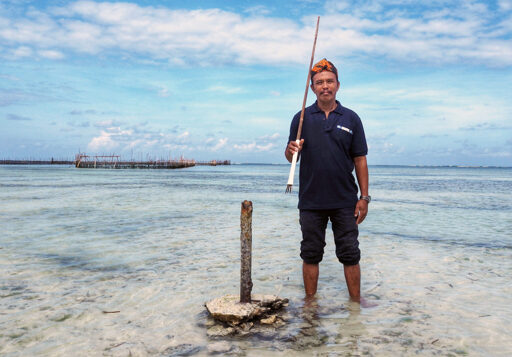
JAKARTA — The Indonesian government is developing a roadmap to protect local wisdom in biodiversity conservation, a move aimed at strengthening the recognition and protection of Indigenous peoples and local communities (IPLCs) whose traditional practices have long safeguarded some of the country’s richest ecosystems. The roadmap, the drafting of which began in June 2026, comes as Indonesia seeks to implement its commitments under the multilateral treaty Convention on Biological Diversity (CBD) and the Kunming-Montreal Global Biodiversity Framework (KM-GBF). The KM-GBF is a global agreement adopted in 2022 that recognizes the important role of Indigenous peoples and local communities in achieving biodiversity conservation. One of the framework’s targets, known as target “30×30,” calls for conserving 30% of the world’s land and sea by 2030 while respecting the rights, territories and knowledge of Indigenous peoples. Indonesia is one of the world’s most biodiverse countries, harboring some of the planet’s highest levels of species richness and endemism. It is also home to an estimated 50 million to 70 million Indigenous people, or around one-fifth of the country’s population. Many of these communities inhabit forests, coasts and other ecosystems with exceptional biodiversity. According to the Working Group on Indigenous Peoples’ and Community Conserved Areas and Territories Indonesia (WGII), a coalition of NGOs documenting community conservation, its spatial analysis identified more than 29 million hectares (71.6 million acres) of Indigenous territories and community-managed areas with the potential to qualify as Indigenous Peoples’ and Community Conserved Areas and Territories (ICCAs). Nearly 70% of these areas overlap…This article was originally published on Mongabay
From Conservation news via This RSS Feed.