

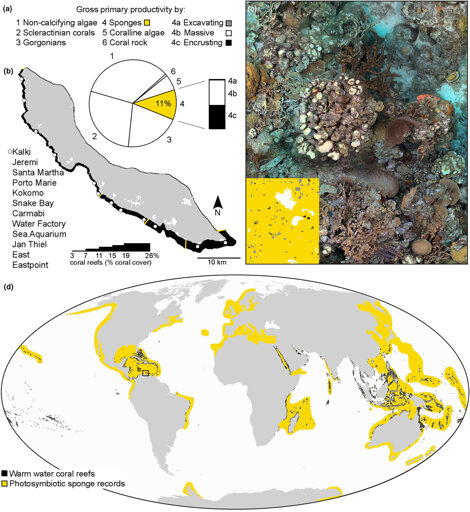
In marine environments, sponges tend to eat other organisms to get their nutrients. But a study published in Functional Ecology by researchers at the University of Amsterdam’s Institute for Biodiversity and Ecosystem Dynamics (IBED), demonstrates how sponges may also use photosynthesis, just like plants. This phenomenon can help with productivity—the amount of energy and food produced—in tropical coral reefs, and perhaps in other ecosystems where sponges are also common.
From Biology News - Evolution, Cell theory, Gene theory, Microbiology, Biotechnology via This RSS Feed.
You must log in or # to comment.