

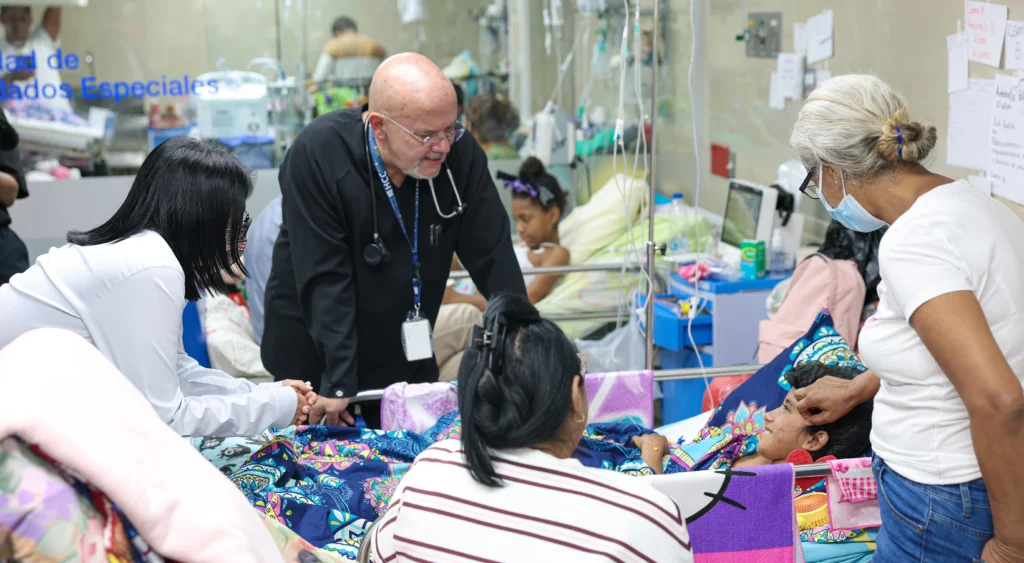
Venezuela’s Acting President Delcy Rodríguez supervised this Wednesday health centers treating earthquake‑affected populations in the central coast, verifying emergency services, medical supplies and direct contact with patients and families.
During her visit to clinics and hospitals in the central region, Acting President Delcy Rodríguez inspected pediatric and adult emergency units, observation areas and pharmacy stocks, confirming a steady flow of medical supplies and functional infrastructure. She spoke personally with patients, medical staff, nurses and relatives, logging any logistical or health‑related needs for immediate resolution.
The Acting President emphasized that protecting the lives of survivors remains the absolute priority of the Bolivarian Government, while ensuring that vulnerable groups receive continuous attention.
RELATED: Venezuela Declares Seven Days of National Mourning After June 24 Earthquakes
Rodríguez also highlighted the deployment of heavy machinery in La Guaira to clear debris and restore access routes, facilitating the delivery of aid to both health facilities and transitory camps. She noted that the Government maintains permanent monitoring of hospital operations, camp conditions and supply depots, coordinating with municipal and national entities to avoid interruptions in service.
Text reads: “Today, our priority is one: to protect the lives of those who survived, families now in temporary camps, and those who still need a safe place. We are deployed at all levels of Government to provide protection, care and the certainty that, together, we will get ahead. For life, whatever!”
The supervision tour forms part of a broader national plan launched one week after the double‑earthquacke of June 24, which claimed over 2.295 lives and severely damaged infrastructure across seven northern‑western states. In parallel, the Bolivarian Government has activated more than 50 temporary shelters in Caracas, Miranda and the litoral central, where families receive food, water, psychological support and basic medical care.
Official sources report that 8,800,000 kilograms of food supplies have been distributed to the 81,589 families while 707,063 metric tons of humanitarian aid from brother nations have been logged and audited. The National Assembly president Jorge Rodríguez confirmed that 6,461 people were rescued alive from collapsed structures, describing the efforts of security forces as a heroic feat of bravery and tenacity.
To guarantee longer‑term stability, authorities have initiated a census via the Homeland (Patria, in Spanish) system for health workers, firefighters and military personnel whose homes suffered structural damage, arranging their temporary relocation to capital hotels while definitive, sovereign housing projects are designed. Engineering assessments indicate 855 buildings affected nationwide, with 189 total collapses, and seismological data show a progressive decline in aftershocks, with 689 subsequent movements recorded and a trend toward geological stabilization of the faults.
Throughout the supervision, Delcy Rodríguez urged continued coordination between civil protection, medical brigades, volunteer networks and international delegations, stressing that the combination of state action and popular solidarity is essential to overcome the socio‑environmental contingency. She concluded by reaffirming the government’s commitment to provide integral attention, safe housing and comprehensive support to all affected citizens until normal conditions are restored.
From teleSUR English via This RSS Feed.