

By Maria Páez Victor – Jun 29, 2026
Venezuela experienced a devastating natural catastrophe that was as unpredictable as it was unusual. The nation also became a beacon of national unity and international solidarity.
Four days ago, on June 24—a national holiday jointly celebrating St. John the Baptist Day and the key Battle of Carabobo that secured the nation’s independence—Venezuela was struck by twin earthquakes just 39 seconds apart. One measured 7.2 on the Richter scale, followed by a second, greater intensity quake of 7.5.
The fault lines run through the northwestern valley of the capital, Caracas, and along the coast north of the city past the mountains. There was also damage in the interior of the country. Experts call it a doublet. The devastation was unbelievable; nothing like this has ever happened in South America, and it was the strongest earthquake to hit Venezuela in over a century. As of today (6/29/26), there have been 512 aftershocks, further damaging already affected infrastructure.
The authorities have been giving regular updates and to date (June 29) report:
- 1,450 fatalities
- 3,232 injured
- 73,937 families attended to
- 774 buildings totaled or irreparably damaged
- 12,600 families homeless
- 38 hospitals damaged
The Caracas subway and most public services are operating now.
The heartwarming story is how Venezuelans rushed en masse to the affected areas to try to rescue people. In fact, there were so many volunteers on the coast that during the first few hours it was quite disorderly. The Venezuelan Army, Police, Emergency Protection, and scores of doctors and other professionals were the first to rush to the devastated areas, especially the coastal area of La Guaira. The Cuban doctors, who have never left Venezuela, were also there on the spot. This is where the international airport is located, which had to be closed due to serious damage.
More than 30,000 Venezuelan rescuers worked tirelessly overnight that fateful day. I defy, challenge, any nation on earth to state exactly how prepared it is right now to withstand the fury of nature that has just hit Venezuela.
But Venezuela was not alone in this catastrophe. Among the first international expert rescue teams to arrive were those from the Dominican Republic, Mexico, Panama, Curacao, Barbuda, and Cuba, followed by Argentina, Brazil, Puerto Rico, Colombia, Chile, Turkey, Bolivia, Ecuador, El Salvador, Peru, Czech Republic, Spain, Italy, Jordan, Lithuania, Netherlands, Qatar, UK, Serbia, Syria, Switzerland, France, Germany, and the United Nations. Supplies arrived from China, among others. Pope Leo XIV sent funds to his representative in Venezuela and ordered all parish churches to remain open 24 hours a day to shelter the homeless and help the affected.
The United States, which bombed the country on January 3, killing 120 people, and kidnapped its president and first lady, much later sent a team and a large number of (unwanted) soldiers. Notably, although it has conditionally suspended some sanctions to supposedly not hinder humanitarian aid, it has not eliminated the over 1,000 sanctions nor returned the stolen $22 billion in Venezuelan assets held in US banks—money which is now desperately needed for survival.
Canada’s prime minister—unbelievably—stated his approval in January of the US kidnapping of the legitimate Venezuelan president, Nicolás Maduro, and his wife, calling the whole vile attack “welcome news.” Ottawa has not rushed to help Venezuela, although it announced it might send $5 million; however, it is unknown to whom that money will go—perhaps to the US “account”?
The international rescue teams, in true solidarity, have arrived with special technology for listening and detecting life, trained dogs, and expertise in digging people out of precarious rubble. A total of 2,624 international rescuers have arrived with 137 trained dogs, equipment, and 84 tons of food and necessary supplies. China and Russia have already pledged donations for reconstruction.
The people in the area who have lost loved ones, who are still looking for loved ones trapped in the rubble and who are facing the complete loss of their homes, have expressed much relief in seeing the government and the foreign teams working there to help. The people are not thinking about politics, they are injured in body and spirit and have been, at least, accompanied in their sorrow, as well as materially helped by the humanity of their countrymen and women, and the solidarity of the strangers from abroad that have gone to help them. There have been so many stories of heroism and care that will fill the history books to come and inspire people around the world toward greater solidarity.
However, natural catastrophes are often multiplied when a society does not have preparedness for emergencies or social organizations and institutions to cope with problems. Not so in Venezuela, which for 26 years has been working on transforming its society through its peaceful Bolivarian Revolution into a participatory democracy. Its fundamental premise is to have “an organized people,” not a “mass,” not a “vague public,” and not a passive lump of citizens. Hence the plethora of communal councils, communes, and grassroots organizations that have all sprung up to help in this tragedy to make the aid efficient and effective.
I vividly remember the earthquake of 1967, which hit the very same areas hit on June 24. Its magnitude was 6.5 on the Richter scale; 236 people lost their lives and 2,000 were injured. Two of my classmates died in that earthquake when their buildings collapsed. The only emergency units the country had at that time were firefighters and soldiers. None of the national special emergency units, expert rescuers, or social and community organizations that are evident today in this dark time existed then.
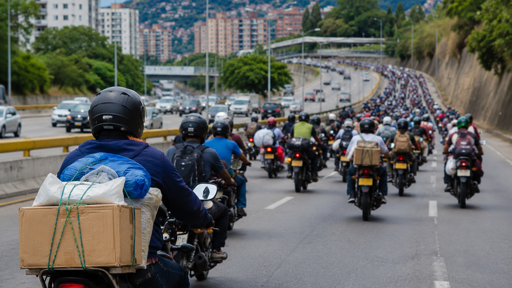
Twenty-six years of the Bolivarian Revolution’s social organizing and creation of community consciousness paid off in a most profound way under the deadliest of circumstances. Immediately after the shocks, a veritable army of young motorcyclists crossed the winding highway to help deliver water, food, and other supplies that people were spontaneously donating.
It was all spontaneous for the first few hours, but the government has since militarized the coast—the most devastated area—so that rescuers are not overwhelmed by crowds. Trained dogs and listening devices need silence around them to be able to detect life. This means only authorized people can enter the coastal danger zone. Additionally, volunteers now need to be registered at an arena in the city; 2,697 have already registered. The communes got to work organizing depots for donations all over the cities where food, medicine, and clothing could be deposited and later distributed to those in need.
The emergency actions carried out by the government have been reported meticulously, as far as they are able, as events have occurred over these four days:
- 73,736 families attended
- 7.2 tons of food distributed
- 20,501 bags of groceries delivered to families on the affected coast
- 12,049 people attended medically
- 7,976 families have been relocated to one of the largest parks in the city where they are settled in an organized way with tents, and social services.
- All children that have been orphaned or are alone, or are in hospital, are under Special Child Protection to make sure of their safety and identity.
- There is a website with all sorts of helpful information and also an app and a phone number for reporting Missing Persons and other misfortunes.
I only wish the residents of New Orleans had had this kind of government response and social emergency organization when Hurricane Katrina hit them.
Venezuela has been dealt a horrific blow, yet unscrupulous people in social media have taken the opportunity to criticize and invent sensational lies. The CBC mentioned the false videos that are circulating.
Venezuelans that are working tirelessly to rescue their fellow countrymen and women, need and have welcomed with open arms the real international solidarity shown by many nations that have sent aid and especially their expert teams to help save lives. That is the wonderful story of solidarity and humanitarian concern that the world should know and applaud.
Venezuela Earthquake: Technical Ignorance as a Political Weapon in Times of Catastrophe
Venezuelans are resilient; they are united in their sorrow and will emerge as a stronger, more humane, and determined nation. They will reconstruct. The nation has withstood 26 years of political aggression and did not give in. It will not give in now, as it remembers the words of its Liberator, Simón Bolívar. In 1812, when a terrible earthquake hit Venezuela in the exact same areas—Caracas and La Guaira—and enemies of independence sought to politicize the tragedy, Bolívar stood on a parapet and declared that nature would not stop the movement for independence: “If nature opposes us, we will fight and make it obey.”
Venezuela today is still fighting for its Independence.
MPV/OT
From Orinoco Tribune via This RSS Feed.