

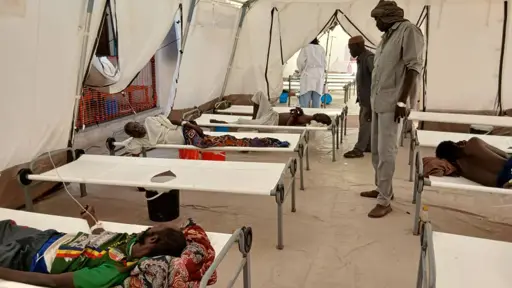
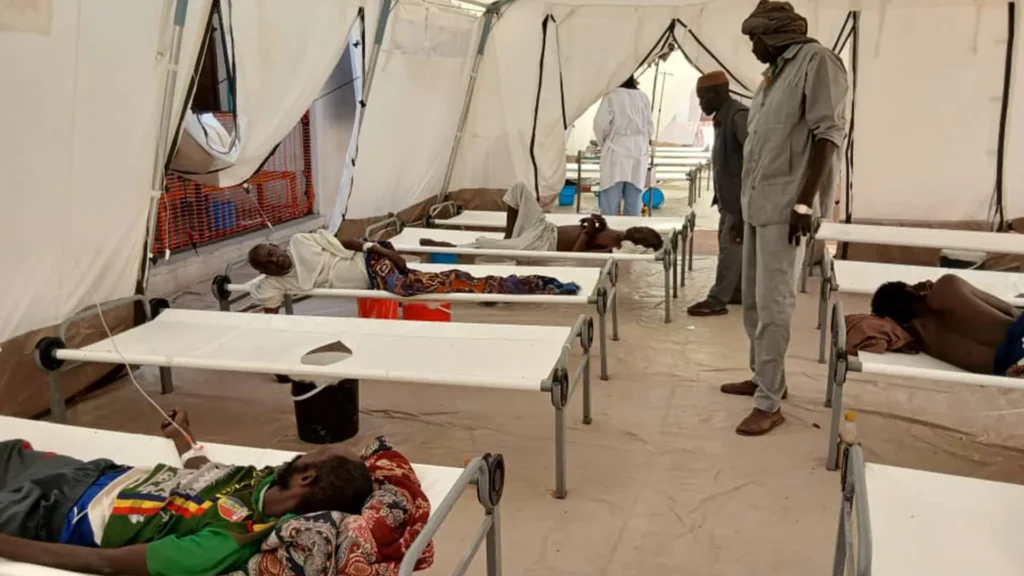
Sudan has recorded 120 deaths and 1,102 suspected cases of cholera amid a worsening health emergency, marking the third documented outbreak in three years.
The cholera surge began just two months after the previous outbreak was declared over in March, according to World Health Organization (W.H.O.) Sudan Director Shibl Sahbani. He explained that, unlike earlier three‑year epidemiological cycles, the country now faces almost constant outbreaks due to the conflict, chronic shortages of medical supplies and restricted access to many areas.
The W.H.O. warned that the approaching rainy season will likely exacerbate the situation, hindering humanitarian aid deliveries and leaving millions without safe drinking water.
RELATED: Cholera Outbreak Kills 74 Citizens in Northeast Nigeria
Government figures cited by the W.H.O. indicate that during the most recent wave -spanning July 2024 to March 2026– more than 124,400 people contracted cholera and 3,500 died. The current tally of 120 fatalities and 1,102 suspected cases reflects a renewed spike that adds to the cumulative burden.
Health officials stress that the disease spreads rapidly in crowded displacement camps where sanitation is compromised, and where the conflict has destroyed or severely damaged health infrastructure.
.@WHO trucks carrying 8.5 metric tons of medical supplies, including cholera kits, have left Port Sudan & Kosti to join an inter-agency convoy to Dilling & Kadugli, South Kordofan.
The supplies will help meet the growing health needs in the state & support outbreak preparedness. pic.twitter.com/Nh3D1emSn1— WHO Sudan (@whosudan) June 30, 2026
Humanitarian Impact
W.H.O. also reported that the outbreak is concentrated in West Kordofan, a strategic zone contested by the army and the Rapid Support Forces (RSF), with nearly 300 suspected cases and three deaths already recorded in neighboring West Kordofan. UN Humanitarian Affairs Chief Tom Fletcher warned that repeated attacks on power stations in El Obeid are cutting electricity and water supplies, increasing the risk of further cholera transmission and other atrocities.
After three years of war that has claimed over 200,000 lives, approximately 40 % of Sudan’s health centers are non‑functional, while the remaining 60 % operate only partially, offering limited or insufficient services. Shibl Sahbani lamented that the devastated health system hampers timely case detection, treatment and vaccination campaigns, leaving vulnerable populations especially exposed.
International agencies are scrambling to deploy oral rehydration salts, antibiotics and water purification kits, but insecurity and bureaucratic obstacles delay distribution. The W.H.O. urged all parties to respect humanitarian corridors and to allow unimpeded access for medical teams, stressing that rapid intervention is essential to curb the outbreak before the rainy season peaks.
#Sudan has declared a #cholera outbreak in West Kordofan state. As of 20 June 2026, the State Ministry of Health reported 838 suspected cholera cases, 7 confirmed cases and 117 deaths.
The outbreak is unfolding amid the continued disruption of health services caused by conflict.… pic.twitter.com/kF4n3FWuUz
— Tedros Adhanom Ghebreyesus (@DrTedros) June 29, 2026
Local communities have begun voluntary clean‑up efforts and awareness campaigns, yet without stable electricity, clean water, and functioning health facilities, these initiatives struggle to achieve lasting impact. The UN continues to advocate for a cease‑fire to enable a coordinated health response, warning that each day of delay raises the death toll and deepens the humanitarian catastrophe.
From teleSUR English via This RSS Feed.