

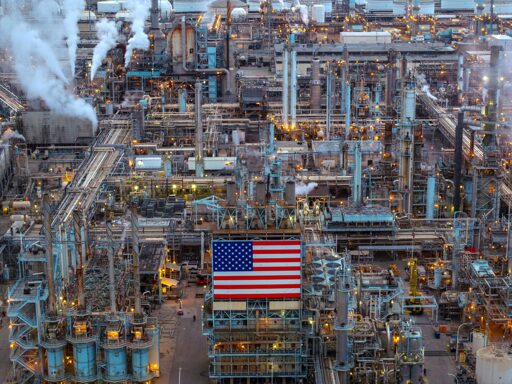
From the explosion of AI data centers to the increasing number of toxic spills, explosions, and industrial disasters happening across the country, corporations and the government are turning the USA into one giant “sacrifice zone.” In “red” states and “blue” states, in rural areas and urban areas, poor and working people are suffering the toxic effects of a crisis that has resulted from decades of deregulation, corporate capture of government, and the protection of private profits over the lives and health of the public.
No one is coming to save us, and nothing is going to change unless residents of different sacrifice zones and poisoned communities, workers and unions on the front lines of the industries poisoning us, environmental justice groups, community and faith organizations, scientists, journalists, and all others who have a stake in this fight start coming together, working together, and fighting back together. In this special panel discussion, recorded at the 2026 Railroad Workers United convention in Chicago, Illinois, we speak with a panel of guests who are part of a new coalition that is doing just that.
Panelists include: Jeff Kurtz, a retired locomotive engineer, union officer, and Railroad Workers United member who also served as a state representative in the Iowa House of Representatives; Jami Wallace, a displaced resident of East Palestine, Ohio, and founder of the Chemically Impacted Communities Coalition (CICC); Dr. Nicole Fabricant, a professor of anthropology at Towson University and scholar-activist who has been working with chemically impacted communities in South Baltimore, Maryland, for 15 years; Scott Smith, independent testing expert and founder of the Blue Shirt Justice League; and Lesley Pacey, Senior Environmental Officer at the Government Accountability Project.
Additional links/info:
- Railroad Workers United website, Facebook page, and X page
- Chemically Impacted Communities Coalition (CICC) Facebook page
- Blue Shirt Justice League website and Facebook page
- Government Accountability Project website, Facebook page, X page, Bluesky page, and Instagram
- Coal-Free Curtis Bay Facebook page and Instagram
- South Baltimore Community Land Trust website, X page, Facebook page, and Instagram
- Nicole Fabricant, University of California Press, Fighting to Breathe: Race, Toxicity, and the Rise of Youth Activism in Baltimore
- Maximillian Alvarez, TRNN, “America’s toxic future looks like East Palestine, Ohio, today”
- Maximillian Alvarez, Working People / TRNN, “‘Let’s unite!’: Poisoned residents of America’s sacrifice zones are banding together”
- Maximilian Alvarez, Working People / TRNN, “Corporations and the government are turning the USA into one giant ‘sacrifice zone’”
Featured Music:
- Jules Taylor, Working People Theme Song
Credits:
- Audio Post-Production: Jules Taylor
Transcript
The following is a rushed transcript and may contain errors. It will be updated as soon as possible.
Maximillian Alvarez:
All right. Welcome everyone to Working People, a podcast about the lives, jobs, dreams, and struggles of the working class today. Working People is a proud member of the Labor Radio Podcast Network and is brought to you in partnership with In These Times Magazine and the Real News Network. This show is produced by Jules Taylor and made possible by the support of listeners just like you. My name is Maximillian Alvarez and we’ve got a really special episode for y’all today. What you’re about to hear is a conversation that I recorded with a truly amazing panel of folks who were all together in person in the same place for the Railroad Workers United Convention that took place in Chicago in June. And these conventions happen every two years and they always overlap with the Labor Notes Conference that is always taking place at the same hotel in Rosemont, Chicago.
Many of you who listen to this were probably there this year. And this is actually the third RWU convention and labor notes that I’ve attended. The first time was back in 2022, then in 2024 and now in 2026. Back in June of 2022, the RWU convention that I attended was pretty small. Railroad workers and I were talking excitedly then about the possibility of a national railroad strike and that would become a major news story later in the year. But since then, as we know, President Joe Biden and both parties in Congress crushed the potential rail strike in December of 2022, shoving contracts down workers’ throats and basically giving the giant rail companies everything that they wanted. And then just two months later, the avoidable and unforgivable Norfolk Southern train derailment and chemical disaster occurred in the small town of East Palestine, Ohio.
And out of these twin catastrophes, it became just so horrifyingly clear how stacked the deck is in this country for corporations and their Wall Street shareholders. It became clear just how much the government today, along with our whole legal system and a lot of the media, exist to basically protect the profits of private industry at the expense of the public, our health, our lives, and our livelihoods. And it has become clearer day after day, year after year that nothing is going to change unless poor and working class residents of different sacrifice zones, different poisoned communities, workers and unions who are on the front lines of the industries that are poisoning us, environmental justice groups, scientific communities and scientists, journalists, and all of the people who have a stake in this fight start coming together, start banding together and start fighting back together. And as you’ll hear in this conversation and as I saw firsthand at the Railroad Workers United Conference, that is exactly what is starting to happen.
I’m here at the 2026 Railroad Workers United Convention being held in Chicago, Illinois, and I’m sitting at a table full of incredible people who are all in the same place at the same time. And I’m going to explain to you who they are really quick by telling you how I got to know them. So first to my right, Real News Network viewers and listeners will remember Jeff Kurtz from Railroad Workers United, Veteran Railroad Worker who was talking us through in 2022 all the crises, long building crises on the freight rail system, on the labor side, on the supply chain side, the Wall Street takeover of this massive industry, creating record profits but creating hazards everywhere for our communities and unendurable jobs for workers on the rails. Then as we all know in 2022 in December, President Biden and both parties in Congress conspired to break the potential railroad strike the first that we had potentially seen in decades two months after that without anything fundamentally changing on the railroads, the Norfolk Southern train derailment and catastrophic chemical disaster took place in East Palestine, Ohio affecting the areas all around there on the Ohio and Pennsylvania side.
And that is how, of course, I met Jamie Wallace, who is from East Palestine, lives right next to the derailment site and here three years later is still fighting for her community and has founded the Chemically Impacted Communities Coalition and was out here speaking at the Railroad United Workers United Conference. Then after East Palestine and reporting on that, I came to meet Dr. Nicole Fabricant, whose work in South Baltimore is legendary and she has been working as a researcher on the toxic pollution of communities in Baltimore, poor black, brown, white working class communities predominantly in South Baltimore in Curtis Bay and the surrounding areas. And the main polluter in that area is another rail company, CSX. And so Dr. Fabricant and I teamed up after she learned about East Palestine and I learned about her work. And then that led us to finding out about all these other toxic disasters, crashes, spills, explosions, leakages that are affecting working class communities all over this country.
And then we learned about the work of the incredible Scott Smith who goes to all of these communities and is asked to come and test the soil and water and to look for the things the EPA isn’t and often he is finding things the EPA is not looking for, but they are telling residents aren’t there. And Scott has told us that he would not be able to be doing all of that work without the incredible support of Leslie Pacey and all the folks at the Government Accountability Project and she is here with us as well. So I’m going to shut up because that’s as quick of an intro as I can give to this incredible table of superheroes. And I wanted to just sort of jump in and ask first and foremost, what does it mean that we are all here sitting at this table together?
And Jeff, I’m going to start with you because so much of this started with the railroad struggle in 2022. So take it away.
Jeff Kurtz:
What we’re doing here all together is we’re stronger together. When I first met Nikki, we’ve started working on some of her projects and I think we’ve made a lot of headway. I met Jamie through the derailment in East Palestine and believe me, when I took a look at the NTSB report from what happened to them, it raised all kinds of questions and red flags, which led me to Leslie Pacey. Leslie has filed a FOIA for me. I think I asked eight specific questions and it will be really interesting to see how the FOIA comes out and how all these questions are answered. And then just recently I met Scott and seeing the work that Scott does is just incredible. So it really is just all of us together doing the work and I think we all make each other better.
Maximillian Alvarez:
And I wanted to just ask you to go a little farther when it comes to the struggle of railroad workers on the rails. What does it mean for railroad workers united union members on the rails given everything that we talked about four years ago and so little of the conditions on the rails has changed in a good way, what does it mean for railroad workers struggles to be sitting here at this table with these other folks?
Jeff Kurtz:
Well, what it means is one of the things that we’ve talked about, me and Mark Burrows from RWU is the fact that there’s a mystique around railroad work. And as workers, we have not been very good about informing the public of how that work is done. And with the help of these people, it’s much easier. We can get information from the government that we could never get before knowing these people. So that helps our struggle so much more. And then with outlets like you, we can get to the general public and we can remove the veil of that mystique and we can let people know that this stuff is happening right under your nose. It’s dangerous. It doesn’t need to happen.
Maximillian Alvarez:
Well, and Jamie, you of course are from East Palestine, Ohio. The train derailment happened in February of 2023. There’s a sign behind me with Railroad Workers United insignia on it that says, “Fix the hazards. Don’t blame the victims.” I wanted to ask again what it means for you and the struggle of you and your neighbors in East Palestine to be here at this conference, but also what that message means for all of us today.
Jami Wallace:
I feel like the rail workers have been screaming about the issues with the safety, the precision scheduling and even being a trackside community, I didn’t know that that was going on. I don’t know if I closed my eyes to it or what the issue was. And now that my eyes have been opened, I say over and over that this derailment did not start when that axle caught on fire. It started with the culture of safety at Norfolk Southern. So coming here and hearing from the railroad workers hearing some of how things work, it made me be able to understand the things that happened in East Palestine and I feel very strongly that the rail workers have the same interest as trackside communities. At the end of the day, if they’re not safe, we’re not safe. These workers know what they’re talking about. They’re the ones that do the jobs.
And if we don’t all come together and fight, more East Palestines are going to happen and maybe even worse than East Palestine.
Maximillian Alvarez:
And could you just say a little more for folks watching and listening like what the state of things is in East Palestine that you continue to advocate for and lift up for the public?
Jami Wallace:
Now we’re starting to see a lot of long-term illness in the community. I had gone to DC and just kind of took a headcount of people that I know that had cancer either personally that reached out to me or I saw on Facebook. We have 64 people right now just that I know of with cancer and our small community and of those 13 are brain cancer and that’s just the cancer. We’re not talking about all the respiratory issues, all the neurological issues. We’re seeing a lot of the same symptoms that our Gulf War vets saw when they came back from the Gulf War after being exposed to the chemical burn pits. So people think this disaster is over, this disaster’s still ongoing. We’re still fighting and I can’t thank journalists enough. I always say this, you save lives. You don’t know the power that you hold in your hands because I’ve always felt like creating awareness was the only way to win.
I can’t make myself believe that people wouldn’t care if they didn’t know what was happening in our community.
Maximillian Alvarez:
Well, I mean, that means a lot to me coming from you and I will return the favor and say, I have nothing to cover if residents like yourselves are not willing to talk and your voice is an extremely powerful one and people listen. And I think you are a dedicated fighter for your community and it’s an honor to know you and everyone at this table even though the most tragic, horrific and infuriating of circumstances brought us together. And in that vein, I wanted to bring Scott and Leslie in here and ask the kind of work that y’all have been doing before East Palestine and then how East Palestine drew you into this struggle and also if East Palestine has kind of changed the nature of the work that you’ve been doing.
Scott Smith:
East Palestine was a defining moment. Actually, I was on the fence about going there because I was watching it from a distance and Courtney Miller, who unfortunately passed away from the train derailment and everything she went through, reached out to me and was Twitter at the time, now X, begging me to test her water. And I go into communities, I don’t solicit anybody. They reach out to me on social media. Then when I got there, she messaged me on February 17th, called Independent Certified Lab and had all my coolers and sampling gear there on February 22nd, got there and that’s when I realized this was unlike any other disaster I’d been to because I put my gear on, went in the creek and within a few minutes I had a Norfolk Southern contractor coming out of the woods. You’ve probably seen that video. Coming out of the woods, who are you?
We need to know everything about you. And in that video, I have a little fun back. I say, “You need to talk to my public information officer. I can’t tell you who I am.”
Maximillian Alvarez:
Well, in the gall of them walking onto a private residence and saying, “You need to tell me who you are. I’m Norfolk Southern.” It’s like, “Fuck you, buddy. Who are you? “
Scott Smith:
Yeah. And that’s what I did. And one thing led to another and now I’m 34 trips and 38 rounds of testing and still going back and East Palestine is a defining moment. Then I meet Jamie and into the ground in the creeks I have never seen such blatant call it corporate capture corruption that you watched the EPA just be the absolute public relations arm for the billion dollar Norfolk Southern. So I dug my heels and stood on principle and this was a fight worth having.
Maximillian Alvarez:
Well, again, beautifully and powerfully put. And we’re only even scratching the surface here because let’s again, Leslie, bring you in here vis-a-vis the EPA and the sort of really increasingly visible tension between what many people trusted as a government agency that was there to protect them and tell them whether or not it was safe to go back home, whether or not they were being exposed to anything unsafe, was telling residents like Jamie, “It’s safe.” And then Scott finds evidence that it’s not. And then among other things, they start trying to discredit and surveil Scott for telling that. So talk to us about how you came into this struggle and what East Palestina sort of meant for the work that you do at Government Accountability Project.
Lesley Pacey:
Absolutely. Thank you, Ma. So we got involved in East Palestine because we were kind of watching it like Scott from afar and we would see where they wouldn’t test for dioxin. And East Palestine EPA was resisting. There were over a hundred environmental groups that wanted it done. There was multiple lawmakers asking for this, media residents, and they wouldn’t do it. And simultaneously, we already had Scott in the community and he was doing the testing and he was finding high levels of dioxin in some of his testing samples. So it really piqued our interest as to, well, what’s going on? I actually, and this is unconventional, but reached out to Scott and said, “What’s going on over there?” Because generally with government accountability project, we’re a whistleblower organization and we tend to work with civil servants or people that work for the government agencies or contractors or corporate whistleblowers.
Scott’s a little bit different. He’s a private citizen, but he was doing something that no one has done before, which is go into these communities and get all the receipts from the soil, the water. He was testing furnace filters and it really provided an opportunity for us for transparency. And so that’s where it all started. Now we have about eight whistleblowers that have come aboard from lots of different walks of life, but generally speaking, they’re scientists and our work has just grown from there.
Lesley Pacey:
So when I talk to people about this, I say, “Okay, what is so interesting and important about East Palestine?” Because we have disasters all the time and it’s getting worse, but East Palestine’s so important because the scope of the disaster here you have the EPA going against 40 years of its own statutes to detonate a carcinogen. And we later find out, of course, that they didn’t need to do that. So they’re basically an accomplice to the crime and it’s sort of a microcosm of these disasters everywhere, but it’s on a very, very large scale. It has unprecedented federal agency involvement and we think the coverup has been unprecedented. It’s not that there’s not these playbook situations where the corporations lock hands with their agencies and they make decisions together, but the scale at which the deception occurred in East Palestine and the harm that that deception has caused is really, it’s off the charts in terms of one of the worst things we’ve ever seen in our lifetimes.
And to answer your question, sorry about that, about the EPA. So they were coming out the gate pretty early. You were out for two days for maybe two full days of –
Jami Wallace:
Less than 48 hours after they blew up that looked like an atomic bomb. They told us it was safe to come home.
Lesley Pacey:
Yep. They told everybody it was safe to come home. They had not tested a single home for toxins. And so they allowed all these people to come back in and get sick. And our government really has been telling lie after lie, which we’re starting to piece together with these whistleblowers between Scott’s testing and some of our other whistleblowers that have shown that they didn’t do the things they were supposed to do with flying the chemical sensing airplane, turning chemical sensors off over contaminated creeks. It’s just been one thing after another, the plastic bags, using plastic bags to collect dioxin samples. So there’s multiple ways, like I say, eight ways to Sunday in which they’ve gamed the system with the testing and sampling. And so it’s all been very interesting. We’re kind of really understanding now how these lies come about, how they’re able to do them.
Maximillian Alvarez:
Yeah. And it really is head spinning for anyone who trusted their government, like many of us at this table at one point in our lives. And to think growing up that the EPA was there to protect us from the pollution of companies like Norfolk Southern. And then I’m watching this catastrophe unfold and it’s like the EPA and the emergency response teams and everyone is answering to Norfolk Southern and it’s like they’re directing everything. They’re not doing this out of the public safety concerns, they’re doing it out of the corporate concerns and it’s really harrowing to see and that brings us kind of perfectly, if not horrifically, Dr. Fabricant, to the work that you’ve been doing about the just rampant decades long, centuries long, generations long corporate pollution of poor and working class communities in Baltimore and beyond.
Nicole Fabricant:
So when about four years ago CSX, they had a coal silo that is part of their export pier in Curtis Bay. When it exploded, it was a wake up call to the community. And I think many youth pass a lot of these industrial facilities on their way to school and it’s very naturalized and they often say, “I didn’t even know that coal creates harm to respiratory health or to lungs. We had no idea. It’s a part of our landscape.” But when it exploded, it raised a lot of questions in the community of why are there so many toxic facilities in this one area? How is a coal export pier a thousand feet from a recreation center? Why should children be playing on slides that are filled with coal dust? And they wanted answers. They wanted answers from scientists especially. It’s where I’ve come to realize the social science is not as useful because they wanted data and data, hard numbers that could be used to hold CSX accountable.
And so a team of community-based scientists came in and worked with the community. It was their questions like, how far is the coal dust traveling? They wanted to know how quickly it was accumulating, where it was accumulating. And through really rigorous investigation, they were able to collect data and worked with our Maryland Department of the Environment, which is interesting hearing the EPA, because I also don’t have a lot of faith in any of these organizations to protect us, especially Maryland Department of the Environment, but they were part of an inside strategy to work with the regulatory apparatus to create a new permit that would be more stringent based upon the science. And so part of the permit was to require that they covered the coal pier and they covered the coal trains coming in because people who live in trackside communities too are experiencing all this coal dust.
Maximillian Alvarez:
Right. And just to tease out the visual and we’ll use some B-roll that we shot together in Curtis Bay, but we’re talking mile after mile of rail cars filled with coal and no covering on top, just blowing all this black toxic dust all over these communities. And people have it all over their homes. They get it in their lungs. There are people walking around South Baltimore with oxygen tanks like it’s just normal.
Nicole Fabricant:
And so part of our struggle was how do we build a stronger movement beyond just environmental justice and holding CSX? How do we connect with railroad workers? Because we wanted the movement to be at the intersection of labor and these concerns about respiratory health. And that’s what brought me to Railroad Workers United because CSX, many of their workers were subcontracted out. Many did not want to organize with us. There were questions of fissures between sort of environmental justice taking jobs away from workers. And so Railroad Workers United understood right away the questions they were asking, the kinds of safety concerns aligned with the vision we had of a worker-centered kind of just transition away from coal. And that is what led me to East Palestine, was Railroad Workers United actually and the work we were doing together. Jeff has come down multiple occasions to Curtis Bay to provide assistance, to talk to folks, to explain the ins and outs of the rail industry, how it works, precision scheduled railroading.
I didn’t understand it before meeting Jeff and now really envisioning the corporatization, the cutbacks, the ways in which that has compromised the safety of workers is the very same thing compromising the safety of trackside communities. And so aligning with some of these laborers, particularly Railroad Workers United was really essential to the movement. And Jeff actually and others got us connected to East Palestine. And the first time we went there, I took a whole bunch of Curtis Bay organizers because it’s part of this building solidarity and having opportunities to share stories, to share struggles across regions. Earlier, Jamie talked about our own playbook, writing our own playbook. And I think that’s so important because oftentimes it’s the playbook of the corporation that we’re all following. And when we arrived in East Palestine, I had youth organizers that were basically blown away. They were crying because they were so emotionally impacted, A, by what you guys had been through, but also realizing, wow, Norfolk Southern CSX starting to put the pieces together around just the ways in which communities health safety has been compromised for profit margins.
Maximillian Alvarez:
Well, and let’s talk about that in this sort of middle phase here because I want us to finish by talking about where the state of things is now across all of our respective sides of this problem, this struggle. But before we get there, I want to focus in on what we have learned between February 3rd, 2023 when the Norfolk Southern train derailed in East Palestine to now. What have we learned about how the government’s going to react, how the media’s going to react, how the rail company’s going to react, like what residents are going to be going through. And I asked this question not just to educate folks out there who may be interested. I’m asking because I am living proof of the message that this is happening everywhere and it is going to come to your town at some point if it isn’t there already because on Memorial Day weekend of this year, a literal nightmare that I had had before came true when after going and around and talking to residents in all these different so – called sacrifice zones where industrial toxic disasters or government run sites or anything is just like leaving people abandoned to live in conditions that threaten life itself.
I kept sort of anxiously wondering if one day I was going to open the newspaper, open my phone and see my hometown there and then it happened in Garden Grove. My parents live 10 minutes from the GKN aerospace facility where the chemical tank was about to explode or threatening to explode or leak. And that feels like such a kind of full circle moment for me if I think about who I was when I went to East Palestine, not knowing the extent of how much corporations and the government have turned so much of this country into basically a sacrifice zone and how many of us are being set up for sacrifice already. We’ve all got the microplastics in our blood, like we’ve all got DuPont’s chemicals running through our blood. I didn’t know, but a lot of that started in East Palestine.
Jami Wallace:
I think I was like so many other people, you don’t pay attention until it happens to you. I didn’t even realize I lived in a sacrifice zone because when you grow up in a sacrifice zone, you’re just used to seeing it. It’s part of your environment, it’s part of your background. It’s always been there and I really wish I would’ve paid and More attention when I heard of things like Flint, Michigan. EPA is there, it can’t be that bad. And as someone who very much trusted my government, I’m an educated woman, I have a master’s degree, a law degree. I knew what the EPA did right until they said it was safe and I pulled in my driveway and felt like I was going to die and saw chemicals free flowing down the creek. And it’s almost taken away my sense of reality.
I have apologized to people that I have called conspiracy theorists because now I realize it’s the truth. Maybe I was the crazy one all along. And it’s not until you actually have to deal with one of those government agencies that you realize that if you would’ve talked to me about East Palestine, railroad coverups and government being owned by the railroad before the disaster, I would’ve been like, “Get this crazy guy away from me. ” But it almost makes you feel like you’ve been living on a movie set your whole life where you had this one vision of your government and this reality is completely different. And at first it really confused me. I was the granddaughter of a World War II vet Marine, very proud, taught to love my country, respect your flag. And after the derailment, I looked at my flag and I’m like, “How do I feel?” It took me a while to separate government from my country and I realized that I still love my country, but I hate my government.
Scott Smith:
Yeah. I started 20 years ago in June. June 28th was when my own disaster where I was wiped out in oil contaminated floodwaters in a 500 year flood in St. Johnsville, New York walking the streets. That’s what inspired me to go in through all this. When I realized all these standards I’m relying on to declare water safe is this making the false assumption that water and contamination arise in equilibrium. And they take something from the surface. That’s when I opened my eyes when BP was my second disaster. That’s where I met some really good scientists at the EPA. And then I learned about and filed some patents and worked on different water testing technologies and a whole host of things. So Rule Forward 76 is East Palestine and what has happened since East Palestine in 2023, I’m now in 86. It’s accelerated the rate and the pace.
The way I sum it all up though is when I walked in and saw that sign, fix the hazards, don’t blame the victims. It’s the same corrupt playbook in every community with East Palestine, blame the victims. And the corporate capture EPA comes in to gaslight people. It’s very, very clever how they do things. I don’t know if people at the table know this. Ray Donovan, anybody watch Ray Donovan? The fixer in Hollywood that the wealthy… It was a showtime series where you call Ray Donovan, you committed murder, you’re a celebrity and makes everything go away. Well, CTEH, Arcadis, they’re the Ray Donovans of the billion dollar ward. They make everything go away.
Maximillian Alvarez:
Well, and say who Arcadis is.
Scott Smith:
Arcadis is a contractor that has been in East Palestine and has been in Denilla, Florida, has been in Conyers, Georgia, and they’re consistent along with CTEH. CTEH is everywhere. And the first thing they do in all these communities is game the air testing. And we talked about plastic bags. What I just recently uncovered and was in the news this week. Well, in East Palestine, we got evidence of showing putting the plastic bags over the air detectors.
Maximillian Alvarez:
So they put plastic bags over the air
Scott Smith:
Detectors. Grocery store’s Ziploc bags.
Maximillian Alvarez:
And then the story that you helped break this week was that they were collecting soil samples and putting them in Ziploc
Scott Smith:
Bags. In grocery stores. Yeah. And the problem with that is not only do you break the chain of custody but the semi-volatile organic compounds without getting into the gory details and the dioxins, they absorb or absorb to the walls of the plastic. So you mix up the grocery store’s Ziploc bag and then you put it in the… You’re supposed to go right into a certified glass lab jar from the lab. There’s a reason you use glass. So you’re going to get potentially a lower detection or a non-detect, what I call a false non-detect. But in all these communities, the first thing they do is blame the victims. They gaslight the victims and that’s what’s common. It’s the same playbook over and over again, but why is East Palestine the turning point? That’s where I saw the most blatant corruption and I had to stop my life and expose it and stand on principle.
Maximillian Alvarez:
Hell yeah. Well, this question is both for Leslie and Jeff because it has to do with those sources of whistleblowing information that we depend on. They’re most often the rank and filers of government agencies, of the rails who can’t get the truth to the public for fear of retribution from their employer, lawsuits, yada, yada, yada. That is why, Jeff, you were among the first railroad workers I connected with because I was going to say because no one else would talk to me.
But I learned how afraid so many railroad workers were to even say anything on the record because of how draconian and awful their employers were and how much they didn’t want the public knowing about their greedy, awful, exploitative business practices, what that was doing to workers and what hazards that was creating for workers and communities like ours. They don’t want the public knowing that stuff, but they couldn’t hide it when East Palestine happened.
Jeff Kurtz:
Well, on the rail side, what we’re doing here these two days, this is the hope. Coming to something like this, sharing information with other railroaders, with Scott, with Lesli, with Jamie, with my good friend, Nikki, I mean, this is how we get the word out. I talked about the mystique of railroad work. This is how we break that mystique. This is how we tell people the experts aren’t the rail executives. The experts are the people that actually operate the locomotives that are maintenance of way people are signal people. The people that actually do the work out there are the experts. And this is what I want to get through with Leslie, with her help.
The NTSB has been notorious. I’ve had my issues with the NTSB, but with her help, we can expose this stuff. We can finally get to the bottom of what’s going on as far as operations on the railroad and what they’re doing with these people, they’ve seen the power of the railroads. This is what us workers have been dealing with. I dealt with this for 40 years. So this is a great start. Coming here for two days and sharing stories with rail workers and non-rail workers and getting together like this, I think that we’re really powerful and I think we’re going to scare some people.
Maximillian Alvarez:
Well, I think that’s very, very true. I wanted to just ask on the need for whistleblowers in the rail industry, the public doesn’t know what it doesn’t know. But I guess another way to phrase the question to you is like, how much does the public not know about our freight rail system when it’s controlled by these mega corporations that don’t have to disclose a lot because they can say, “Oh, it’s a proprietary secret or a competitive advantage.”
Jeff Kurtz:
As far as what’s on the trains, the workers have been pretty transparent about what’s on there. And the thing is when we are transparent, that’s when we’re in the most danger from the rail companies. And so we had whistleblower laws in the 2008 federal rail safety law that came into being, but the problem with that is the corporations just ignored what they didn’t like and there were no penalties involved. And this is one of the things that I’ve been trying to stress is that we need personal accountability from some of these rail execs. And I’ve said this to you before, but I’m going to say it again, three words, corporate death penalty. It needs to be in there.
Scott Smith:
I love that.
Jeff Kurtz:
Yeah. And it needs to be in there because these people, you can see they have no fear. They will lie, they will cheat, they will do everything. We need to put the fear of God into them again.
Maximillian Alvarez:
Leslie, pick up on that.
Lesley Pacey:
Yeah. I mean, that’s sort of the bird’s eye view, the long view of what we’d like to see change is of ultimately we want to take all of this information and create policy change, changes in the law that will impose criminal penalties, jail time because these corporations have so much money and they know they can do whatever they want because they are working with these agencies that’ll give them what they want. So that’s where the arrogance comes in. So if they get fined, it’s nothing to them. They can recoup a lot of those losses through their insurance policies. So until people actually have to go to jail and be held actually accountable for what they’re doing, like in East Palestine, there’s people who have died already. People are dying. I talked to a HEPA coworker the other day who has stage four lung cancer. He is in hospice and this is just one.
I mean, Jamie is like a clearing house for all the illnesses. Everybody calls Jamie and I don’t know how she does it day in and day out, but he said, and this is getting into the class action, but he never got any money that he was promised. And he says, “I have no rights now.” And so he just wants his wife to be taken care of because he’s dying and they didn’t give him any proper PPE and that goes for the rail workers as well that have to go and reassemble the tracks and clear all the derail the trains off of there.
Nobody in this disaster really was given proper PPE and that includes military people that showed up. So it is a huge crime and people are dying and anybody else, if you weren’t a corporation and you created a problem that killed people, you’d be in jail for that, but that’s not how it works in our system of government. And so I agree with you 100%. We also need to change the circle of laws, which super fund laws because we can’t have these responsible parties. Sure, they need to pay for it. If they make a mess, they got to pay to clean it up. We don’t need to give them carte blanche to hire whomever they want to hire to hold all the cards, all the testing and sampling information. And the only reason they can get away with that is our laws and because the federal agencies are too afraid to go up against them.
Maximillian Alvarez:
Well, the arbitraryness of it and all the political football crap that gets wrapped up into it. I said on the moment that it happened when the GKN aerospace chemical tank crisis was happening on Memorial Day weekend, everyone thought it was going to explode or leak and Governor Gavin Newsom asked President Trump for an emergency declaration, he gives them one, we get one. Why the hell didn’t East Palestine ever get one?That makes no sense to me. I’m from Garden Grove and I’ve been to East Palestine. That makes no sense. It’s not right. We shouldn’t accept that. You shouldn’t have to hope that you’re in the right part of the country to get the minimal amount of aid that you need and there’s no even guarantee that you’re going to get that. They’re telling my family and people who live over there that everything’s safe and fine and they use the same goddamn air testers that they used in East Palestine.
That’s what Scott informed me about.
Lesley Pacey:
The same inadequate testing equipment with the same elevated detection limits. So they’ll miss detections and they just tell everybody everything’s okay. It doesn’t matter what community you live in. It doesn’t matter what the toxin is or what the chemical spill is or the fire. They’re happening more and more, but they’re going to tell you the same thing. I mean, in East Palestine, then they come in and just say, “Trust your government.”
Jami Wallace:
Yeah, basically that’s what they told us.
Lesley Pacey:
That’s a red flag, by the way. But I mean, they were so brazen about it.
Maximillian Alvarez:
It’s like out of the Simpsons. If it wasn’t so horrifying, it would be hilarious, but this is real life. This isn’t the stupid Simpsons fish with three eyes jumping around.This is real living people being told to go back into homes that are making them sick and it’s happening everywhere and I want to sort of take us into the like, what do we do about this and what are we doing about this? Because I think we have all said as much that you start going down this rabbit hole, you’re going to find that it is everywhere that these data centers are popping up even in rural parts of the country and we talk about that corporate playbook, people around this country are experiencing that firsthand when it comes to like suddenly there’s a massive development approved that they never heard about and they have no say in.
And now a big old data center is like making everyone go crazy and bleed from their ears and pollutes their water and so on and so forth. So they’re coming for all of us. And when I say us, I mean anyone who’s not rich enough to basically go try to run and hide in Lake Tahoe or some crap. I mean, but if you’re a working person in this country, you are in the line of fire and that same goes for people who are in the front lines of climate change because they’re showing the exact same playbook. If you’re in Asheville, North Carolina and you get walloped by a once in a century like a hurricane, you’re going to be just as abandoned as East Palestine was. If fires are getting bigger and bigger, wiping out more areas across my state and others, insurance companies are going to say, “You know what?
We’re not going to insure you anymore.” So they’re throwing us overboard at every chance they can and more of it’s coming. So what do we do about it and how do we fight it?
Nicole Fabricant:
Yeah. I think that actually arming youth with the tools from those communities, like when I talked about naturalizing your environment, the tools and raising consciousness is a way to begin at the very grassroots. And I saw that in South Baltimore immediately. The youth were using science, they were using public health data, they were going out door to door informing folks in the community and that is like an armor for them in dealing with everyday overburden and toxins. But I don’t think any of the battles, I think power is at the grassroots and it’s so important to start there. Relationships matter, building trusting, loving relationships is part of movement work, but it’s clear we aren’t going to necessarily with just the data, take on these corporations, that these are much bigger struggles that are global, that reach to the mountains of West Virginia where they’re extracting the coal to the railroad workers that are carting the coal to South Baltimore.
And so I think part of what we’ve been trying to do is not just expose the youth, it’s another armor is like visiting these communities and beginning to see those connections and through those connections, realizing this is how we enlarge our power. If we could actually share struggles from West Virginia where people are dealing with the extraction in the coal and it was really powerful last spring and you were there, Max, to have Angie who lives a few thousand feet from the coal pier talk about the explosion and what it means to live in a trackside community alongside a resistor activist fighting mountaintop coal removal mining and he has no stomach, no liver as a result of all the heavy metals and chemicals in his water supply. And it was very powerful to see these two from extraction to export coming together on a supply chain and to me like organizing could move beyond just the grassroots and we have to like coalitions are so important and that’s why this table is really critical because Scott’s information, Jamie’s chemically impacted communities, really thinking about how do we tether our struggles.
And I’m not so sure it’s just about changing laws because I don’t believe necessarily that the laws are ever written for the people. I don’t believe that the government as it stands will ever. So I don’t know what the end goal is, but I do know that if we continue along this path of vulture capitalism, as Max said, we’re all living in a sacrifice zone no matter who you are, that’s what East Palestine taught me. I have lived, worked for 20 some odd years in environmental justice communities. Those are overburdened communities. East Palestine taught me about mobile toxicity, that no matter what, you can become an overburdened area if you are living in a trackside.
Jeff Kurtz:
Well, and this conference was, it’s a good start. We have talked to people that are running as independent candidates. I think that’s what we need because right now it looks like both parties have been compromised and I know a lot of people don’t want to hear this, but a large part of the solution is going to be political. So we’ve got to have people in place in Congress that will not only listen to us but will act on what they hear from us. And so that’s why it’s important to get a lot of these young guys that are here at this conference, get them politically active and get them to run for office like I did when I was 64 years young. But we do need people that are young. We’ve got a guy 31 years old right now running as an independent candidate and I’ve been working with this guy and he is as sharp as a tac.
If we can get him in Congress, he can do a lot of good things and just imagine if we got 50 people like him. I think that’s what we have to do. And like I said, people don’t want to hear that politics is going to be a big part of the solution, but it is. Well,
Maximillian Alvarez:
And just to kind of push a little more on the labor side, like RWU, Railroad Workers United, exists because of the built in problem on the rails of all the unions being split up. And you guys got 13 different unions taking on like four now probably going to be two mega corporations just like East Palestine can’t take on Norfolk Southern alone, neither can one of the rail unions take it on alone. So what are you guys doing on the RWU side to get around that division that still exists within organized labor? Well,
Jeff Kurtz:
What we’re doing is bringing people all together like this and you talk to a carman, you talk to an engineer, you talk to a conductor, you talk to a maintenance of way guy. We start to understand each other better when we talk to each other and especially in the railroad industry because I don’t know everything like say a BMWD guy does, but I’ve got a pretty good idea. I exchange information with him. I say, “This is what I’m going through when I’m operating a locomotive.” And he tells me, “Well, while you’re doing that and I’m on the side of the track, this is what I’m watching for. I’m watching the rail, I’m watching the ballast, I’m watching all of this stuff.” We understand each other better that way. And that way when we go to fight the rail corporations, we’re more united. And now I’ve got a buddy in BMWED and boy, I’m not going to stab him in the back.
I met him in an RWU convention and we got to be good friends and we had a cookout together and everything and now what happens to him is important and this is another thing, we spend so much time on the job, especially out on the railroad that we can’t develop real solidarity. Workers have to have more time off so they can be with their families, but they can be with their fellow workers too. One of the things we used to do is have picnics together. We had softball teams and stuff, but now that we work so much and our schedules are so erratic, it’s every man for himself and now we’re cutting the size of the crews down. So where I used to interact with three or four other people on one train, now maybe one and pretty soon it might not be anybody, you’re going to be by yourself.
And to tell you the truth, I think that’s by design. If we split people up and all of a sudden Scott is doing something on the other side of the railroad and I don’t like what he’s doing, the hell with you. I’m going to go after you union or not, but if we interact together, if we socialize together, if we go to union meetings together, then this stuff isn’t going to happen.
Maximillian Alvarez:
No, I think there’s so much wisdom in that for all of us, not just in labor, but all of us around this country. I mean, we