

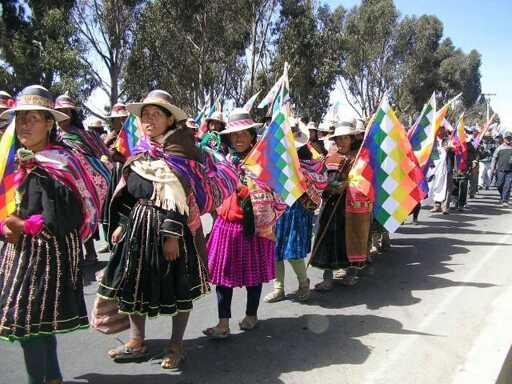
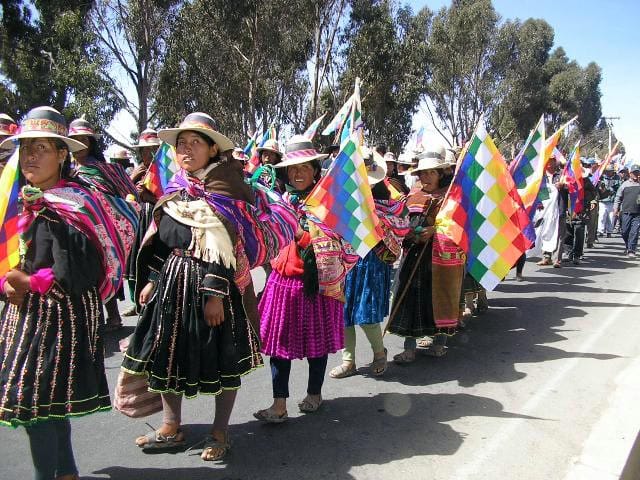
This is Part 3 of a series on US intervention in Bolivia. The story begins long before the cables and the paramilitaries — with a war on an indigenous plant that campesinos had used for medicine, soap, shampoo, tea, and ceremony for three thousand years.
Read the series from the beginning:
Part 1: The Three-Decade Long War You Never Heard About — Reagan’s DEA in the Andes: burning homes, torturing campesinos, destroying the coca economy.
Part 2: Like Water for Capitalists — Bechtel, the Shock Doctrine, and how Bolivia’s water was sold to a US corporation that charged the poor for rain.
On January 18, 2006, four days before Evo Morales was even inaugurated as president, US Ambassador to Bolivia David Greenlee sat down with executives from the major oil companies to discuss their opinions about Bolivia’s first indigenous head of state. The fossil fuel executives were, in Greenlee’s own words, “unanimous about the need for a credible and trustworthy interlocutor in the Hydrocarbon Ministry.” In plain terms: they wanted to install an industry-friendly figure as the minister responsible for regulating their industry, and they communicated their preferences directly to the president-elect.
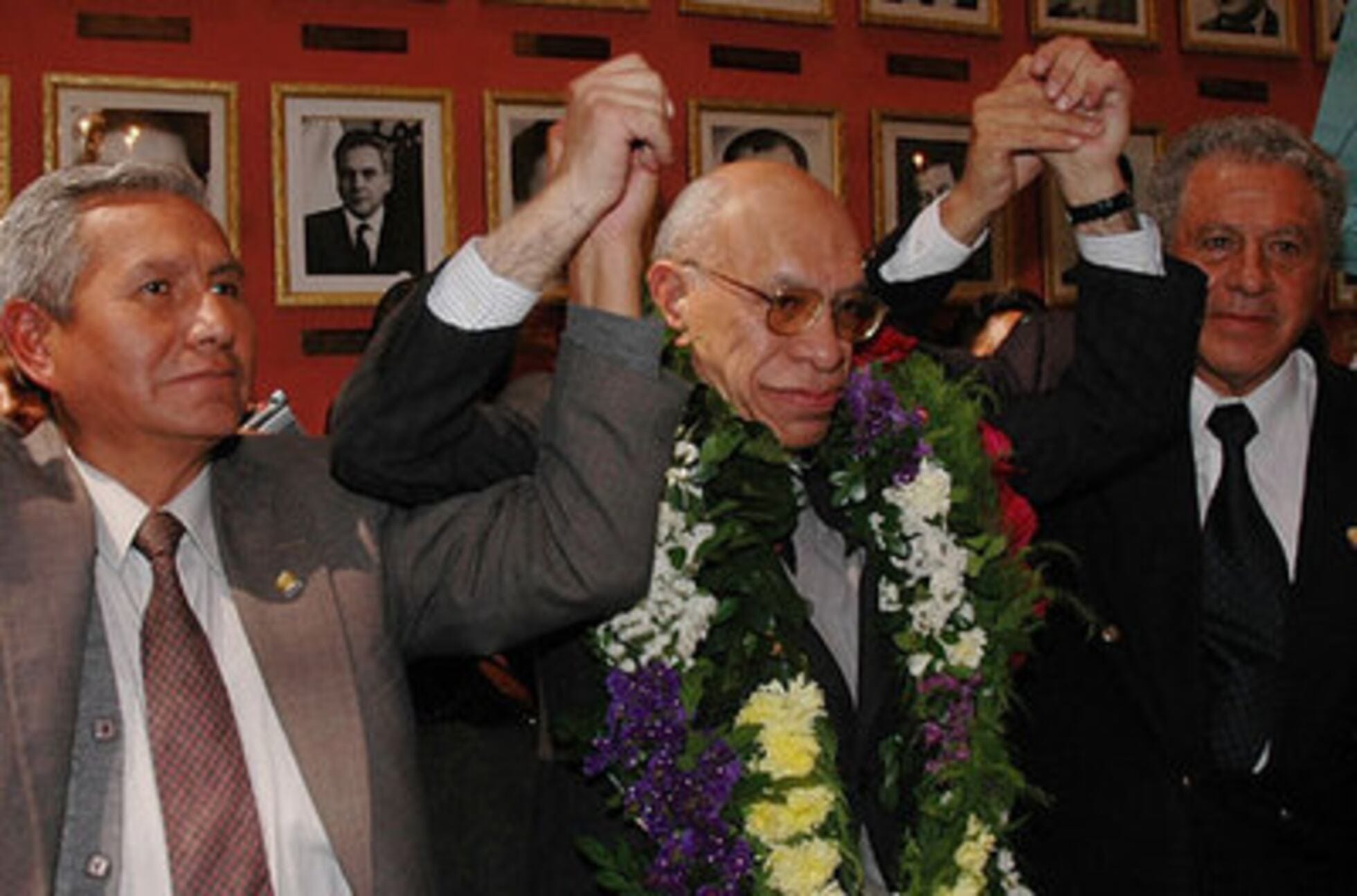
Andres Solis Rada being appointed the Minister for Hydrocarbons
A few days later, Morales made his nomination — and appointed Andres Solis Rada. The ambassador noted, with evident disappointment, that the oil executives had previously declared Solis Rada would be a “disaster” for the fossil fuel industry in Bolivia.
The problem the US government had with Evo Morales wasn’t that he was corrupt. It was that he was incorruptible. With that single appointment, Morales earned his place on the ever-lengthening list of leaders the West has labeled “authoritarian dictators.”
Because the interests of the United States are those of global capital, and the State Department functions as little more than a giant lobbying firm on capital’s behalf, “authoritarian dictator” in Washington’s vocabulary simply means a president who dares to represent his own people. This becomes brutally clear when you read the State Department cables from this period. In the minds of US diplomats, the meaning of democracy had been completely inverted. Genuine democracy — the will of the people becoming the law of the land — was treated as a threat to be managed.
No cable captures this hypocrisy more precisely than one sent by Ambassador Greenlee, titled "Bolivian Democracy Under Threat." According to Greenlee, the two dangerous actions threatening “democracy” were:
- Registering rural voters.
- Giving them identification cards so they could participate in civic life, open bank accounts, and vote in the upcoming Constituent Assembly.
Even Greenlee was forced to concede that, “many point to the government’s 75% approval ratings as evidence that it would win big were elections held today.”
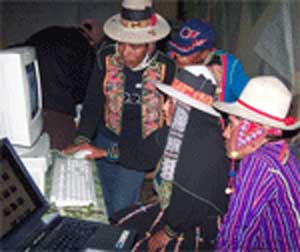
Campesinos getting their Voter Registration Card AKA “Threat to Democracy”
Bolivia is home to more than 36 officially recognized nations and 37 languages, and millions of people who belong to First Nations communities. Despite their numbers, most lived in abject poverty as the land, wealth, and natural resources were concentrated in the hands of the mostly white political elite in the Media Luna — the “half-moon” crescent of eastern lowland departments. This brutal inequality is precisely why Bolivians embraced Morales and his party MAS with such overwhelming force.
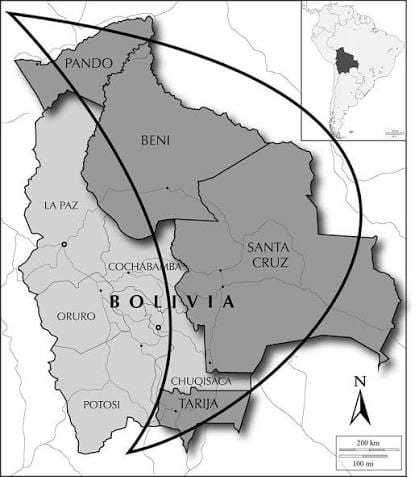
Bolivia’s Media Luna Region
Morales’ own upbringing was illustrative. He once described his childhood in the Andes to a US embassy staffer: there was no potable water, no electricity, no roads leading to the makeshift schools, which only went up to the third grade in most cases. He had personally witnessed DEA agents setting fire to the homes of campesinos and, during Ronald Reagan’s drug war, had seen helicopters killing farmers in the coca-growing regions.
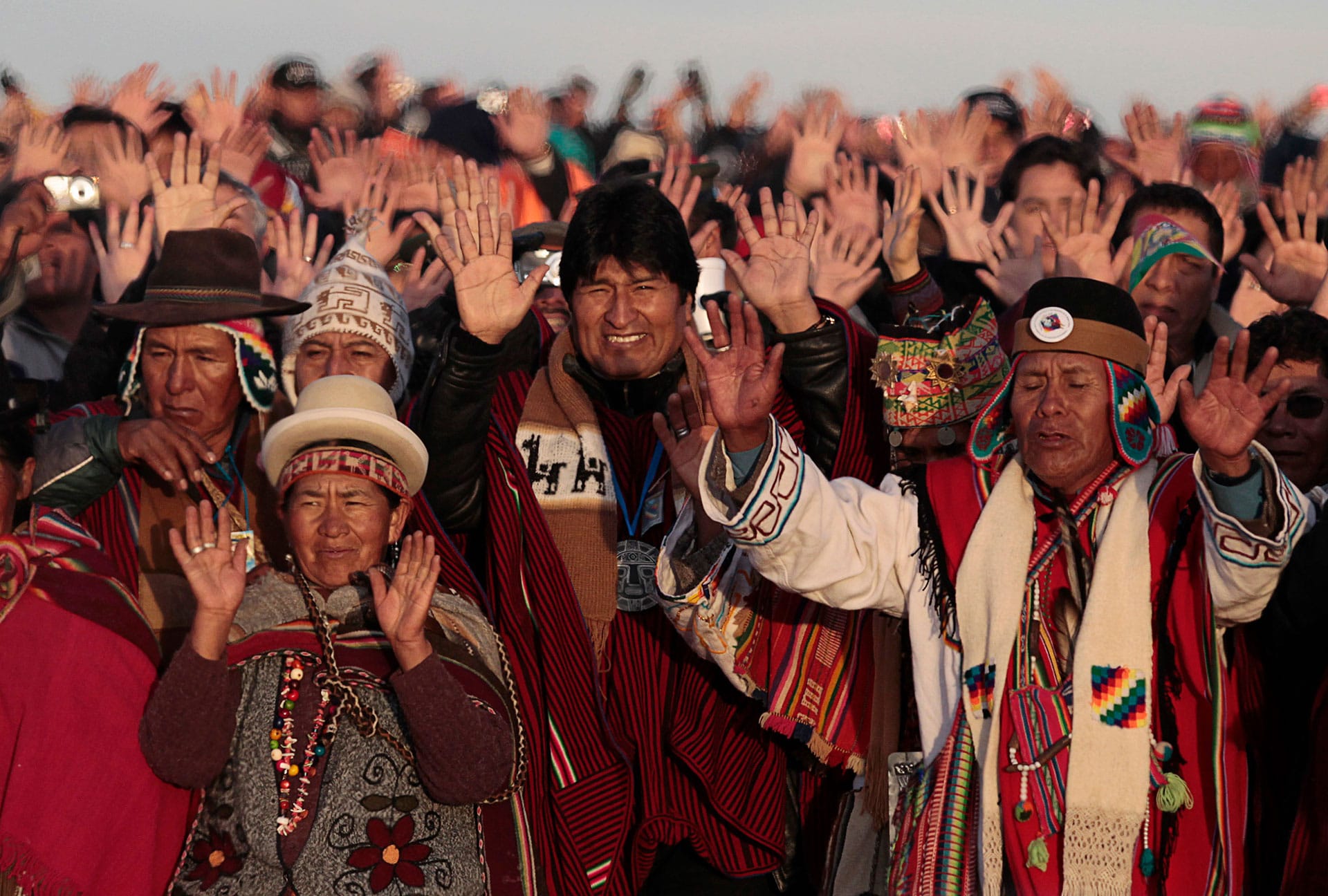
The Indigenous people of Bolivia Celebrating Bolivia’s First President
The contrast with Santa Cruz could not have been starker. By 2005, just 400 individuals owned 70 percent of Bolivia’s productive land. The top 3,500 landowners together controlled more than 20 million hectares, while 2.5 million mostly indigenous people existed in conditions of landlessness and destitution. The Santa Cruz elite understood the danger of real democracy: if the people were truly allowed to decide, they might choose to stop being slaves. That prospect had to be stopped by any means necessary.
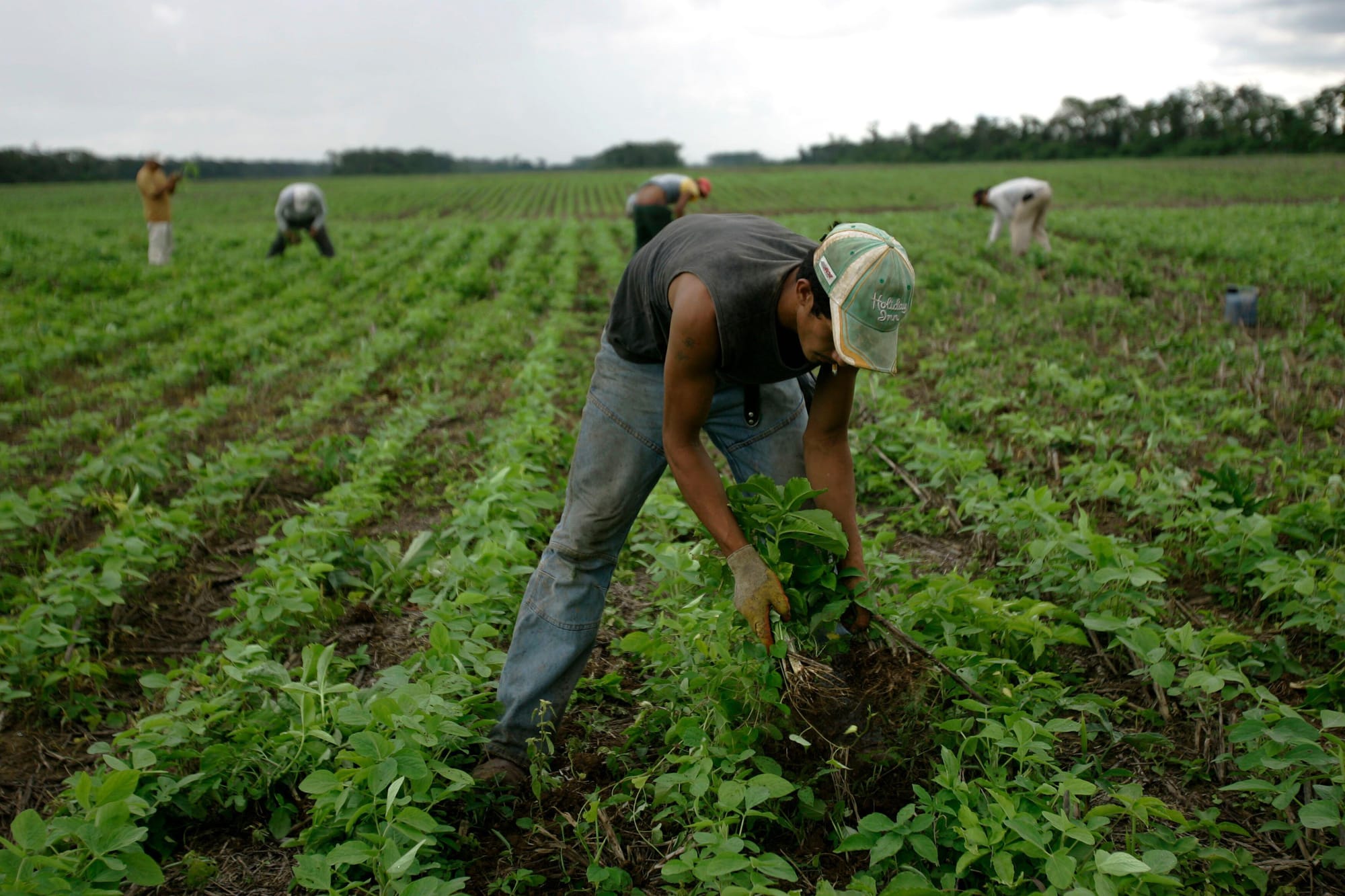
Large Planation Farms in Media Luna Typically Owned by White People and Worked by the Guarani.
Morales moved immediately to give the people that voice. He established a Constituent Assembly — a 255-member independent body elected directly by the people. USAID agents and all members of the existing executive, legislative, and judicial branches were explicitly prohibited from participating in the process. This structure should have addressed every prior World Bank concern about “local corruption” in poor governments. It also laid the groundwork for something genuinely unprecedented: a people’s constitution that would declare Bolivia’s ecology — from the clouds above to the soil underfoot to the minerals buried below — the sovereign right of the Bolivian people, beyond the reach of the Bechtels and the Abengoas and the Aguas del Tunaris and all their corporate consortiums.
Washington’s own cables reveal what they found so threatening about it. In a confidential scenesetter sent days before Morales’ inauguration, the embassy warned of “a Constituent Assembly whose democratic parameters remain undefined.” In other words: a process the people would control entirely — with no outcomes pre-approved by Washington — was, in their framing, a democracy problem.
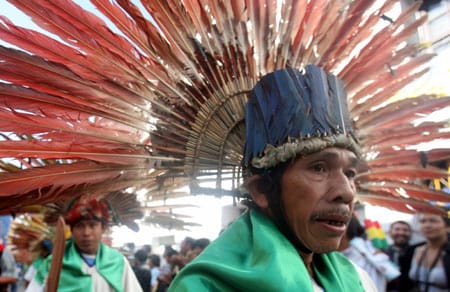
Bolivians Celebrate the inauguration of their first Constituent Assembly
Already alarmed by the Constituent Assembly resolution, the US Embassy and the Bolivian business elite went into full panic mode on May 1, 2006, when Morales nationalized the hydrocarbon industry. The very next day, Ambassador Greenlee sat down with the major oil company executives to “plan a strategy” with the white elites on how to undermine the will of the Bolivian people. What the Bolivian government didn’t fully realize was the scale of what it was up against. A confidential cable sent three days before Morales’ inauguration had already noted that US assistance — the largest bilateral donor in Bolivia by a factor of three — was “often hidden by our use of third parties to dispense aid with U.S. funds.” The embassy intended to keep it that way.
Their first hope was that the opposition in the Media Luna would win enough seats in the upcoming assembly elections to block progress. That plan collapsed in July 2006. MAS swept the vote. An indigenous woman, Silvia Lazarte, was elected president of the Constituent Assembly. On August 6, 2006, the Assembly opened in Sucre — the “white city,” as Bolivians call it, and not because of sugar. MAS held a clear majority but fell short of the two-thirds threshold needed to override obstruction.
The empire’s response was swift and ruthless.
Inside the Assembly, members of the US-backed opposition party Podemos immediately began haggling over every procedural detail. Using a pre-existing parliamentary rule that required two-thirds support for any final constitutional draft, they demanded a two-thirds majority even for basic procedural decisions — including how long each delegate was permitted to speak. For an entire month, they obstructed, delayed, and stalled.
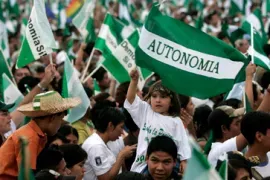
From help from the US Embassy, people in Santa Cruz egging on the "Autonomy’ Campaign
Outside, in the streets of Sucre, right-wing gangs began routinely attacking indigenous delegates on their way to the Assembly. The violence became so severe that many indigenous delegates begged for the entire body to be relocated to another city for their safety.
On September 1, when Lazarte read out the rules of procedure, delegates from Podemos began throwing water bottles at her. Afterward, MAS leader Ramón Loaiza, a Quechua labor organizer, was shoved by opposition members. He was hospitalized with a cerebral hemorrhage, slipped into a coma, and suffered respiratory failure. Meanwhile, the opposition continued to claim they were the ones being silenced — an accusation that US newspapers dutifully transcribed as though it were true.
While indigenous delegates were being beaten in the streets, the US ambassador was meeting privately with agribusiness lobby leaders in the Media Luna. The head of the trade association, Mauricio Rico, told the ambassador plainly that they were “prepared to go to any lengths to protect their land.”
It was around this time that the opposition recognized it could not subvert the assembly process alone. Separatist sentiments began surfacing in their private conversations with the US Embassy. The ambassador initially noted that “Eastern Bolivian opposition figures realize that the Media Luna would not be a viable independent country.” But once it became clear that MAS could not be dislodged through normal political means, Washington changed course. They decided to bring in someone with more specialized experience.
To achieve that goal, they sent in the expert.
In October 2006, Philip Goldberg arrived as the new US Ambassador to Bolivia. Informally, he was known as the “Ambassador of Ethnic Cleansing.” Fresh from engineering the balkanization of Kosovo in Pristina, Goldberg had a long record of involvement in separatist movements. Earlier that year, Bolivian right-wing journalist Leopoldo Vegas had openly written that Goldberg’s experience in the former Yugoslavia — where ethnic conflict followed the country’s violent dissolution — could be applied in Bolivia. Nearly a decade earlier, Goldberg had served as special assistant to Ambassador Richard Holbrooke, the man famous for advocating “bombing for peace” in the Balkans.
Weeks after Goldberg’s arrival, hate crimes against Bolivia’s indigenous population increased tenfold.
The Balkan connection ran deeper still. US embassy staff held frequent meetings with Branko Marinković, the powerful head of the Santa Cruz Civic Committee. Marinković was the son of Croatian immigrants. His family owned vast soy plantations, controlled the influential Banco Económico, and held stakes in the Transredes pipeline.
According to WikiLeaks cables and intelligence files, his family’s background attracted suspicion. One analyst wrote: “I would bet a lot of $$$ that this dude’s parents are 1st gen… and that they were Ustaše (read: Nazi) sympathizers fleeing Tito’s Communists.” Marinković denies this, claiming his parents fought alongside Tito.
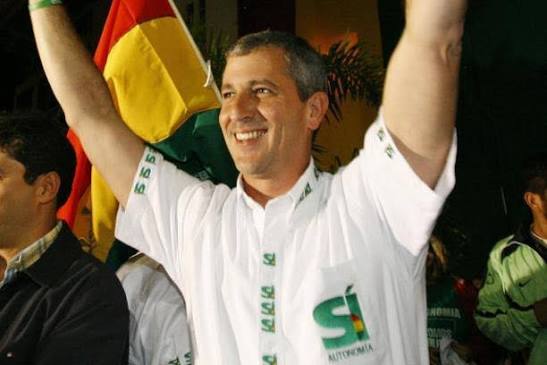
Branco Marinkovic in Santa Cruz
His own biography fits a distinct pattern. Educated at American-linked schools in Santa Cruz, he graduated from the University of Texas in 1991. That same year, he joined the Croatian Defense Forces (HOS) — a far-right paramilitary organization with roots in the Ustasha fascist movement of the 1940s — and fought as a foreign volunteer during the breakup of Yugoslavia. He returned to Bolivia and rose quickly through the ranks of the fascist paramilitary group Unión Juvenil Cruceñista (UJC), whose members have been filmed giving Nazi salutes:
UJC Doing the Nazi Salute
With paramilitary groups like the UJC, the backing of regional business leaders, and sympathetic prefects, the support flowed freely. USAID’s own documents state that the Office of Transition Initiatives provided “support to fledgling regional governments” to the tune of over $4,451,249.
Goldberg soon began making rounds to all the regional prefects who opposed Morales. He visited Potosí, Tarija, Cochabamba, and of course, the US embassy staff were such regular visitors in Santa Cruz they might as well have moved in. During one of these visits, Santa Cruz Prefect Rubén Costas — who became infamous for using a racial slur against Venezuelan President Hugo Chávez — thanked the US delegation for their financial support.
Weapons also flowed into the paramilitary groups. In one cable, the US embassy continued to ship weapons to distinctly “unorthodox” stores in Santa Cruz.
Less than a month after Goldberg’s tour, the regional prefects began aggressively pushing for “autonomy” and separatism. These words concealed a much darker reality. Before the 2007 constitutional changes, prefects were appointed by the president, and they had almost always been white landed elites. A 2004 interview in El Deber documented the kind of debt bondage the Guaraní faced, when farmer Germán Cardosa explained: “I don’t know how much I owe. My boss takes care of all the accounts… I’m always falling behind because he tells me I can pay for my clothing and food with labor. Money never changes hands.”
US Embassy cables confirmed the systematic nature of the abuse: men earned between $1.25 and $1.75 per day, women received half as much, and children and the elderly often worked for nothing. Ranch owners deducted food, shelter, and clothing at inflated prices, trapping entire families in multigenerational debt servitude. Most lacked access to potable water, electricity, schools, or medical care.
As national deputy José Bailaba (MAS, Santa Cruz) put it: “The oligarchs in this department could have used their control of the national government to adopt autonomy, but they didn’t need it when they dominated national institutions. Now they need autonomy to protect their economic privileges — but they can’t just adopt it because they no longer control the government.”
Faced with millions of indigenous people demanding the return of what had been taken from them, the elites lashed out with sustained and organized violence.
The UJC and allied right-wing groups served as the shock troops. They paraded through Santa Cruz with swastikas on their vehicles, painted “Viva Bolivia Libre de Indios” — Long Live Bolivia Free of Indians — across walls and directly onto the streets in broad daylight, burned MAS offices, and attacked indigenous settlements. This was not hidden. Photographs survive of the slogan painted across the middle of a public road, cars driving past it in full daylight. Videos from the period show UJC members bullwhipping Guaraní men in the streets. [INSERT VIDEO] Sacred indigenous religious symbols were routinely desecrated. The group presented themselves as defenders of “Western civilization” against what they called the “indigenous hordes” — language that would not have been out of place in the Croatia of Marinković’s paramilitary youth.
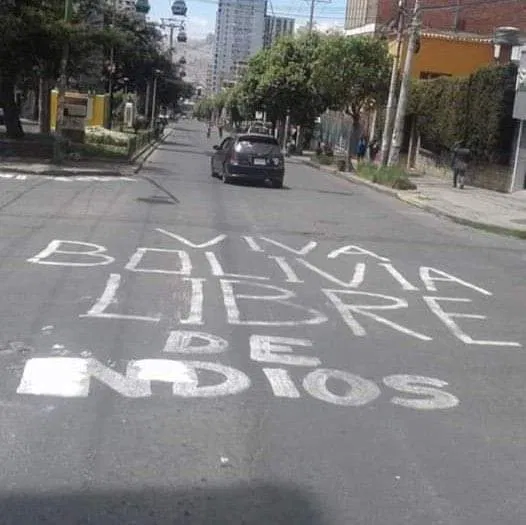
Long Live Bolivia Free from Indians
This racist terror was not concealed. On May 24, 2008 — the 199th anniversary of Bolivian independence — opposition supporters in Sucre staged what can only be described as a planned racist pogrom. When President Morales cancelled a visit to the city following violent protests, the opposition turned their rage on indigenous supporters who had come to celebrate the holiday.
What followed was not spontaneous. By 9:35am, the mob had driven police out of the stadium with a barrage of rocks and insults. The Interinstitutional Committee then entered and negotiated the military’s withdrawal as well, leaving the field deliberately clear. With security forces gone, opposition mobs — largely university students — captured approximately 30 indigenous people and marched them to the Plaza 25 de Mayo, the central square of the city. There, they were beaten, forced to remove their shirts, and made to kneel on the cobblestones. A young student kicked an elderly indigenous man in the mouth as the victim tried to cover his face with his bloodied hands. A mob member produced a lighter and burned the Wiphala — the flag of the Andean indigenous peoples — in front of the kneeling captives, while hurling the racial slur “chola” at them. The hostages were forced to beg forgiveness for supporting MAS, chant anti-Morales slogans, and sing Catholic hymns — a deliberate spiritual humiliation of people whose indigenous beliefs the opposition regarded as subhuman. Among those taken hostage was the elected Mayor of Mojocoya. This degrading spectacle took place in full public view. The mayor of Sucre, whose allies had ordered the security forces to stand down, expressed no remorse.
Racist humiliation of Campesinos in Sucre
Even within formal political spaces, racist violence went unchecked. A US embassy cable documented how Podemos assembly member Fernando Morales physically attacked indigenous leader Adolfo Chávez at Sucre airport, striking him multiple times on camera while hurling racial insults. Ambassador Goldberg privately noted the incident appeared “violently racist” — while continuing to meet with the prefects and civic leaders whose movement produced it.
All of this occurred while the US embassy maintained its cozy relationship with the opposition prefects and business leaders who were funding, arming, and providing political cover for the violence. The street-level terror and the embassy cables were two parts of the same operation.
On August 10, 2008, Bolivians delivered their verdict. In a recall referendum called by the opposition itself — confident they could humiliate Morales — the president won with 67 percent of the vote. His mandate was overwhelming and unambiguous. The people had spoken again, more clearly than ever.
The opposition prefects ignored the result entirely. Within days, Costas, Fernández, and their allies announced they would implement their illegal “autonomy statutes” regardless. On August 19, the Media Luna departments declared strikes and began seizing government buildings and airports. On August 25, Ambassador Goldberg held a private meeting with Santa Cruz governor Costas. He continued making rounds to the other opposition prefects in the days that followed.
On August 28, the UJC attacked a peaceful march of indigenous and working-class supporters in Santa Cruz. Before unleashing the assault — with clubs, whips, and lumber — UJC members delivered their political manifesto in plain language: “We don’t want this race in our territory.” And: “Indians, return to your lands.” One man chased an elderly Guaraní man through the streets and proceeded to whip him.
UJC whipping and beating up a Guarani man
They were standing on Guaraní land. They were the descendants of Croatian and German immigrants. And they were telling the people whose ancestors built Tiwanaku — when Croatia did not exist as a concept — to leave.
On September 10, opposition groups blew up a gas pipeline supplying Brazil from Tarija. That night, Ambassador Goldberg met privately with Leopoldo Fernández, the prefect of Pando.
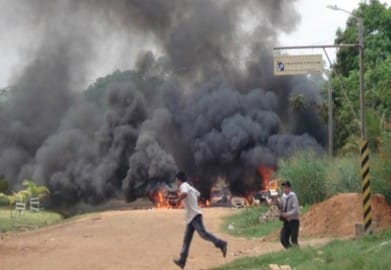
The Opposition Blowing up a gas pipeline
The next morning was September 11, 2008.
A thousand indigenous farmers — men, women, and children — set out that morning in trucks toward Cobija, the capital of Pando department. They were traveling to a union congress — an ampliado — to organize against Prefect Leopoldo Fernández and his allies’ violent seizure of government buildings and airports across the region. They brought their families because that is what rural union members do. They were unarmed. Their weapons were their numbers and their presence.
They never made it to Cobija.
Seven kilometers outside the town of Porvenir, they found the road had been trenched. Road crews working for the prefecture’s SEDCAM road service had dug up the highway during the night, cutting off their route. On the other side of the trench, armed men were waiting.
Eyewitness Roberto Tito later testified: “We were unarmed, contrary to what they said. They stopped us some seven kilometers before Porvenir, and afterwards they attacked us when we reached the bridge, where they ambushed us and began to shoot.”
What followed was not a confrontation. It was a hunt.
Violence before the Porvenir Massacres
The farmers scattered into the surrounding jungle and toward the river. Prefectural forces — riding in vehicles belonging to the Pando prefecture, each truck carrying thirty-odd armed men — pursued them. Snipers positioned in trees fired down into the fleeing crowd without regard for the women and children running among them. Those who reached the river and tried to swim to safety were shot with submachine guns in the water. Some were never found. Bodies were later recovered downstream.
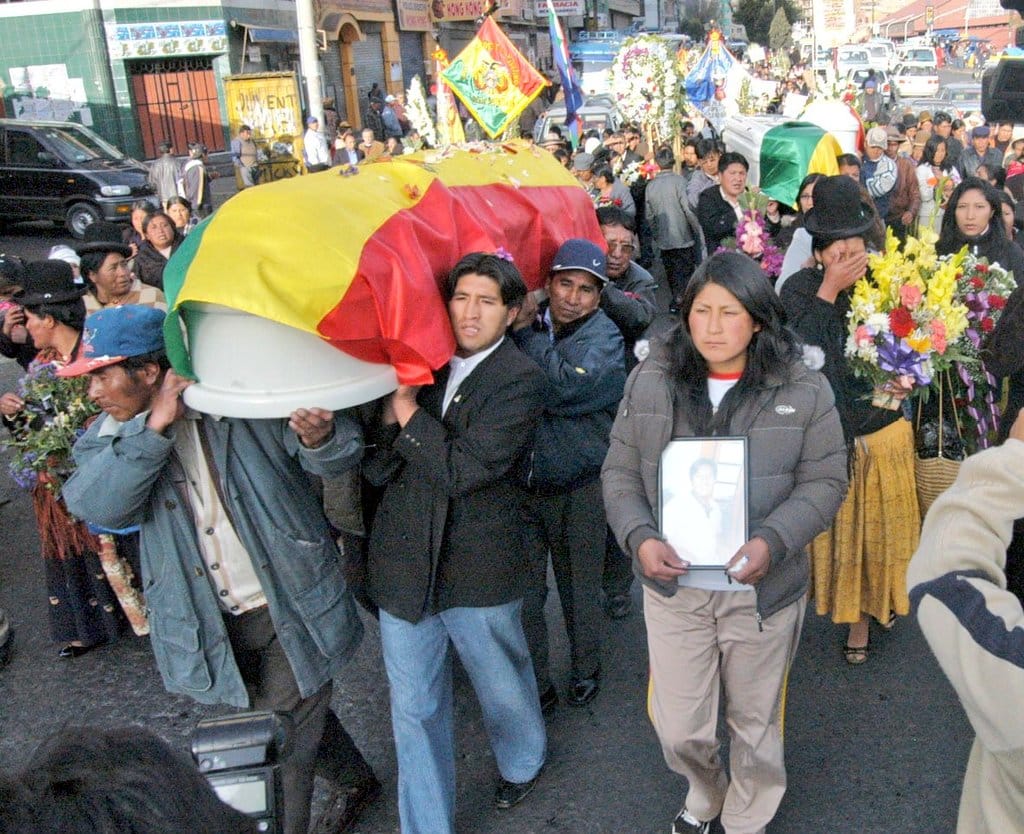
One of the Massacred in Porvenir
Those who were captured were beaten. Some were beaten again in the ambulances carrying them to hospital. The perpetrators were not masked. They were not hiding. They were using official government vehicles, organized under a clear chain of command, directed by Leopoldo Fernández — a man who had been meeting privately with US Ambassador Philip Goldberg the night before.
The death toll has never been definitively established. Bolivian prosecutors confirmed at least 13 dead. UNASUR investigators, who arrived in Pando within days, documented 19 victims and concluded that what happened at Porvenir was a planned massacre — organized under prefectural authority, carried out by paramilitaries and state actors working in coordination, and constituting a crime against humanity. Dozens more were wounded. An unknown number disappeared into the river and the jungle and were never found.
The Morales government declared a state of emergency in Pando. Troops were sent to retake the airport and government buildings seized by the opposition. On September 16, soldiers arrested Leopoldo Fernández in his prefectural office and transported him to La Paz to face charges of terrorism, murder, and crimes against humanity.
Then Morales turned to face the embassy.
Standing before the Bolivian people, Morales declared Philip Goldberg persona non grata. His words were direct: “Without fear of anyone, without fear of the empire, today before you, before the Bolivian people, I declare the ambassador of the United States persona non grata. The ambassador of the United States is conspiring against democracy and wants Bolivia to break apart.”
This was not rhetoric made in anger. It was documented. Goldberg had held private meetings with the opposition governors in the weeks leading up to the massacre. He had met with Santa Cruz governor Costas on August 25. He had toured the other opposition prefects throughout August. He had met with Fernández — the man who organized the ambush at Porvenir — the night before September 11.
The New York Times described Marinković, the Croatian-born paramilitary leader whose movement had just participated in a massacre of indigenous farmers, as someone who had been “cast in a harsh light.”
UNASUR called it a crime against humanity.
Goldberg left Bolivia. He was subsequently appointed by Barack Obama as US Ambassador to the Philippines, and later as Director of National Intelligence. His career suffered no interruption. No accountability followed. The cables documenting his meetings with the men who organized the Porvenir massacre remain in the WikiLeaks archive, available to anyone who wishes to read them.
Leopoldo Fernández spent years in pretrial detention before being convicted in 2021 — thirteen years after the massacre — of homicide and serious injuries. He received a sentence that many survivors and human rights organizations considered inadequate.
The farmers shot in the river at Porvenir are still waiting for something that could be called justice.
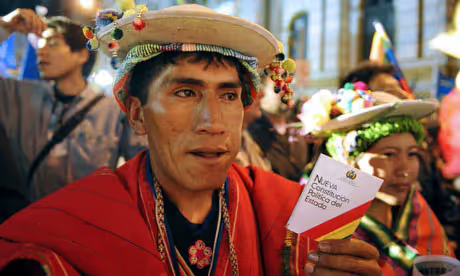
Bolivia’s large Indigenous population looking at the New Constitution before Voting on it.
On January 25, 2009, the people of Bolivia ratified their new constitution with nearly 61 percent approval. After centuries of colonial rule, decades of IMF-imposed structural adjustment, and three years of sustained paramilitary violence, legal obstruction, and US-backed destabilization, Bolivia’s indigenous majority had written their own founding document and voted it into law.
What they produced was nearly unprecedented in world history — not just in its content, but in how it came to exist. The process began at the most local level: villages, indigenous communities, campesino unions, and neighborhood assemblies across Bolivia each held their own meetings and produced their own constitutional proposals. These grassroots drafts were brought to the national Constituent Assembly in Sucre, where delegates synthesized them, adopted provisions with broad community support, and returned revised texts to the communities for further deliberation. Only after this full cycle of bottom-up participation was the final draft put to a national referendum. It was the most genuinely democratic constitutional process in the history of the Americas.
The constitution that emerged declared Bolivia a plurinational state for the first time — formally recognizing its 36 First Nations as co-equal peoples within a single nation. It guaranteed indigenous autonomy, land rights, and the right to be governed by traditional justice systems. It nationalized natural resources and declared them the permanent sovereign property of the Bolivian people. It enshrined the rights of nature — Pachamama, Mother Earth — as justiciable legal rights. It guaranteed free healthcare and education. It banned the privatization of water. The Bechtels and the Abengoas and the Aguas del Tunaris would not be coming back.
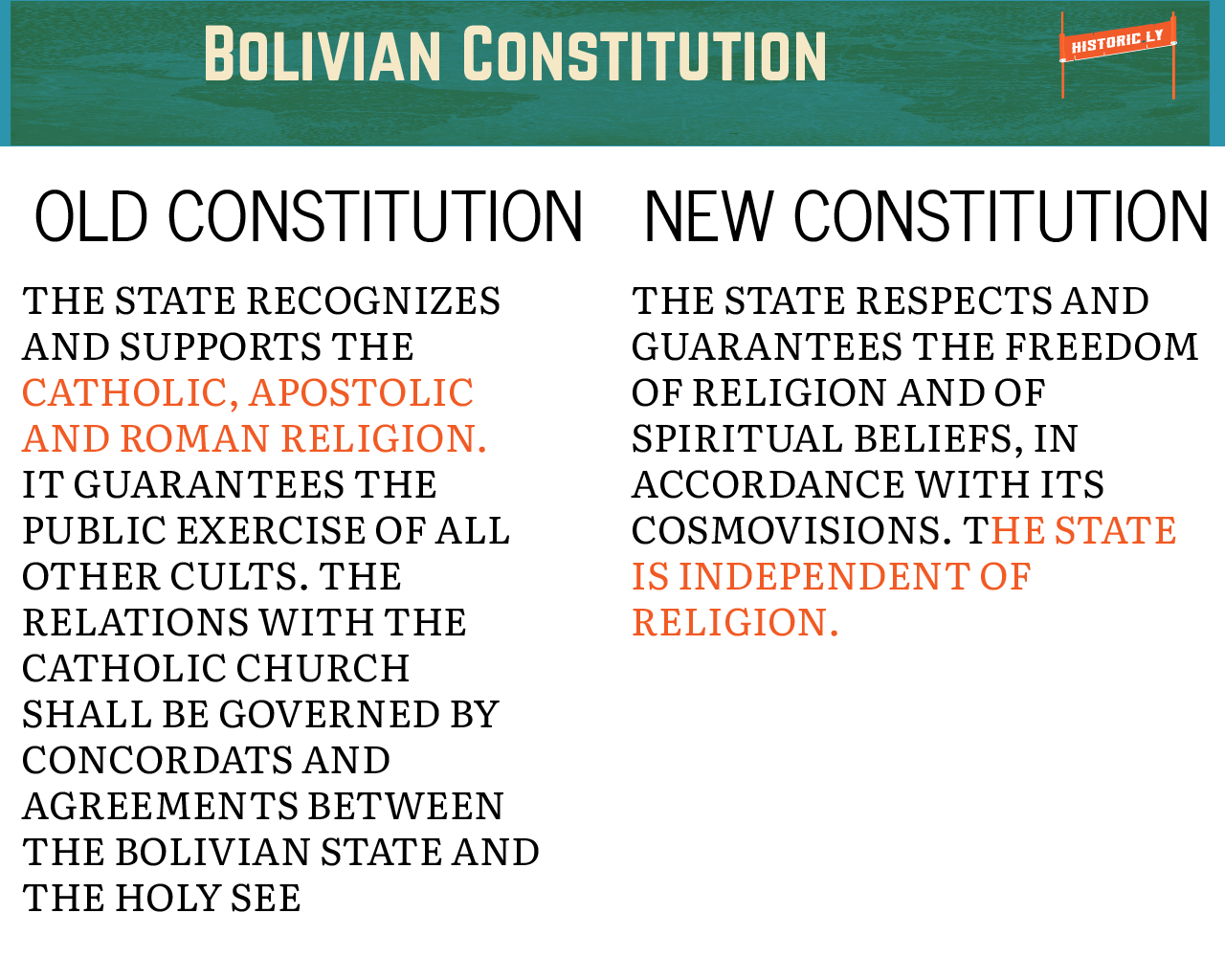
The New Constitution recognizes all the Religions
The fossil fuel executives who had met with Ambassador Greenlee four days before Morales was even inaugurated — demanding effective veto power over his cabinet appointments — had lost. The oil companies whose interests the State Department had faithfully represented had lost. The 400 families who owned 70 percent of Bolivia’s productive land while 2.5 million indigenous people existed in landlessness and destitution had lost. Leopoldo Fernández was in a cell. Philip Goldberg was on a plane. The constitution was law.
For the next decade, Bolivia experienced what the New York Times editorial board would later describe — apparently without irony — as being “propped up by a growing economy and shrinking inequality.” GDP grew from $9 billion to $40 billion. Poverty fell from 60 to 35 percent. Extreme poverty was cut in half. Bolivia went from a nation dependent on IMF loans to a net creditor. An indigenous woman became president of the Senate. Aymara and Quechua became official languages of government. Children in the highlands attended school in buildings with electricity and roofs.
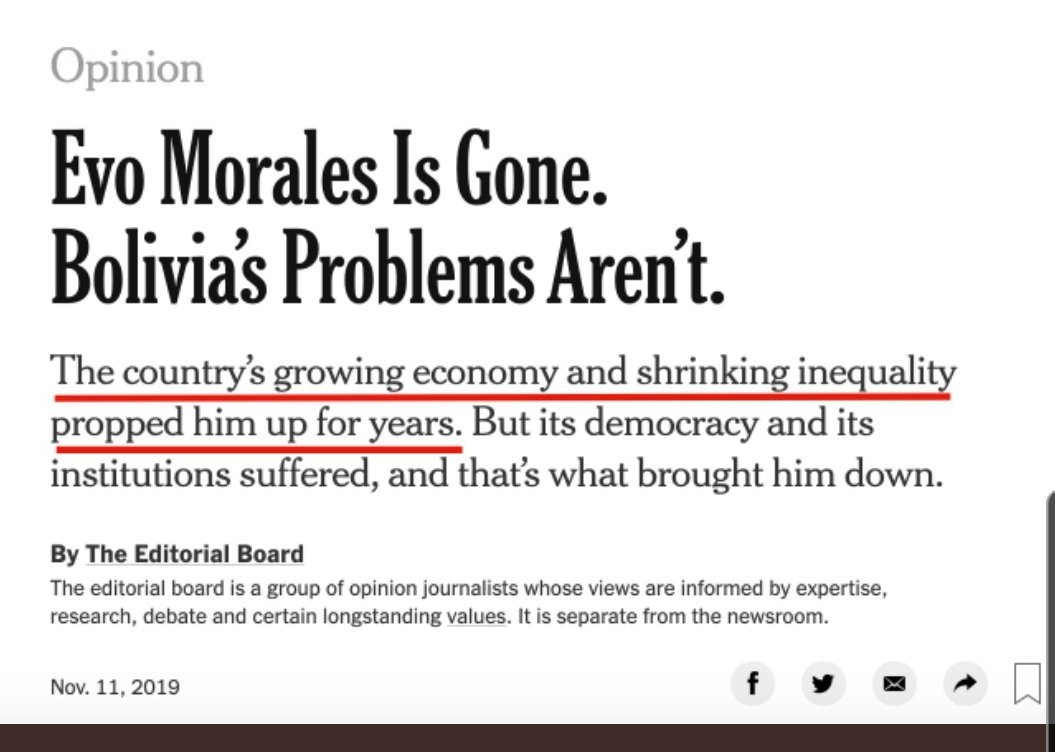
Comical Headline from New York Times
This was the crime. This was what the State Department cables, the paramilitary weapons shipments, the illegal autonomy referendums, the obstruction in the Constituent Assembly, the beatings on the streets of Sucre, the ambush at Porvenir, and the midnight meeting between Ambassador Goldberg and Leopoldo Fernández had all been mobilized to prevent.
They failed in 2009. They tried again in 2019.
On November 10, 2019, Evo Morales resigned under military pressure following a disputed election. The Organization of American States — whose methodology was later challenged by independent statisticians at MIT and the Center for Economic and Policy Research — claimed to have found evidence of fraud. The military, whose commanders had recently received training at US facilities, suggested Morales resign. He did. He fled to Mexico, then Argentina.
The woman who declared herself president in his place, Jeanine Áñez, arrived at the presidential palace carrying a large Bible. She had previously posted on social media that she dreamed of a Bolivia “free of satanic indigenous rites.” Within days of taking power, her security forces massacred protesters in Sacaba and Senkata — mostly indigenous Bolivians demanding the return of their elected government. At least 18 people were killed. The Inter-American Commission on Human Rights documented extrajudicial executions.
The Trump administration immediately recognized Áñez as Bolivia’s legitimate leader. Marco Rubio celebrated. Luis Camacho — the UJC leader whose paramilitary organization had spent thirteen years bullwhipping Guaraní farmers, burning indigenous settlements, and screaming “Indians return to your lands” — gave a victory speech in the presidential palace with a Bible in one hand and a Bolivian flag in the other.
The New York Times described it as the restoration of democracy.
In 2020, MAS won the election with 55 percent of the vote. Luis Arce became president. Áñez was eventually arrested and convicted of terrorism and sedition for her role in the coup. Camacho was arrested in 2022 on terrorism charges related to the same events.In November 2025, a Bolivian court freed Áñez — days before the anniversary of the Sacaba and Senkata massacres.
And then, on May 20, 2026, Marco Rubio posted the following on X:
“Let there be no mistake: the United States stands squarely in support of Bolivia’s legitimate constitutional government. We will not allow criminals and drug traffickers to overthrow democratically elected leaders in our hemisphere.”
This is the same Marco Rubio who celebrated when Jeanine Áñez — who arrived at the presidential palace with a Bible and a tweet about satanic indigenous rites — declared herself president without an election. The same United States government whose ambassador met with the organizers of the Porvenir massacre the night before it happened. The same State Department that, four days before Evo Morales was even inaugurated, was meeting with oil executives to discuss who should be permitted to run Bolivia’s hydrocarbon ministry.
The farmers shot in the river at Porvenir are still waiting for something that could be called justice.
The constitution they died for is still law — but it is under threat once again. Just as they did after the 2019 coup that installed Jeanine Áñez, Bolivians — particularly miners, teachers, indigenous federations, and campesino movements — have taken to the streets in widespread protest and rebellion since May 2026. Road blockades have brought much of the country to a standstill, triggering shortages of fuel, food, and medicine amid a deep economic crisis. The president overseeing all of this is named Rodrigo Paz. Paz, in Spanish, means peace. He has responded with a state of emergency, military deployments to clear protests, and appeals for international backing. The United States has thrown its support behind Paz, framing the unrest as a threat to “democracy” and a supposed coup attempt — the same rhetoric deployed against Morales two decades earlier.
Bolivia’s general strike against neoliberalism:
Workers in the Santa Cruz region have forced police & paramilitary forces to retreat after more than 4 hours of resistance on the highway in San Julián. The barricade blocking the road remains in place for now. pic.twitter.com/zFqoIdSUFw
— Ollie Vargas (@Ollie_Vargas_) June 6, 2026
The farmers shot in the river at Porvenir are still waiting for something that could be called justice.
If you’ve made it this far, and found our article illluminating, please remember we are 100% reader supported. If you think this work matters, throw us a few dollars so we can keep going. The empire certainly isn’t funding us.
Every penny counts.
Source cables:
- Cable 07LAPAZ1949_a
- Cable 06LAPAZ2603_a
- Cable 06LAPAZ2781_a
- Cable 06LAPAZ3056_a
- Cable 06LAPAZ3085_a
- Cable 06LAPAZ3131_a
- Cable 06LAPAZ584_a
From Historic.ly via This RSS Feed.