

Bullets:
The Russian gas industry is under heavy sanction by Western governments.
Nevertheless, high volumes of Russian helium and other energy supplies find their way into global markets, via middlemen in China.
In the opening days of the Persian Gulf War, Iran hit Qatar’s massive Ras Laffan gas complex with drones and missiles, immediately switching off a third of the global supply of helium for up to five years.
Helium distributors are rationing shipments, raising prices, and prioritizing deliveries to hospitals and the highest-margin customers in the tech industry.
Inside China / Business is a reader-supported publication. To receive new posts and support my work, consider becoming a free or paid subscriber.
Report:
Good morning.
The BRICS and Global South countries are re-organizing the trade flows of the world, and thereby working around sanctions from Western governments. And then the War in the Persian Gulf, and the closure of the Strait of Hormuz, have blown up supply chains across the non-BRICS countries.
Today we’re on the helium problem. There are Western sanctions on Russian producers of helium, so markets had to find another way to get it. Chinese firms stepped in and now serve as a conduit for helium gas markets, by buying surplus supplies and exporting them to other countries, including in Europe, who just pay higher prices for Russian helium by transshipping it via Asia first. Russian shipments to China last year were 38 million cubic feet per month on average, which was an increase of over 60% from 2024. Last December, helium exports from Russia to China were more nearly twice that, at 71 million cubic feet.
The demand for Russian energy never went away—Russia is a low-cost producer of almost everything. What the BRICS countries have done is build a trading system that gets around all those Western economic sanctions. The EU has 20 comprehensive sanctions packages targeting Russia.
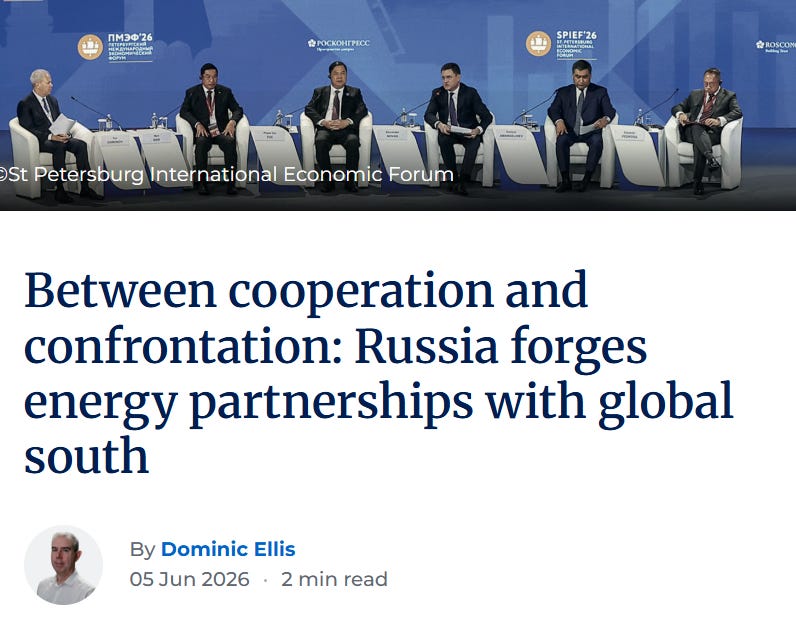
But last month 20,000 delegates from 100 countries showed up in Saint Petersburg, to learn how to do business with Russia using the new financial systems set up in the new economic bloc.
Back to helium. China uses a lot of helium, and last year Qatar supplied over half of China’s total import demand.
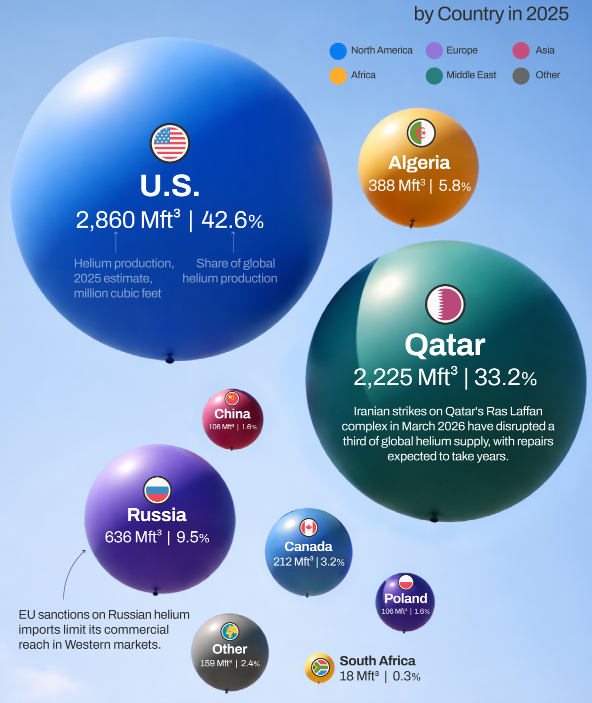
This is a chart of 2025 helium production. The United States supplies over 40% of total production, and Qatar was at over 2 million cubic feet, which was a third of global supply.
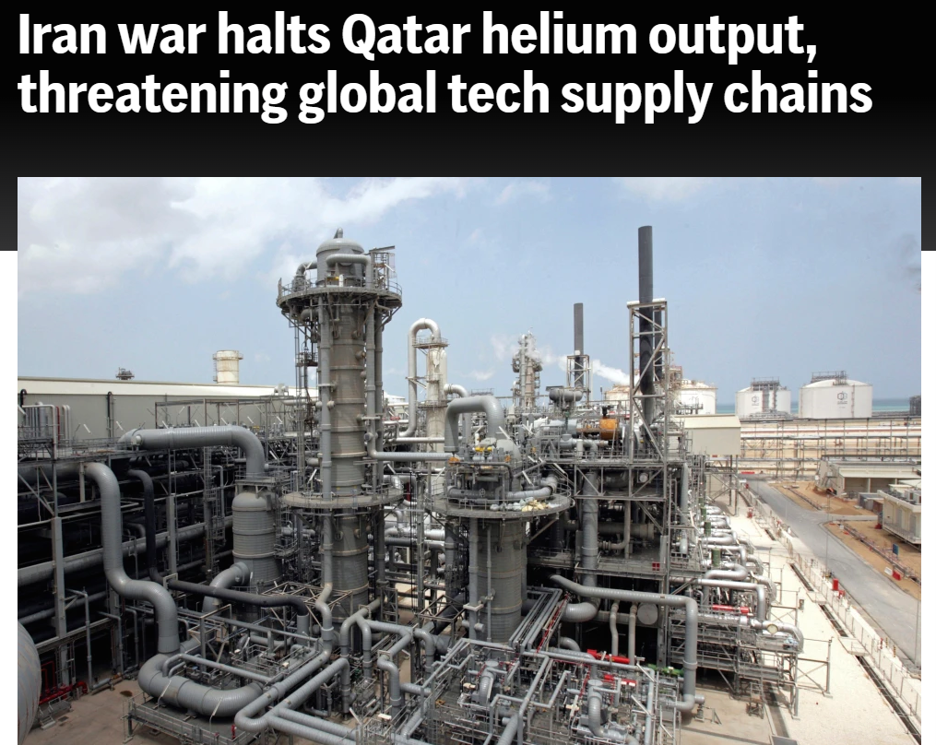
That’s all past tense, because this year, 2026, brought us the War on Iran, and in the opening days of the war Iran hit that refinery, in Qatar, with drones and missiles. Suddenly that one-third of global helium supplies disappeared. And no matter what happens in the so-called peace talks, the helium supply chain out of Qatar is a years-long repair job, and helium distributors urgently began rationing their supplies.
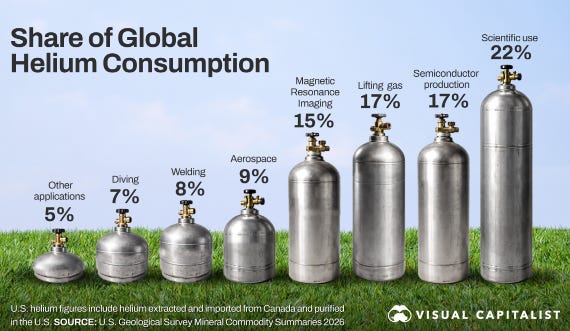
Helium is used across many key industries, and dealers immediately began prioritizing their customers, with healthcare providers on the very top, and everybody everywhere paying higher prices, if they can get the gas at all. Airgas is a US company; its headquarters is in Pennsylvania. And the US produces 42% of the world’s helium supply—and it’s even a lot higher than that now that Qatar is gone—but nevertheless American companies selling American helium to American buyers are cutting down shipments and adding surcharges.
The shortages will last for up to five years, no matter what happens with shipping through the Hormuz. And it’s not a money problem either. Gas turbines for the refrigeration compressors are backlogged by at least 2 years, and only three manufacturers in the world make them.
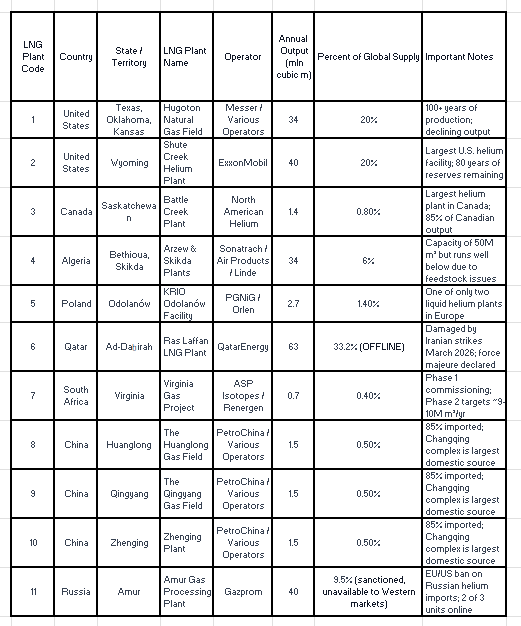
So here’s a table that is helpfully updated to show where the industry is. These are individual helium production facilities, and the top two by volume are in the United States. At #6, the Ras Laffan plant in Qatar is offline, 33% gone out of the market completely. There’s Russia at #11, at about 10% of the market pre-Iran, but those supplies are under sanction and unavailable to everyone who isn’t already working with a Chinese middleman.
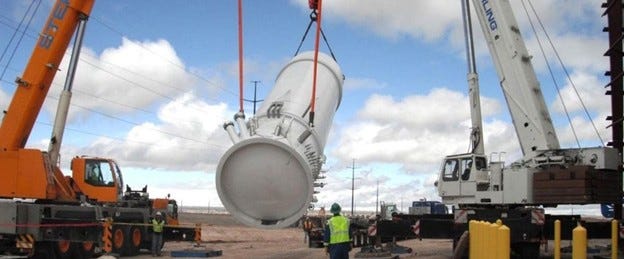
Unlike other gases, and crude oil, which can be stockpiled over years and drained to keep prices artificially low during wartime, helium cannot be. The helium supply chain is wholly reliant on constant production and delivery, and there is another problem with those special super-cooled containers. There are only 2,000 of them in the world, and a lot of them are stuck in the Gulf:
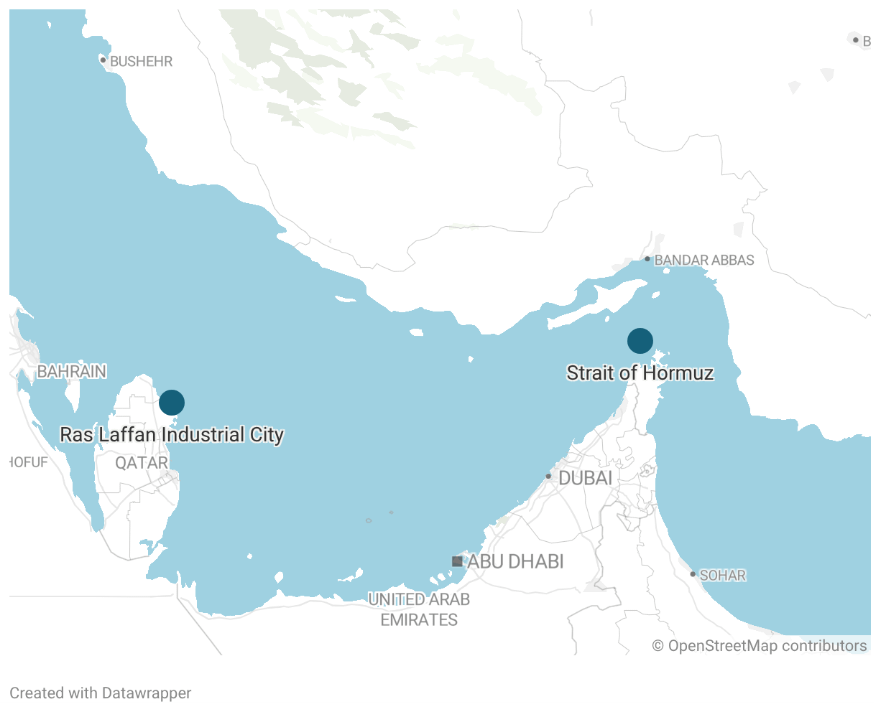
Here is a map that shows the problem faced by the Qataris, and everyone else in the world who needs helium. There is only one way out, many of the helium container ships are stuck, and emergency stockpiles—which are small to begin with because of the chemical nature of helium itself—are almost all gone:
Semiconductor manufacturing is a trillion-dollar industry, but even chipmakers take a back seat to hospitals during a helium shortage. The semiconductor industry is forced to implement “allocation tiers” to prioritize users there. AI server hardware is the most profitable use of helium, so they’re probably first in line.
This is the Bloomberg Intelligence forecast for what is coming next, for the tech industry.
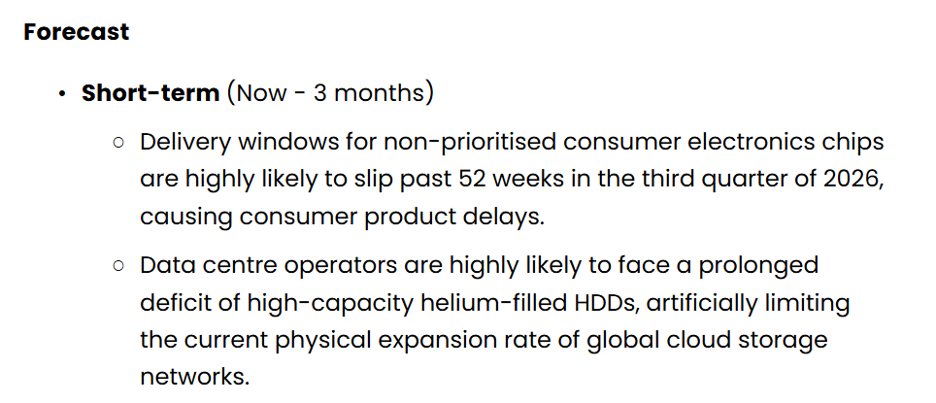
Short term: chipmaking for consumer electronics will be delayed, along with new product releases and shipments. Data Center growth will be limited, because of hits to cloud storage networks. So that’s the good news for summer.
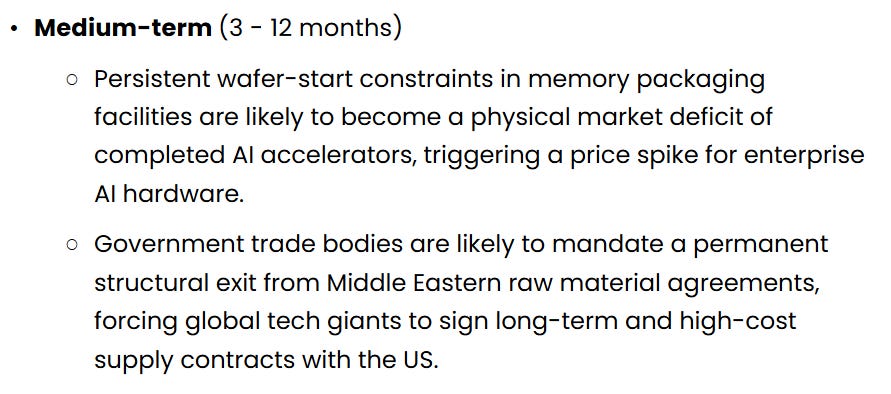
Medium term. Big impacts for wafers, and in memory packaging. Shortages of AI accelerators, and enterprise AI software costs will shoot higher.
Governments “likely to mandate permanent structure exit from Middle Eastern raw material agreements”, which will force companies to sign long-term contracts with American suppliers, at higher cost. And remember that Airgas can’t supply their own customers, right now.
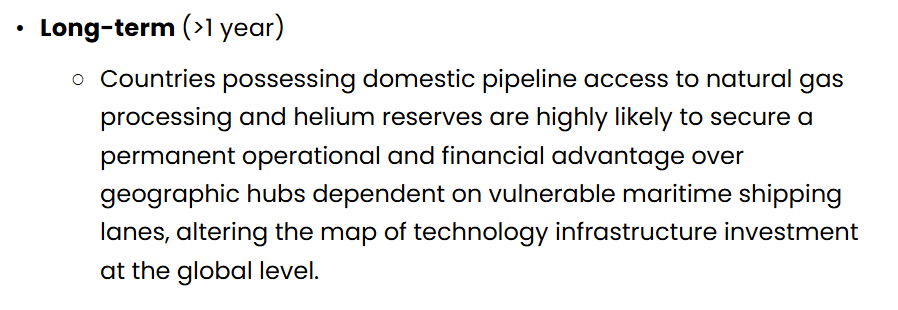
Long term, countries with access to natural gas fields and helium reserves will gain a permanent operational and financial advantage over everyone else.
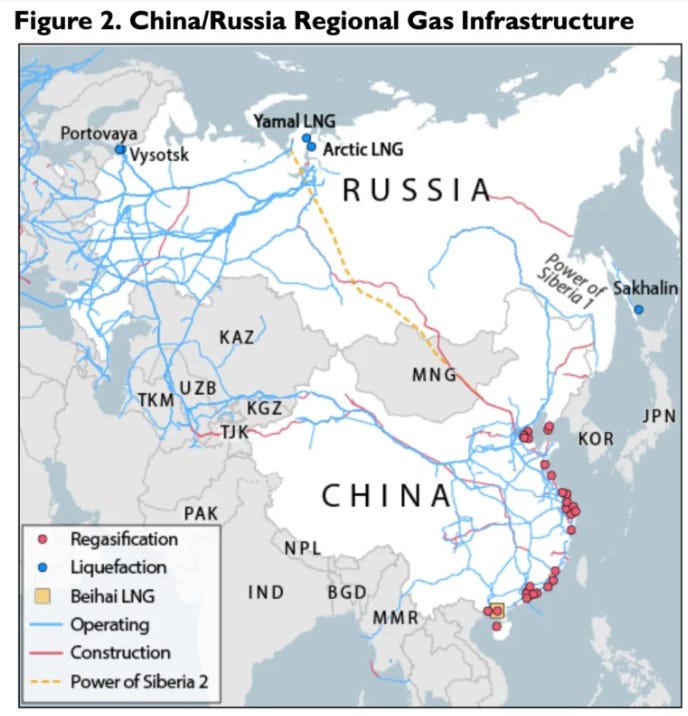
That sounds like Russia. We’re back to them again; they have vast reserves, lots of pipelines, and lots of natural gas. So it’s a boon to Russian helium producers like Gazprom.
Where does that leave everyone else?
Canada sees an opportunity too: Canadian companies produce three percent of global supply, but has large, untapped reserves. Currently Canada exports their helium to the US for processing and liquefaction.
So their idea, now, is to try putting some new policies in place, then drive fresh capital investment into the sector, and then build their own liquefaction industry, and get their fields in Saskatchewan producing three times more helium than they do now. That will create “a secure helium supply chain for Canada” and their allies. Five years from now.
Be good.
Resources and links:
Russian sanctions drive China’s expanding role in helium trade
https://www.gasworld.com/story/russian-sanctions-drive-chinas-expanding-role-in-helium-trade/2252158.article.article.article/
Charted: Helium Production by Country
https://elements.visualcapitalist.com/charted-helium-production-by-country/
2026 Helium Shortage: Why Recovery Will Take Years, Not Weeks
https://westairgases.com/blog/helium-shortage/
The Iran war has spiked helium prices. Here’s which products and industries could get more expensive.
https://www.businessinsider.com/helium-prices-iran-war-increase-products-industries-more-expensive-2026-4
Cloud data storage impacted by helium supply shock
https://www.gasworld.com/story/cloud-data-storage-impacted-by-helium-supply-shock/2251688.article.article/
Iran war squeezes critical supplies and global alliances
https://www.gisreportsonline.com/r/iran-war-strains/
Helium Supply Shock and Semiconductor Volatility in the Context of the Iran War
https://bisi.org.uk/reports/helium-supply-shock-and-semiconductor-volatility-in-the-context-of-the-iran-war
‘There’s a global supply crisis’: Helium shortage prompts call for more Canadian production
https://www.ctvnews.ca/ottawa/article/theres-a-global-supply-crisis-helium-shortage-prompts-call-for-more-canadian-production/
The Increasing Scarcity of Helium
https://priceonomics.com/the-increasing-scarcity-of-helium/ helium reserve shut down
Russian govt brings in temporary authorization procedure for helium exports until end of 2027 - document
https://interfax.com/newsroom/top-stories/117116/
Helium prices soar as Qatar LNG halt exposes fragile supply chain
https://www.reuters.com/business/energy/helium-prices-soar-qatar-lng-halt-exposes-fragile-supply-chain-2026-03-12/
Iran attacks wipe out 17% of Qatar’s LNG capacity for up to five years, QatarEnergy CEO says
https://www.reuters.com/business/energy/iran-attack-damage-wipes-out-17-qatars-lng-capacity-three-five-years-qatarenergy-2026-03-19/
Iran war halts Qatar helium output, threatening global tech supply chains
https://apnews.com/article/iran-chips-semiconductor-helium-exports-war-fe934332f7c83bb722ca87db22cd57d0
Iranian Strikes Limit Supply of Gas for MRI Machines, AI Chips
https://www.bloomberg.com/news/articles/2026-03-24/airgas-curtails-helium-orders-after-qatar-lng-field-damaged
Russian gas exports to China expand as pipelines and LNG reshape supply routes
https://globallnghub.com/report-presentation/russian-gas-exports-to-china-expand-as-pipelines-and-lng-reshape-supply-routes
Inside China / Business is a reader-supported publication. To receive new posts and support my work, consider becoming a free or paid subscriber.
From Inside China / Business via This RSS Feed.