

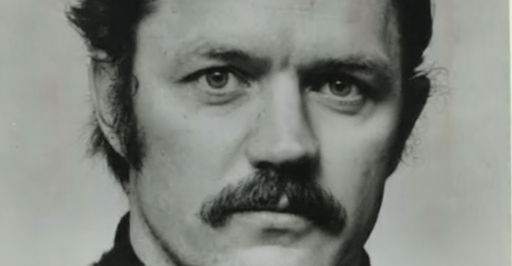
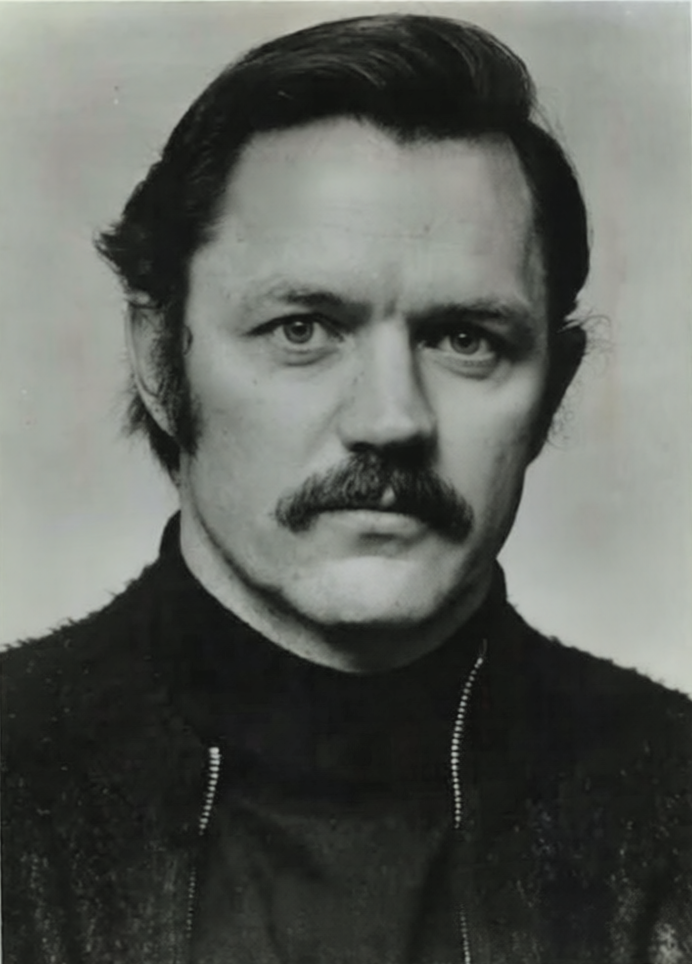
John Stockwell after he came out as a CIA critic.
CIA whistleblower John Stockwell died this month in Texas at the age of 88. Few people have had as much impact on FAIR and our determination to bring to light the underreported realities of US foreign policy.
Stockwell joined the CIA in 1964, and in the course of his career was chief of base in the breakaway Katanga province of Zaire (now the Democratic Republic of the Congo), the officer in charge of Vietnam’s Tay Ninh province (the area between Saigon and Cambodia), and chief of the Angola task force, running the secret war against that country’s first post-colonial government.
In each battle zone, he witnessed brutal mass killing by US proxies, and saw that the CIA’s bloody projects were invariably defended by institutionalized lying. In 1987, he summed up his assessment of the agency’s purpose:
It is the function, I suggest, of the CIA, with its 50 destabilization programs going around the world today, to keep the world unstable, and to propagandize the American people to hate, so we will let the establishment spend any amount of money on arms.
In 1977, after 13 years of firsthand experience in America’s secret wars, Stockwell quit, thoroughly disgusted with the agency where he had spent most of his adult life. “I decided that the American people needed to know what we’d done in Angola, what we’d done in Vietnam,” he later said.
He spent five days testifying before Congress; he wrote a book, In Search of Enemies, which the CIA successfully sued him over for not submitting to agency censorship; and he went on the college lecture circuit.
Those lectures had a profound impact on Jeff Cohen, who would later found FAIR. “His lectures were as powerful as any I ever heard—as he would tally up the millions of innocent people killed by US wars and CIA operations,” Jeff wrote.
In the ’80s, I accompanied him around Southern Cal, where 1,500 people would pack into a college auditorium to hear him, sometimes in hushed silence, sometimes in tears.
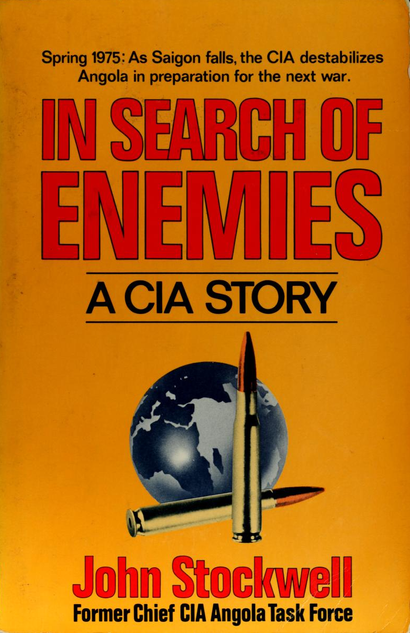
The CIA gets 65 cents for every copy sold of John Stockwell’s In Search of Enemies (New York Times, 6/25/26).
I was one of those students—not in Southern California, but in the Bay Area, where the Central America solidarity group I was part of brought Stockwell to speak on campus. The entire speech was riveting, but what most struck me was his discussion of the Indonesian genocide of 1965. There’s a similar passage in a speech Stockwell gave later, whose transcript he posted on his website:
The Indonesian covert action of 1965 [was] reported by Ralph McGehee, who was in that area division, and had documents on his desk, in his custody, about that operation. He said that one of the documents concluded that this was a model operation that should be copied elsewhere in the world. Not only did it eliminate the effective Communist Party (Indonesian Communist Party), it also eliminated the entire segment of the population that tended to support the Communist Party—the ethnic Chinese, Indonesian Chinese. And the CIA’s report put the number of dead at 800,000 killed.
I remember thinking: I’d been reading the news avidly since I was in junior high. I was most of the way through a political science degree at an elite university, with a focus on international relations. Not only had I never heard that the CIA participated in the genocide, I had never heard of the genocide. Why didn’t I know about this? What is wrong with our media systems that a crime of this magnitude could be disappeared?
That’s a question I’ve spent nearly my entire career trying to answer. (I have learned that the Indonesian genocide, so assiduously forgotten by the media, was celebrated by media in real time, particularly by the New York Times—Extra!, 7–8/90; FAIR.org, 10/18/17.)
After inspiring Jeff to found FAIR—and me to later join it—Stockwell helped get the fledgling organization off the ground. “He was on FAIR’s advisory board,” Jeff noted, “and spoke at FAIR’s big 1988 conference on ‘The Media and US Foreign Policy.’”
Media criticism had been part of John Stockwell’s standard talk for years. Here’s how he put it in 1987:
In television, you get capsules of news that someone else puts together, what they want you to hear about the news. In newspapers, you get what the editors select to put in the newspaper. If you want to know about the world and understand, to educate yourself, you have to get out and dig, dig up books and articles for yourself. Read, and find out for yourselves.
From FAIR via This RSS Feed.