

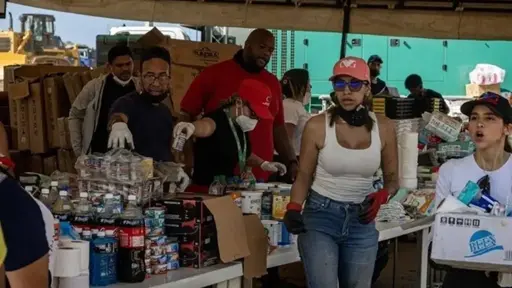
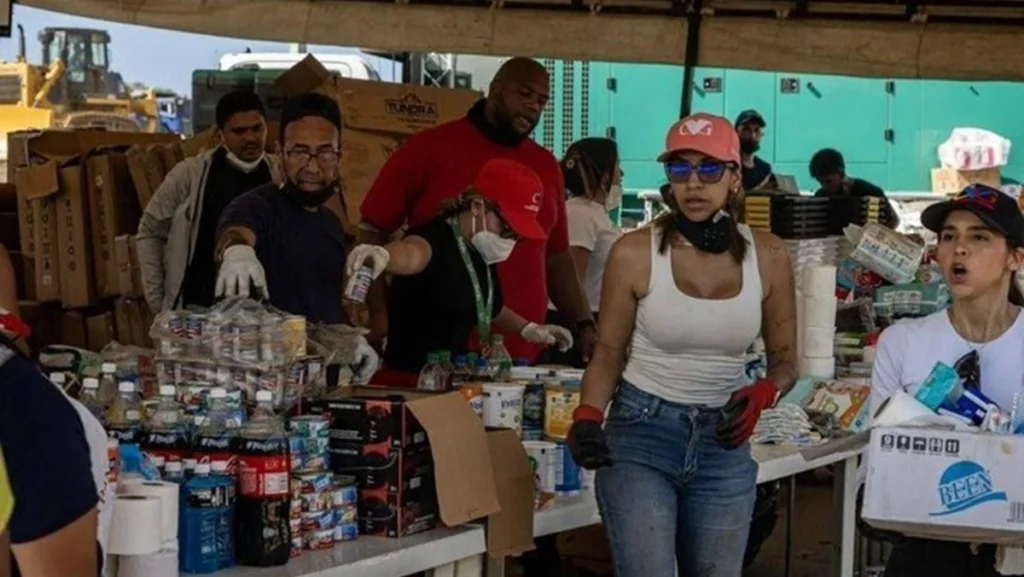
In the face of adversity, Venezuelans demonstrated once again the strength of their solidarity.
For 66-year-old Carlos Guerrero, the earthquakes caught him completely by surprise during his usual routine. He had already sold all his coffee outside the Propatria Metro station and returned home.
RELATED:
Animal Rescue Efforts Expand Across Venezuela After Twin Earthquakes
As always, his animals were waiting anxiously behind the door. Then, at 6:05 p.m. on Wednesday, June 24, the ground roared twice, leaving Venezuela suspended between the thunderous noise and fear.
Carlos had barely arrived home from work when the two earthquakes shook Caracas and La Guaira. For decades, he has survived by selling coffee and small sweets outside the metro station of an area where the seismic doublets caused several residential buildings to collapse in just minutes. His building resisted, but inside his room, he believed his life was coming to an end.
I thought we were going to die, that the walls of the room where we live were going to collapse on top of us,” he tells this reporter.
He didn’t look for money, documents, or clothes. His first reaction was to grab Brenda, his parrot; Diana and Flan, his two dogs; and Ursula, the black cat that completed the family. He rushed down narrow stairs while dozens of neighbors tried to escape with the few belongings they managed to rescue. His only fear was not making it out in time to save those who represent a lifetime. “My most precious treasure is them.”
#InPictures | The rescue team from Jordan is working with heavy machinery and manpower to clear debris and find survivors following last Wednesday’s earthquakes in Venezuela.#Venezuela #Jordan #VenezuelaEarthquake #WeStandWithVenezuela #teleSUREnglish pic.twitter.com/XaAHmsXIvU
— teleSUR English (@telesurenglish) June 30, 2026
Hours later, he appeared on a livestream from a park where thousands of families were spending the night out of fear of aftershocks. The image went viral across social media: Brenda sitting motionless on his shoulder, Flan—a disabled pug—resting by his side, Diana exploring the grass, and Úrsula cradled safely in his arms. Amidst the disaster, that scene served as a reminder that even in the deepest tragedies, there is still room for tenderness.
But Carlos didn’t turn his pain into self-promotion. With more than 120,000 followers on TikTok, he used the reach of his virality to direct everyone’s attention toward those who needed it most:
“Thank you for so much love and support, because I truly do need it. But what I really ask of you is to help the people of La Guaira, to take everything you can to the collection centers. We must have the courage to accept what happened. We need to have a lot of strength.”
While authorities were trying to gauge the scale of the emergency, another response was already organizing itself from the ground up. Keidris Mejías didn’t wait for instructions. As soon as the earthquake ended, she took a bus from Barquisimeto to Caracas. Upon arrival, she hopped onto a motorcycle taxi heading toward La Guaira. There was no pause, no rest, and no second-guessing.
The young man driving the motorcycle, known on social media as Fransua, had also made a decision: to provide free rides to transport volunteers and people who needed to reach the disaster zone.
Together, they pushed forward along cracked highways, weaving through heavy machinery, endless columns of motorcycles, and private vehicles loaded with water, mattresses, food, and medicine.
The wave of solidarity was so massive that the access roads to La Guaira ended up completely gridlocked—not out of fear, but because of the sheer volume of people determined to help.
Mexico’s Head Coach, Javier Aguirre, speaks out and sends a message of solidarity to the Venezuelan people.#Venezuela #Mexico #VenezuelaEarthquake #WeStandWithVenezuela #teleSUREnglish pic.twitter.com/qOVBy3jREx
— teleSUR English (@telesurenglish) June 30, 2026
When there was no longer any room to move forward by motorcycle, Keidris got off and continued on foot through the rubble. She is a contemporary dancer, but that day she left the stage behind to offer her services as a volunteer paramedic. She would go, she said, wherever the screams indicated that someone was still waiting to be found.
Before saying goodbye, the motorcycle taxi driver asked her to write a few words in a notebook. With a steady hand, she left a simple phrase, almost like a message to herself:
“There are circumstances in life that we do not plan. But… we always have hope that everything will work out for the best.”
Amid the tragedy, four-legged heroes also emerged. One of them is named Tsunami. She is a nine-year-old Border Collie trained to locate people trapped under rubble.
During the emergency, she has participated in the rescue of more than 300 survivors. Her story is deeply moving because, before becoming a rescue dog, she was a victim of abandonment and abuse. Someone decided to give her a second chance. Today, that second chance is multiplied into hundreds of lives found.
Tsunami does not work alone. Dozens of specialized dogs continue to search through collapsed buildings, even though more than a hundred hours have passed since the first tremor. Every bark, every signal, and every scratch of the paws keeps alive a hope that refuses to die.
The Unofficial Registry of Kindness
Great tragedies are usually measured in figures: fatalities, injuries, and destroyed homes. But there is another tally that rarely appears on official balance sheets: The count of those who open their homes to strangers. Those who drive for free for hours. Those who donate a spare mattress. Those who turn their social media platforms into a bridge to mobilize aid. Those who, without a uniform or recognition, hold a country together when everything seems to be falling apart.
Carlos, Keidris, and Tsunami are just three names among thousands. Because when the earth stopped shaking, another force began to move across Venezuela: the force of a society that understood that, in the absence of certainties, solidarity always remains. And that, in the darkest hours, there is a truth that echoes once more among the rubble: the people save the people.
Medical personnel from India have deployed a fully equipped mobile hospital in the La Rinconada sector of Caracas.
The field hospital provides immediate medical and dental care, along with telemedicine services, to those affected by the powerful earthquakes that struck Venezuela… pic.twitter.com/ZbbkOgwtD8
— teleSUR English (@telesurenglish) June 30, 2026
teleSUR/ Alejandra Garcia
Source: teleSUR
From teleSUR English via This RSS Feed.