

The Communist Party of China marks its 105th anniversary on July 1, more than a century after its founding in 1921 in Shanghai, amid a historical process of transformation that has taken China from a country marked by political instability and structural poverty to one of the world’s leading global economies in the 21st century.
According to a report from the Organization Department of the CPC Central Committee, the Party had 101.29 million members at the end of 2025, following an increase of 1.01 million members in one year.
The organization also reached 5.43 million grassroots organizations, spread across different administrative levels, public institutions, and social sectors.
The Party’s internal composition reflects its broad presence across Chinese society.
Women account for around 31.5% of total membership, while members from ethnic minority groups make up 7.8%, equivalent to approximately 7.88 million people. In addition, more than 12 million Party members are aged 30 or under, indicating an ongoing generational renewal within its structure.
Founded in 1921, the CPC emerged in a context of deep political fragmentation and social instability and, throughout the 20th century, played a central role in the unification of the country and the establishment of the institutions of the People’s Republic of China, proclaimed in 1949.
In recent decades, particularly since the economic reforms launched in the late 1970s, China has undergone profound economic and social transformations, marked by rapid industrialization, accelerated urbanization, and significant poverty reduction.
This process has been closely linked to the state’s capacity for long-term planning and institutional coordination under the leadership of the Party.
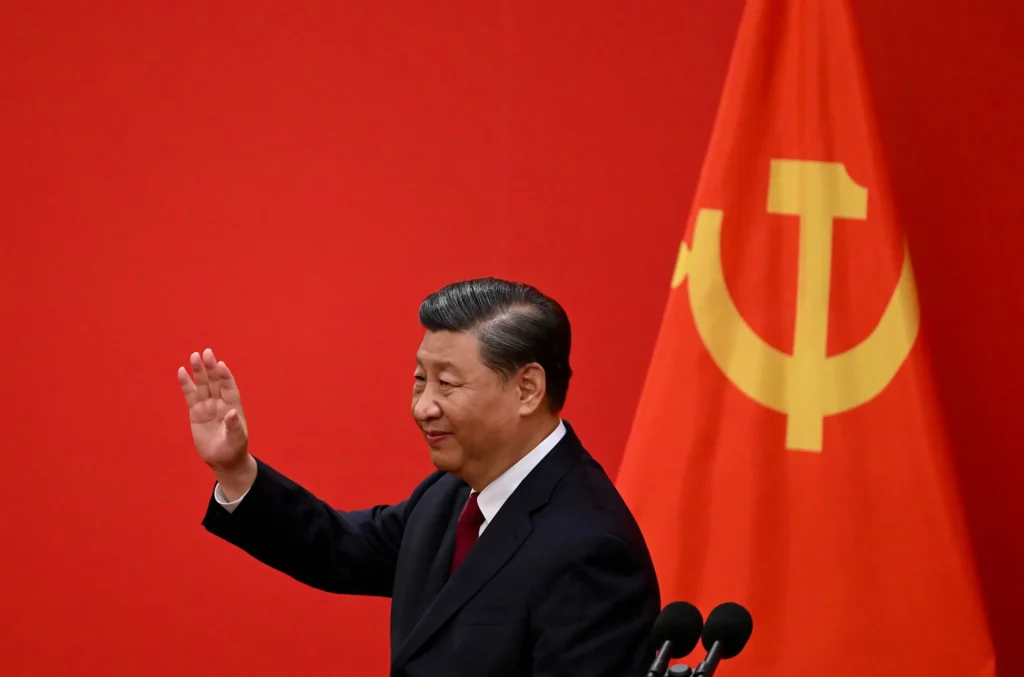
President Xi Jinping leads central ceremony marking the CPC’s 105th anniversary in Beijing
General Secretary of the Communist Party of China and President of the country, Xi Jinping, is leading the central ceremony marking the Party’s 105th anniversary in Beijing.
The event will be held at the Great Hall of the People, the country’s main venue for major political and state ceremonies, where the Party holds its most important national gatherings.
According to the official schedule, the ceremony will begin at 10:00 a.m. on July 1 and will include the presentation of the “July 1 Medal,” the Party’s highest honor, awarded to exemplary members, leading cadres, and grassroots organizations recognized for their performance.
A ceremony was held in Beijing marking the 105th anniversary of the founding of the Communist Party of CHINA.
A cultural event themed “People First” was held at the Great Hall of the People in the capital Beijing, attended by senior Party and state leaders, led by Chinese… pic.twitter.com/5x9TUNDjVC
— China pulse
(@Eng_china5) June 30, 2026
Xi Jinping is also expected to deliver a strategic policy speech, outlining priorities for the Party’s next development cycle, including modernization, institutional strengthening, and the consolidation of China’s development model in the so-called “New Era.”
In addition, Party members, workers, and grassroots organizations from across the country will be honored in a ceremony that highlights the CPC’s nationwide organizational capacity and mobilization structure.
The celebrations come a few years after the Party’s centenary in 2021, when the Chinese government reinforced the historical narrative of continuity linking its founding in 1921, the 1949 revolution, and the current phase of institutional consolidation under Xi Jinping’s leadership.
In this context, the CPC maintains its position as the central core of China’s political system, coordinating state decision-making, economic planning, and long-term strategic direction more than a century after its founding in Shanghai.
The Communist Party of China: resistance, liberation, reconstruction, and national rise
Founded on July 1, 1921, in Shanghai, the Communist Party of China emerged in a period of political fragmentation, territorial division, and strong foreign influence in the country.
Inspired by Marxism and the revolutionary transformations of the early 20th century, the Party began organizing among urban workers and peasants in opposition to the Nationalist Kuomintang government.
In its early years, the CPC faced severe repression, which led to the consolidation of its rural-based strategy and the development of grassroots revolutionary bases.
This process was accompanied by the formulation of the concept of the “encirclement of the cities from the countryside,” which became one of the central strategies of the Chinese revolution.
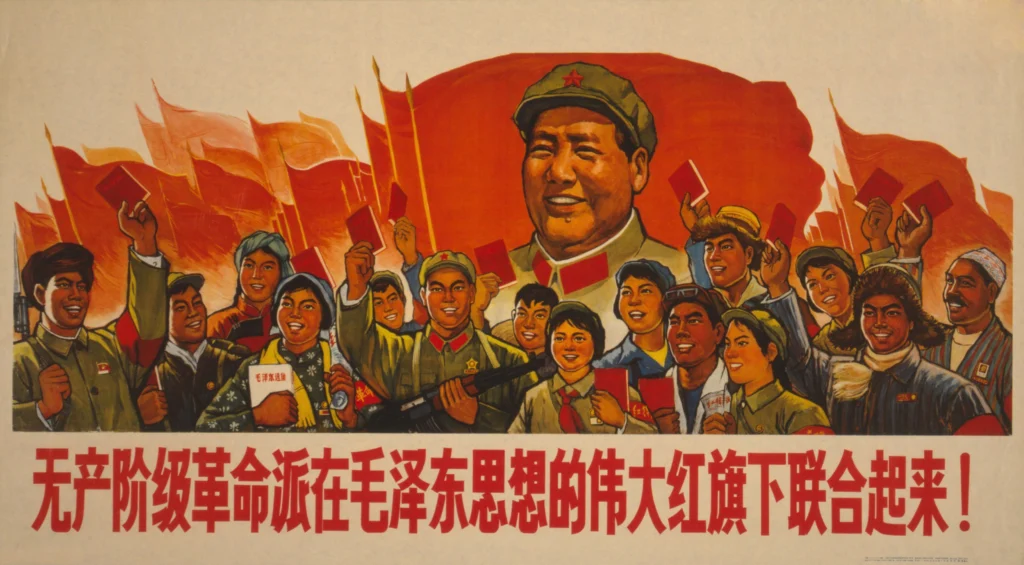
Between 1934 and 1935, during the Long March, Communist forces carried out a strategic retreat of thousands of kilometers to escape encirclement by Kuomintang troops.
The episode consolidated Mao Zedong’s leadership within the Party and reinforced the movement’s ideological and military cohesion, later becoming a key symbol of revolutionary resilience in official historical narratives.
From 1937, with the Japanese invasion and the outbreak of the Second Sino-Japanese War, the CPC and the Kuomintang formed a United Front against Japan, a tactical alliance to confront the external enemy.
During this period, the Party significantly expanded its influence in rural areas, strengthening the so-called “mass line,” a concept emphasizing the Party’s direct connection with the needs of the people.
During the resistance war (1937–1945), the CPC consolidated bases in northern and central China, expanding its military and organizational capacity. This process was decisive in strengthening the Party in the post-war period and increasing its social legitimacy.
With the end of World War II, the internal conflict with the Kuomintang resumed, leading to the Chinese Civil War. The Communist victory in 1949 led to the proclamation of the People’s Republic of China, marking the beginning of state-building under Party leadership.
During the period of Mao Zedong, major social and economic transformation campaigns were implemented, including agricultural collectivization and rapid industrialization, within the framework of the “socialist construction line.”
This period consolidated the Party as the central core of the state.
From the late 1970s, under Deng Xiaoping, China launched the Reform and Opening-up (gaige kaifang) process, introducing market mechanisms within a state-planned system.
This stage gave rise to the concept of “socialism with Chinese characteristics,” combining economic development with the political centrality of the Party.
In recent decades, the CPC has further emphasized the concept of the “New Era of Socialism with Chinese Characteristics,” particularly under Xi Jinping’s leadership, reinforcing the Party’s central role in governance, institutional stability, and long-term development strategy.
From teleSUR English via This RSS Feed.