

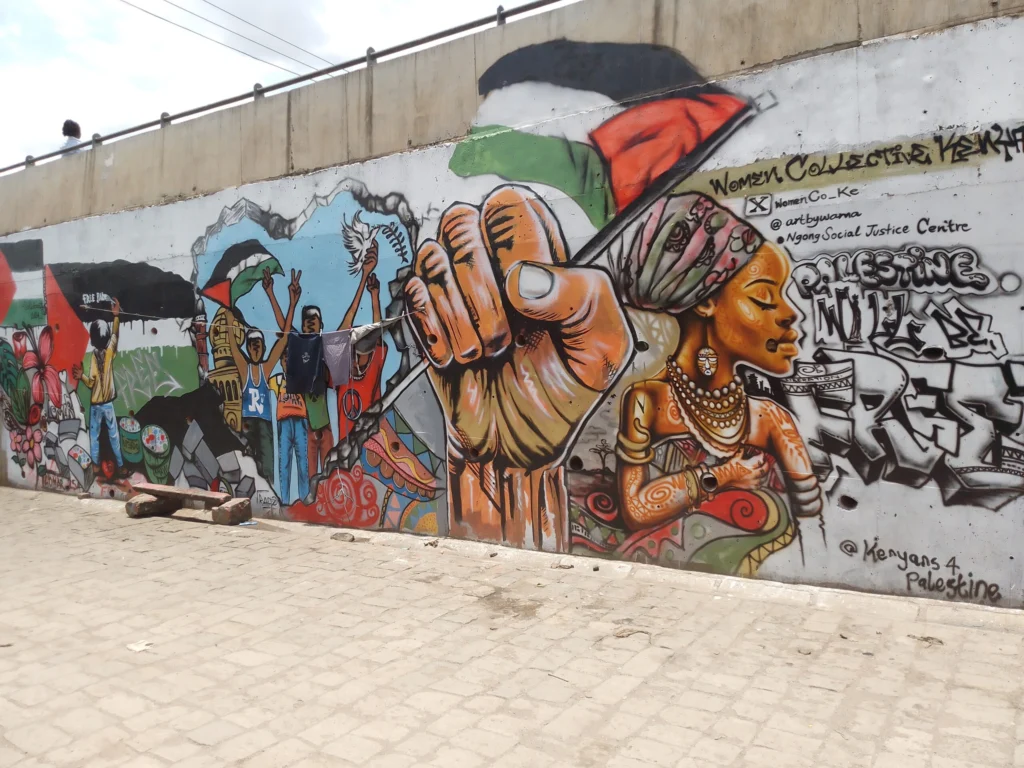
From Hollywood to global stages, performers demand accountability and self-determination.
Artistic expression has long served as a tool for social critique and political mobilization. Today, cultural workers, actors, musicians, and filmmakers are using their platforms more openly to defend human rights and draw attention to humanitarian crises, especially in Palestine and Lebanon.
RELATED:
Oscar Speeches Challenge the Politics of Fear
Where mainstream media and elite institutions often soften state violence or remove context from territorial disputes, artists are filling the gap between official policy and grassroots solidarity.
Public figures counter mainstream narratives through statements, symbolic gestures, and creative work. Many risk their careers to break through information blockades, challenge geopolitical consensus, and offer new ways for the world to see human rights, state accountability, and the right to self-determination.
Hollywood stars call for Gaza ceasefire at Emmys
Celebrities attending last night’s Emmys wore ceasefire pins, highlighting the need for an end to Israel’s bombing of Gaza.
Bridgerton’s Nicola Coughlan was among the stars who were seen wearing the pin which features a red… pic.twitter.com/M3NWLLAfBz
— Middle East Monitor (@MiddleEastMnt) September 16, 2024
Breaking the Hollywood Taboo
For decades, entertainment industries in the United States and Western Europe treated foreign-policy topics as off-limits. In recent years, high-profile performers organized collectively and began openly challenging that tradition.
A key example is Artists4Ceasefire, a volunteer collective of actors, filmmakers, and cultural professionals formed in late 2023. The group calls for an immediate, permanent ceasefire in Gaza, unrestricted humanitarian aid, and enforcement of international laws that prohibit using military assistance to commit human rights violations.
Its members have made themselves visible at major ceremonies, wearing enamel pins designed by Shepard Fairey that show a dove, a lotus, and a heart as symbols of human liberation.
Signers and participants include Mark Ruffalo, Joaquin Phoenix, Cate Blanchett, Mahershala Ali, and Cynthia Nixon, among others. Individual performers have also taken personal risks. Javier Bardem, for example, has repeatedly used global stages to denounce state violence.
At the 98th Academy Awards in March 2026, he stepped onstage wearing a “No to war” patch and a Handala badge, the iconic cartoon figure by Naji al-Ali that symbolizes Palestinian identity and resistance. He said plainly, “No to war and Free Palestine.”
Susan Sarandon has kept a firm public stance on human rights, joining anti-war rallies and debates despite institutional backlash. At the Goyas in February 2026, she praised countries in the Global South and some European states for taking clear moral stands against military aggression.
At the Emmy Awards, Hannah Einbinder used her Best Supporting Actress speech to express solidarity; she later told reporters her words came from personal ties to people suffering under Gaza’s blockades. Australian actor Guy Pearce wore a “Free Palestine” pin on the 2025 Oscars red carpet, showing that advocacy spans generations and geographies in the global film community.
Sonic Resistance: Musicians and Intellectuals
Music and academia have also broken through information barriers. Several internationally known musicians and intellectuals systematically use their work to highlight the suffering of civilians in Palestine and Lebanon.
Roger Waters of Pink Floyd has long opposed apartheid and occupation, weaving human-rights documentation into performances and media appearances. On June 18, 2026, he released a reimagined version of “Comfortably Numb” with Palestinian singer Mona Miari, dedicating the track to Gaza’s humanitarian crisis. The release mixed English and Arabic lyrics with documentary footage of displaced families to force international audiences to face the human cost of bombardment.
The Irish hip-hop group Kneecap links Ireland’s history under British rule to the structural oppression faced by Palestinians. During their 2024–2025 festival tours, including Coachella and Glastonbury, Kneecap used large stage screens to show anti-occupation graphics and to denounce blockades.
Mainstream pop stars have joined in too: Dua Lipa has repeatedly shared verified infographics documenting family displacement in southern Lebanon and Gaza and has called for legal accountability.
Veteran performers like Annie Lennox used the 2024 Grammy broadcast to demand an immediate ceasefire, proving that calls for human-rights advocacy move from underground scenes to the center of commercial pop.
Censorship, McCarthyism, and Institutional Backlash
Talent agencies, production studios, and venues do not always function as neutral defenders of creativity; they can act as mechanisms enforcing political conformity. This punitive environment resembles a modern McCarthyism aimed at isolating dissent and protecting corporate sponsors.
The firing of Mexican actress Melissa Barrera is one well-documented example. In November 2023 Spyglass Media Group fired Barrera from the Scream franchise after social posts where she described the Gaza blockade as ethnic cleansing and highlighted civilian deprivation of water and electricity.
The studio claimed her posts were hate speech, a charge rejected by progressive outlets and human-rights defenders who pointed out her language mirrored international legal definitions.
In a May 2026 industry interview, Barrera explained the structural logic behind her blacklisting. As a rising woman of color, she said, she was visible enough to serve as a warning to others but lacked the decades-long star power to protect her.
After her firing, she endured a 10-month employment drought; top talent agencies like WME debated dropping her amid corporate pressure. She later found work only through independent progressive filmmakers outside the studio system, such as Boots Riley, in late 2024.
This punitive pattern reaches beyond actors. Concert bookings for classical musicians are canceled, museum retrospectives shuttered, and academic contracts not renewed after signatories join humanitarian petitions.
South–South Solidarity and Peripheral Media Resistance
Where Western institutions punish advocacy for the oppressed, an array of independent organizations, grassroots groups, and peripheral media have built an alternative solidarity architecture. The Palestine Institute for Public Diplomacy (PIPD) uses platforms like Rābet to push verified, ground-level documentation directly to international audiences, bypassing traditional Western press pools.
In March 2026, the Palestine Digital Activism Forum awarded PIPD its annual prize for defending the Palestinian digital narrative against online censorship and shadowbanning. By producing multilingual content, these initiatives help grassroots groups share legal and humanitarian terms across borders, reframing local disputes as part of a global anti-colonial struggle.
This horizontal alignment is backed by progressive news outlets (teleSUR, Al Jazeera, Al Mayadeen, and others) that prioritize colonized perspectives and regularly translate and syndicate statements from independent Arab journalists and cultural workers.
When an artist is blacklisted in London or Los Angeles, these networks immediately document and validate that resistance for millions across the Global South.
Feminist and anti-war groups coordinate with regional networks as well: at the International Conference Against War in June 2026, CodePink co-founder Medea Benjamin argued that institutional suppression of anti-imperialist speech must be met by expanding direct cross-border public mobilization.
Mark Ruffalo, an outspoken advocate for the Palestinian cause, was one of many Oscar attendees who wore the Artists4Ceasefire pin. But he also has worked behind the scenes on the efforts to free the hostages who remain captives of Hamas. Sources say Ruffalo has met with family… pic.twitter.com/54hkrC97yz
— Variety (@Variety) March 13, 2024
The Indestructible Arch of Cultural Liberation
The mobilization of public figures, musicians, and visual artists shows that culture remains a central field of political struggle. The old expectation that prominent people must stay silent on Western foreign-policy priorities to protect their careers is being dismantled.
Coordinated actions like Artists4Ceasefire, visible gestures on awards stages, and South–South media collaborations prove that institutional pressure can be resisted through collective organization.
Corporate media and elite political actors can shape news cycles, set editorial rules, and blacklist dissidents, but they cannot permanently manufacture public consent. Penalizations like Melissa Barrera’s have not stopped advocacy; they have revealed the biases within Western cultural industries and driven audiences toward alternative media and independent creative spaces.
At once political and human, the steadfastness of these public figures matters. Politically, it challenges the moral authority behind Western state actions and weakens diplomatic shields for occupying powers.
Humanly, it gives crucial validation to civilians living through blockades and infrastructure collapse, signaling that their suffering is seen and remembered. When artists use their visibility to defend oppressed peoples, they protect historical memory, legitimize the right to self-determination, and build cultural foundations for longer-term global liberation.
Laura Souza, the wife of Activist Thiago Avila, denounces ongoing violence and the failure to protect lives, as killings continue with impunity. She stresses the urgent need for humanitarian aid and global accountability. Calls grow louder for immediate action and an end to the… pic.twitter.com/TlhRByrmmt
— teleSUR English (@telesurenglish) April 2, 2026
Sources: Al Jazeera – Democracy Now – Press TV – TRT World – Code Pink – Hope Palestina – The Palestine Institute for Public Diplomacy – teleSUR – Brasil de Fato – Página 12 – NODAL
From teleSUR English via This RSS Feed.