

After trading air strikes with the US over the weekend, Iran warned on Sunday, June 28, against any foreign interference in reopening the Strait of Hormuz, calling it a violation of the MoU signed with the US on June 17.
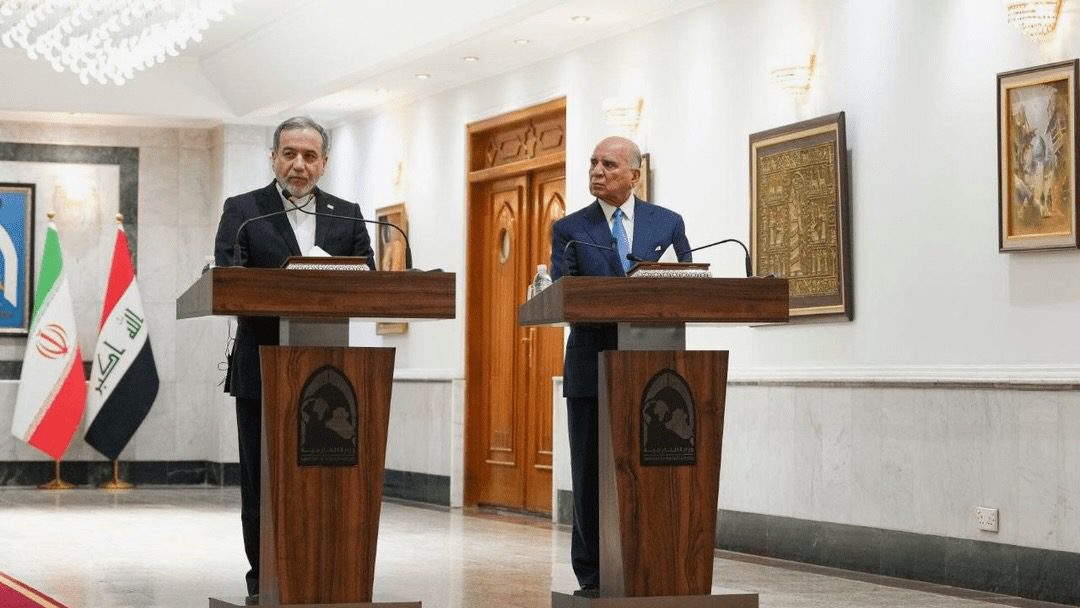
The sole responsibility to reopen the strait for international navigation in the next 30 days lies with the Islamic Republic of Iran, as per the Islamabad MoU, Iranian Foreign Minister Abbas Araghchi emphasized during a press conference in Baghdad.
“Any interference in this matter and any attempt to adopt new and separate arrangements compared to what is underway by Iran will only lead to more complicated situations and delays in the reopening of the strait,” Araghchi warned.
Over the weekend on Saturday, US Central Command launched fresh air strikes at various locations in Southern Iran, claiming to have hit Iranian missile and drone facilities after holding Iran responsible for drone attacks on a couple of commercial vessels near the Strait of Hormuz on Thursday and Friday.
The US had carried out similar attacks a day earlier, targeting locations in Sirik, Bandar-e Lengeh, and Qeshm Island.
In retaliation, Iran carried out attacks on US bases in Bahrain and Kuwait on Saturday and again on Sunday morning and warned of more such attacks if attacked again.
The strikes and counter strikes were rooted in the attacks on two commercial ships, on Thursday and Saturday trying to transit out of the Persian Gulf through an alternative route to the Strait of Hormuz, created by the US in coordination with Oman and the International Maritime Organization (IMO), on Wednesday.
The US has tried to push the transit of vessels through the alternative route located near the Omani coast, despite the MoU provision that gives Iran 30 days to reopen the strait and restore the conditions that existed before the beginning of the war.
After the attacks on Thursday and Friday, the number of ships transiting through the alternative route dropped significantly from a couple of dozen daily, leading to fresh spikes in the international oil prices.
Future management of the strait
Iran has also reiterated that paragraph 5 of the MoU gives it the right to finalize a new management of the strait in coordination with Oman and other Persian Gulf states after the end of the 60 day-period from its signing.
On Monday, Iran’s Deputy Foreign Minister Kazem Gharibabadi visited Oman and met his counterpart in Muscat. In his social media post, Gharibabadi called it the first meeting of the Hormuz Joint Committee launched on June 22.
However, US President Donald Trump continues to deny Iranian claims to control the Strait of Hormuz, calling the attacks on ships a violation of the MoU and repeating his threats of obliterating Iran on Saturday.
The attacks and counter attacks over the weekend have impacted the ongoing technical level talks between Iran and the US.
Though earlier reports indicated that the two parties have agreed to participate in the next round of talks planned on Tuesday in Qatar, Iran has denied such reports.
Meanwhile, Iranian President Masoud Pezeshkian claimed on Monday that $6 billion, half of Iran’s total assets frozen in Qatari accounts, would be “released and returned to the country” soon.
Timeline for the withdrawal of Israeli forces from Lebanon
On Sunday, Iran demanded a timeline for the withdrawal of Israeli forces from Lebanon’s occupied territories, claiming it was an essential condition for achieving a lasting agreement to end the war and ensure regional security.
“Respect for Lebanese sovereignty and territorial integrity is indispensable for the durability of any agreement concerning the cessation of hostilities,” claimed official spokesperson of the Iranian Ministry of Foreign Affairs Esmail Baghaei.
This has been the approach of Iran since the beginning of the ceasefire on April 8 and has been the first principle of the MoU signed between Iran and the US on June 17, Baghaei reminded.
However, Israel continued to launch attacks inside Lebanon on Monday, despite signing a 14-point framework agreement with Lebanese authorities in Washington last week.
The agreement, which was announced by the US, has been rejected by most of the Lebanese parties such as Hezbollah, the Amal Movement, and speaker of the Lebanese Parliament Nabih Berri, and others.
The agreement demands the disarmament of Hezbollah as one of the conditions and also apparently allows the Israeli army to reenter the Lebanese territories at will to “verify” if Hezbollah is actually disarmed by the Lebanese army.
Israel has signed multiple agreements with the Lebanese authorities in recent days. However, it has defied all of them, including the US-Iran MoU, and refused to end its attacks or withdraw its forces from the Lebanese territories.
Israel’s war and occupation in Lebanon has killed over 4,200 people and wounded over 12,000 others since March 2, when the latest round of attacks began. It has also displaced over a million people.
Zoe. , June 30, 2026
From BT News via This RSS Feed.