

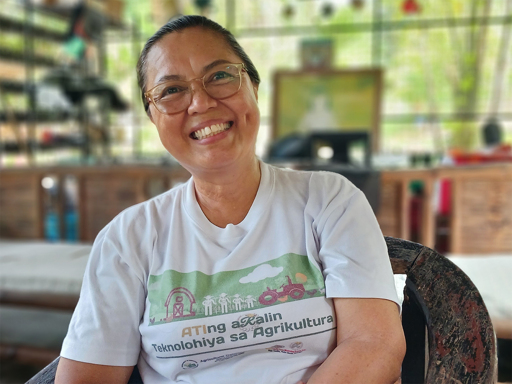
PITOGO, Philippines — The Glinoga Integrated Farm in Quezon province sits among brackish fishponds, some active, others long abandoned and slowly reclaimed by the landscape. About a four-hour drive from Manila, the farm in Pitogo municipality can be reached by land or sea. Both routes pass through mangroves. “We raised the embankment and kept the mangroves, because the lowest part often floods,” Ninieveh Glinoga, who manages the farm, told Mongabay during a visit in May. The farm’s coconut-covered slopes lead to tidal rice paddies below and wetlands beyond, reflecting the mosaic landscape found across many Philippine coastal communities. As coastal developments across the Philippines erase wetlands that once buffered communities and sustained marine biodiversity, the farm offers a different model: food production intertwined with the coastal ecosystem rather than apart from it. Nipa is seen growing alongside mangroves, during low tide. Image by Mavic Conde for Mongabay. Working with water and natural topography Glinoga’s husband’s family has owned the land for generations. The coconut, cacao and sugarcane that once grew here abundantly sustained the family. But in 2008, the family visited the farm and found it nearly unrecognizable. Years of slash-and-burn farming by a tenant had stripped the land bare. Smoke rose from the ground. “The first thing the tenant fed us was native chicken. There were no greens, just salt,” Glinoga recalled. Her grandmother-in-law, who once managed the farm, could no longer visit due to old age. The relative who next took charge fell ill, leaving the tenant in…This article was originally published on Mongabay
From Conservation news via This RSS Feed.