

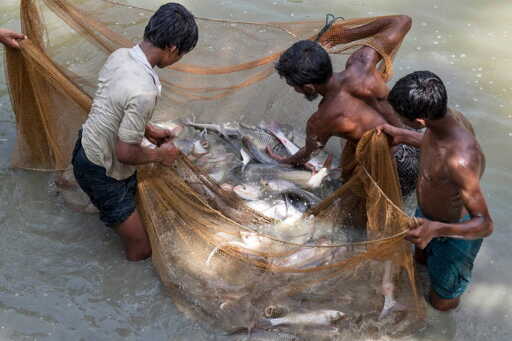
Rapid aquaculture growth has pushed farmed aquatic animal production to more than 100 million metric tons per year for the first time ever, boosting the trade value of all aquatic animal products almost to parity with the trade value of land-produced meat. That’s according to the latest “The State of World Fisheries and Aquaculture” (SOFIA) report from the United Nations Food and Agriculture Organization (FAO). The 2026 installment of the report, a biennial collection of data that outlines FAO’s vision for the fishing and aquaculture sectors, was released June 16 at the 11th Our Ocean Conference in Mombasa, Kenya. “The [aquaculture] sector is evolving very rapidly,” Manuel Barange, director of the FAO’s Fisheries and Aquaculture Division, told Mongabay. “It’s now achieving levels that fisheries never did. And that is positive because there’s no doubt about it that we’re going to be 10 billion in just a couple or three decades. And everyone has a right to food.” An FAO spokesperson discusses the SOFIA 2026 report during a session held at the 11th Our Ocean Conference in Mombasa, Kenya, on June 16, 2026. Image by Malavika Vyawahare/Mongabay. Connecting science and policy SOFIA is “one of the most authoritative reports we have,” Paul Orina, director general of the Kenya Marine and Fisheries Research Institute, said at a Mombasa press conference to launch the report. Its value lies in how it “connects science with policy,” he said. The FAO has been giving policymakers, scientists and civil society a deep dive into the global fisheries and aquaculture sectors…This article was originally published on Mongabay
From Conservation news via This RSS Feed.