

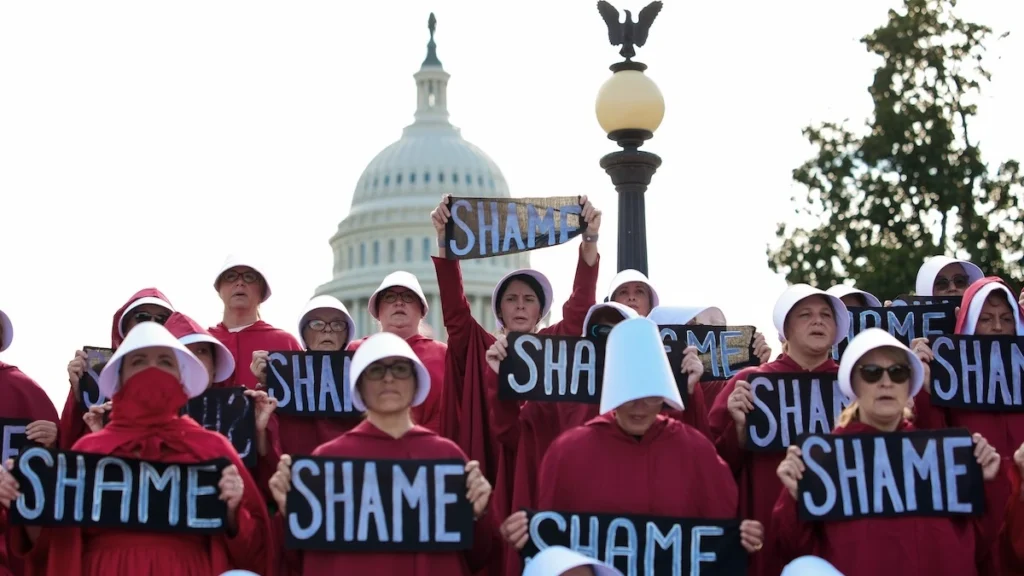
The institutional machinery behind America’s censorship wave and the erasure of marginalized narratives from public education.
The suppression of literature in public spaces has shifted from local disputes to a highly centralized and institutionalized system. Across the United States, within conservative political structures, books are being removed from public schools and community libraries at unprecedented levels.
RELATED:
Dua Lipa’s Manifesto Library Houses Books Unmasking Power
Currently, statistical and administrative data on book censorship point to something much larger and more organized. The modern system of book restriction is a state-supported effort to regulate thought and language, especially marginalized experiences.
Rather than targeting only a few classic titles, these campaigns now focus on entire categories of literature that examine structural power, racial history, and gender identity.
This new wave of censorship works as an organized tool to enforce cultural sameness. Tracking indexes compiled by free expression organizations show that the number of unique titles challenged each year continues to approach historical highs.
This article examines the institutional structure behind these efforts, the role of federal and state executive actions, and the specific types of literature being removed from public access.
Suzanne Nossel, CEO of @PENAmerica, explains why the group is suing a Florida school board over book bans and censorship. “This effort disproportionately targets books by and about authors of color, LGBTQ narratives,” says Nossel. pic.twitter.com/BzpfOz6F3Y
— Democracy Now! (@democracynow) May 22, 2023
The Infrastructure of Reactionary Censorship
Public tracking data from national library groups show a top-down structure backed by well-funded political pressure organizations. The American Library Association (ALA) Office for Intellectual Freedom documented 4,235 unique titles challenged in public, school, and academic libraries.
By contrast, about 92 percent of all documented book challenges were started by political pressure groups, government officials, and institutional decision-makers. Organizations like Moms for Liberty and No Left Turn in Education use centralized digital networks to spread pre-compiled lists of target titles to local chapters.
Researchers often describe this practice as “astroturfing” because it imitates broad public demand for censorship, even though the demand is manufactured by advocacy networks and conservative think tanks.
By filling school board meetings and using political contacts, these organizations help pass restrictive local rules that bypass normal professional library review. The target lists they circulate are strikingly similar across different states, showing that the challenges do not reflect unique local standards. Instead, they point to a coordinated national strategy aimed at reshaping public education.
Julianne Moore ‘in shock’ after Trump bans her children’s bookhttps://t.co/Y7gKtqOSIb
— PinkNews (@PinkNews) February 17, 2025
Trump Deepens the Conservative Purge
The shift from local book challenges to a formal national policy grew through direct federal action. On January 24, 2025, the U.S. Department of Education’s Office for Civil Rights (OCR) issued a structural directive that changed the federal government’s role in monitoring censorship.
The administration dismissed 11 active civil rights cases that were investigating the legality of book removals in public school districts. At the same time, the agency eliminated the federal oversight coordinator position that had been created to investigate viewpoint discrimination and compliance in public school libraries.
In an official statement explaining the change, the Department of Education redefined the removal of books as a matter of community standards rather than a possible violation of student civil rights.
The agency said the cases “did not involve book bans, but proper oversight by parents and community stakeholders” and added that “because this is a question of parental and community judgment, not civil rights, OCR has no role in these matters”.
The administration also withdrew earlier federal guidance that had warned school districts that broad book exclusions could violate Title IX and Title VI civil rights statutes.
This retreat from federal oversight created a regulatory vacuum that changed the legal landscape for public education. The federal hands-off approach acted as an indirect endorsement for state legislatures to pass very restrictive laws.
In states such as Florida, Texas, and Iowa, lawmakers approved broad and punitive measures that place direct administrative and criminal liability on public employees.
According to a PEN America analytical index, about 97 percent of books removed from shelves under the threat of state legislation were not directly ordered out by the wording of the laws themselves. Instead, school districts remove far more books than required to avoid severe penalties, including the loss of state funding or the revocation of educators’ licenses.
Amid a rising number of book bans in US schools and public libraries, Llano County officials have said public libraries will remain open while a court battle continues over whether local officials can remove books deemed inappropriate from libraries https://t.co/s89rENdSGa pic.twitter.com/3AqZvOVb03
— Reuters (@Reuters) April 14, 2023
What is Being Erased and Why?
A close look at the books being removed shows a very clear pattern. The current censorship movement does not challenge all genres or themes equally. Instead, it focuses heavily on literature about systemic racism, historical inequality, and LGBTQIA+ identities.
The American Library Association’s (ALA) records show that roughly 40 percent of all unique titles challenged directly reflect the lived experiences of BIPOC (Black, Indigenous, and People of Color) or LGBTQIA+ people.
In the area of racial history and structural criticism, foundational works continue to face strong institutional exclusion. Toni Morrison’s The Bluest Eye, which explores the psychological effects of systemic racism and white hegemony on a young Black girl, remains one of the most frequently restricted novels in public high schools.
In the same way, contemporary young adult novels such as Angie Thomas’s The Hate U Give, which deals with police misconduct and racialized state violence, face repeated removal demands from conservative political networks. Nonfiction and historical work is also targeted.
Censorship efforts aimed at gender identity and sexual orientation follow the same pattern of systematic erasure. Graphic memoirs such as Maia Kobabe’s Gender Queer and essay collections like George M. Johnson’s All Boys Aren’t Blue are often labeled “sexually explicit” or “obscene” by political pressure campaigns.
In an official brief on literary challenges, researchers found that more than a third of banned titles containing consensual relationships or personal identity exploration are regularly treated as obscenity to justify removal under state laws.
The result of these targeted removals is a narrower form of cross-class and intersectional literacy among young people. When books that explain how institutional power works are removed, students lose historical frameworks they need to understand present-day economic and social inequality.
Censoring Nonfiction and Class Critique
Contemporary literary censorship now reaches far beyond young adult fiction and narrative novels. Quantitative tracking by organizations shows a sharp doubling in the restriction of nonfiction, especially memoirs, history books, and sociological texts.
This marks a shift from policing creative stories to directly suppressing factual writing about labor movements, civil rights struggles, and institutional economics. By expanding the range of banned material, censorship systems increasingly block books that explain wealth distribution, corporate monopoly, and the history of class exploitation.
Restricting historical nonfiction limits public access to records of collective organizing and social change. Educational materials about the history of American labor unions, anti-war movements, and multiracial coalition building are often removed under broad laws that ban so-called divisive concepts.
When school districts remove documented accounts of how working-class people organized against corporate and state power, they also remove historical models for civic action. This creates an artificial amnesia that cuts modern social problems off from their structural roots.
The targeting of economic and sociological texts also limits the development of critical systemic literacy among younger generations. Books that study the link between racial discrimination and economic exploitation are routinely labeled ideological or out of line with state curriculum rules.
Removing these texts means public school libraries offer fewer resources that explain how inequality continues across generations. As a result, students have fewer tools for understanding and judging current economic hierarchies.
At the June 23, 2026 meeting of the Higley USD Governing Board, Board President Amanda Wade, currently running for reelection, defended keeping sexually explicit books accessible to students.
Among the books being defended:
The Absolutely True Diary of a Part-Time Indian by… pic.twitter.com/MayckbeRNn— The Arizona Blade (@TheAZBlade) June 28, 2026
Writing as a Tool of Resistance
The rapid growth of book bans in public schools and community libraries is a coordinated institutional effort to control public knowledge and block access to systemic critique. The data points to a top-down, well-funded infrastructure built to enforce cultural and political conformity.
The removal of literature centered on marginalized identities and structural inequality works to limit the language people need to understand and challenge institutional power.
The retreat of federal oversight and the rise of punitive state laws have helped build a culture of self-censorship among teachers, librarians, and school officials.
At the same time, this state-backed censorship has also strengthened a growing counter-movement focused on defending public access to information as a democratic right. Free speech coalitions, labor groups representing librarians, and independent community networks are increasingly combining legal action with grassroots organizing to challenge restrictive laws and protect public libraries as democratic, non-commodified spaces.
Sources: BBC – NYT – Democracy Now – PEN America – American Library Association (ALA) – The Southern Poverty Law Center (SPLC) – ALA Statistical Breakdown on Censorship Initiatives – Department of Education – Office for Civil Rights (OCR) Action Logs – American Civil Liberties Union (ACLU) Briefings
From teleSUR English via This RSS Feed.