

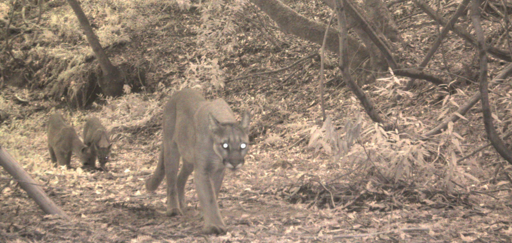
When a mountain lion moved into a small suburban preserve near California’s Stanford University in the U.S. around 2012, its presence transformed the local food web, suggesting that apex predators can reshape ecosystems even in heavily developed landscapes. A recent study published in the journal Ecology and Evolution drew on nine years of camera trap data from Jasper Ridge Biological Preserve, a 4.9-square-kilometer (nearly 2-square-mile) patch of oak woodland and grassland in the San Francisco Bay Area, surrounded by roads and residential neighborhoods. After mountain lion (Puma concolor, also known as puma or cougar) activity began increasing around 2012, researchers documented ripple effects through multiple species. Coyotes and deer shifted away from nighttime activity. Gray foxes expanded into niches left vacant by retreating competitors. Brush rabbits became more active in the mornings, and woody plant density jumped 64-fold over 17 years. These types of multi-level effects are called trophic cascades. The most well-known example comes from the U.S., as dramatic changes occurred in Yellowstone National Park when wolves were reintroduced to their former range in 1996. “Much like the well-documented cascade triggered by wolves in Yellowstone, we found that increasing mountain lion activity coincided with changes cascading through the food web, from deer and coyotes down to foxes, rabbits, and woody plants,” lead author Chinmay Sonawane, a Stanford Ph.D. candidate, said in an email to Mongabay. “These findings provide clear, empirical evidence of the profound structural role mountain lions play,” Zara McDonald, biologist and president of the Felidae Conservation Fund…This article was originally published on Mongabay
From Conservation news via This RSS Feed.