

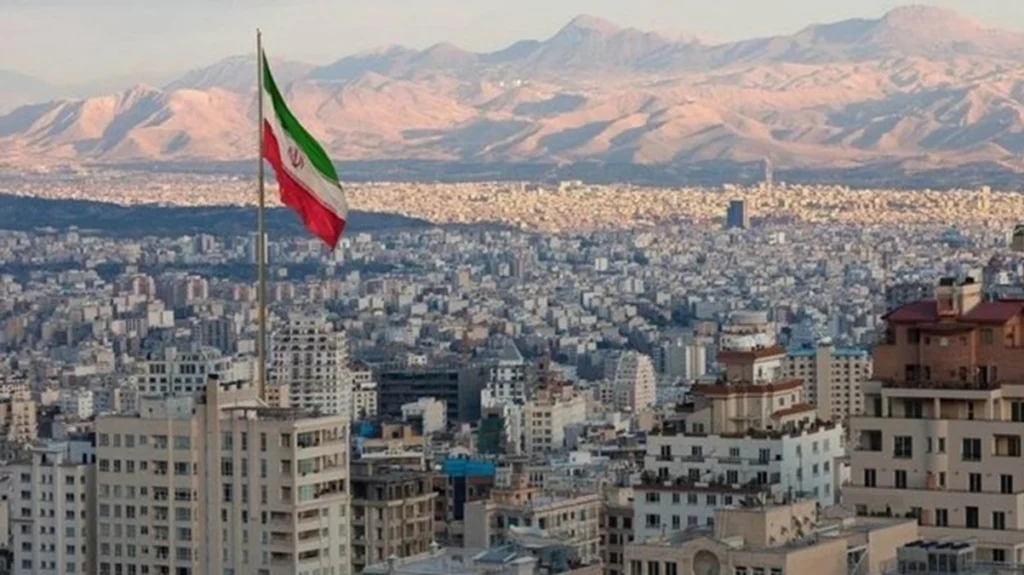
The latest exchange of fire underscored the deep-rooted divisions and mutual distrust between both nations.
Recent sporadic clashes between the United States and Iran have raised questions over whether a fragile truce reached earlier this month can hold, though analysts say both sides still appear unwilling to return to a full-scale war.
RELATED:
U.S. Tested Missiles in Civilian Areas of Iran at the Beginning of the War
The latest exchange came after the U.S. carried out strikes on multiple targets along Iran’s coast on Friday, saying the targeted sites had been involved in drone attacks on a commercial vessel in the Strait of Hormuz the previous day. On Saturday, the U.S. military announced additional strikes against multiple targets in Iran.
In response to the U.S. attacks, Iran said it launched missile and drone attacks on U.S. military sites in Kuwait and Bahrain, raising concerns that the developments could undermine hopes for regional calm and progress in further negotiations between the two countries.
MISTRUST, STRUCTURAL CONTRADICTIONS
Regional analysts said the latest exchange of fire underscored the deep-rooted divisions and mutual distrust between the United States and Iran, warning that their entrenched hardline positions suggest the path to future negotiations is likely to be fraught with challenges.
Mohamed Mohsen Abo El-Nour, an expert on Iranian affairs and head of the Arab Forum for Analyzing Iranian Policies, said the main outstanding issues between the United States and Iran are not linked only to the latest clashes, but stem from broader strategic disputes that were not fully resolved in the memorandum of understanding (MoU) that they signed earlier this month.
He listed among these issues the security of navigation in the Strait of Hormuz, the U.S. military presence in the Gulf region, the future of Iranian influence in regional arenas, especially Lebanon and Iraq, and the continuation of U.S. economic sanctions against Iran. “What is currently happening is a reflection of the continuation of these structural contradictions,” Abo El-Nour said.
Abu-Bakr Al-Desouky, an Egyptian expert on international relations, Gulf and Iranian affairs, said that although the exchanges of fire have so far remained limited in scope, the mutual attacks reflected “a continuing crisis of trust” between the two countries.
“Both sides announced that the other had violated the agreement,” Al-Desouky said, stressing that the clashes would cast a negative shadow over the atmosphere of ongoing negotiations.
“There are no negotiations under bombardment and amid mutual attacks,” he said, warning that the strikes could also provide hardliners on both sides with grounds to halt the negotiation process.
Things are heating up in the Gulf. Literally.
This is the attack on the US Fifth Fleet Naval Base in Bahrain.
American & other western news outlets are reporting the company line:
“Only a residential building was struck by Iran and there were no casualties.”Lo and behold.… pic.twitter.com/nzNEUP0gR7
— Tomthunkit
(@TomthunkitsMind) June 29, 2026
WILL TRUCE HOLD?
Following the latest exchange of attacks, Iran’s Deputy Foreign Minister Kazem Gharibabadi said on Monday that no technical working group meetings under the Iran-U.S. MoU were planned for this week. However, experts said the latest clashes were unlikely, at least for now, to fully derail the truce.
It is unlikely that the sporadic clashes will cause the failure of the ceasefire agreement, though they could slow the implementation of some of its provisions and increase caution and mistrust between the two sides, said Abo El-Nour.
The collapse of peace prospects is not a rational option for either side, he noted, explaining that Iran needs calm to stabilize its economy and restore trade flows through the Strait of Hormuz, while the United States seeks to avoid a new round of war that could disrupt global energy markets and add further military and political burdens on Washington.
“Therefore, the clashes remain within the bounds of limited military signaling, without causing the collapse of the understanding aimed at ending the war between the two sides,” Abo El-Nour added.
Echoing Abo El-Nour, Al-Desouky also believes that neither side appears to have a desire to escalate the conflict. Both sides share an interest in avoiding a wider war with its losses in equipment, lives and money, Al-Desouky said, emphasizing “there is a strong interest for them in continuing the MoU and the negotiations.”
“This is a disastrous World Cup. As professional players, we can’t play in a tournament under these conditions—it’s neither right nor fair,” said Mehdi Taremi, captain of the Iranian national team.#Iran #WorldCup2026 #FIFA #teleSUREnglish pic.twitter.com/02MNRWtzcj
— teleSUR English (@telesurenglish) June 27, 2026
teleSUR/ JF
Source: Xinhua
From teleSUR English via This RSS Feed.