

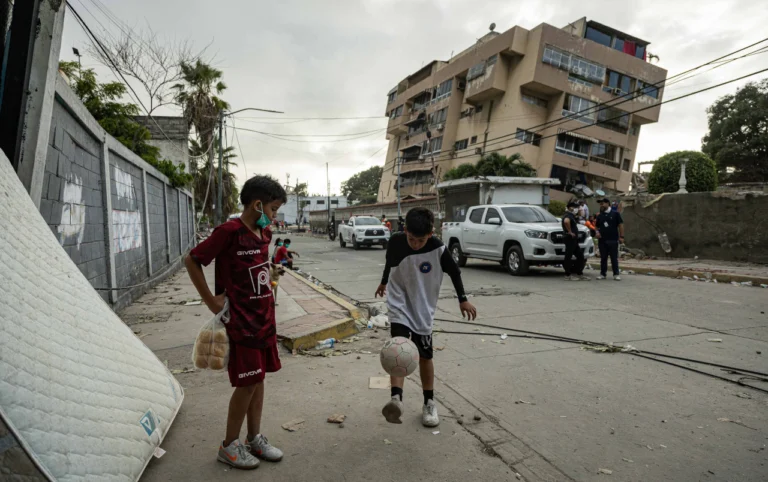
Venezuela earthquake child protection measures clarified as authorities deny false claims about children after deadly June 24 quakes.
Venezuela earthquake child protection: Authorities deny false claims about children after disaster
The Venezuela earthquake child protection framework has been reaffirmed by national authorities following the spread of false information regarding the handling of minors affected by the June 24 earthquakes. Officials issued a formal statement to counter rumors circulating on social media, emphasizing that no child or adolescent is handed over to unknown individuals under any circumstances.
The clarification comes amid heightened concern for vulnerable populations after the earthquakes, which left more than 1,430 people dead and over 3,200 injured, while thousands of families remain displaced. Authorities stressed that child safety protocols remain strictly enforced, even under emergency conditions.
The Autonomous Institute National Council for the Rights of Children and Adolescents (Idenna) confirmed that family reunification processes are carried out under strict supervision, dismissing claims that minors are being informally transferred or abandoned.
Venezuela activa “La Ruta de la Esperanza” para apoyo emocional de niños tras terremotos
Ministerio de Cultura y entes locales lanzan programa que usa arte y recreación para la sanación. Inicia en Caracas. #teleSUR #Venezuela #Cultura #ApoyoEmocional pic.twitter.com/QuLODFUPgh
— teleSUR TV (@teleSURtv) June 28, 2026
Venezuela earthquake child protection protocols and official response
In its official communiqué, Idenna underscored that the Venezuela earthquake child protection system is grounded in national and international legal standards designed to safeguard minors during crises. Authorities highlighted that all procedures involving children are governed by strict protocols, ensuring identity verification and secure reunification with relatives.
The institution reiterated that its primary mission is to protect the rights and well-being of children and adolescents, working in coordination with health services, social protection agencies and emergency response teams. This includes providing both physical and psychological care to minors affected by the disaster.
For children who have not yet been reunited with their families or who have been orphaned, authorities confirmed they are being housed in supervised care centers, where they receive comprehensive assistance, including emotional support and monitoring by trained professionals.
Addressing misinformation in Venezuela earthquake child protection efforts
The spread of misinformation has posed a serious challenge to the Venezuela earthquake child protection response. Authorities warned that false narratives about child handovers and irregular adoptions could generate panic and undermine trust in institutions.
The communiqué called on citizens to rely on official sources and avoid amplifying unverified claims, particularly in a context where families are experiencing high levels of vulnerability and uncertainty. Officials emphasized that maintaining public confidence is essential for ensuring effective coordination of humanitarian efforts.
Concerns raised by activists and social organizations about suspicious messages and unusual inquiries regarding affected children have also been acknowledged. These reports have heightened fears of potential risks such as human trafficking or child exploitation, prompting authorities to reinforce vigilance and monitoring mechanisms.
Institutional commitment to child safety
Authorities reiterated that every action taken within the Venezuela earthquake child protection system is guided by official protocols and legal safeguards. The government maintains that protecting minors remains a top priority in the broader disaster response.
The statement also urged civil society to maintain trust in public institutions and to collaborate responsibly by sharing verified information. Officials warned that misinformation not only creates confusion but can also put children at greater risk by disrupting coordinated protection efforts.
The response framework integrates multiple agencies to ensure that minors receive holistic care, including access to shelter, healthcare, education continuity where possible, and psychosocial support.
Geopolitical context
The Venezuela earthquake child protection issue highlights broader global concerns about safeguarding vulnerable populations during humanitarian crises. In disaster scenarios, children are among the most at risk, and the spread of misinformation can exacerbate existing dangers, including trafficking and exploitation.
International organizations often play a key role in supporting national systems through technical assistance and monitoring. In Venezuela’s case, the effectiveness of child protection measures may influence international perceptions of institutional capacity, particularly in the context of ongoing humanitarian and political challenges.
Regionally, the situation underscores the importance of coordinated child protection frameworks across Latin America, especially in emergencies where displacement and family separation are common. Strengthening these systems is critical for preventing long-term social consequences.
From teleSUR English via This RSS Feed.