

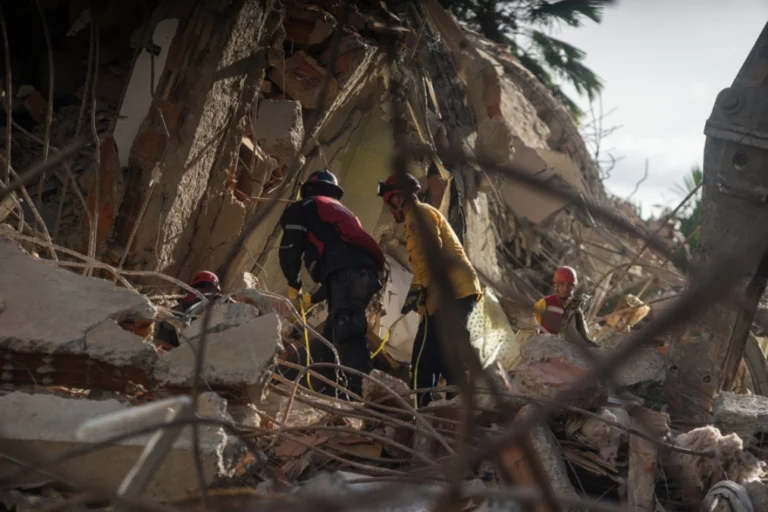
Venezuela earthquake death toll rises to 1,430 after June 24 quakes, with thousands injured and global rescue efforts underway.
Related: Venezuela Hydrocarbon Sector Backs Quake Relief Efforts
Venezuela earthquake death toll rises amid massive rescue effort
The Venezuela earthquake death toll has climbed to 1,430 fatalities following the powerful earthquakes that struck the country on June 24, according to updated official figures released on Saturday. Authorities confirmed that 3,238 people have been injured, while thousands of families continue to face the aftermath of one of the most destructive natural disasters in recent Venezuelan history.
Jorge Rodríguez, president of Venezuela’s National Assembly, provided a comprehensive update on the ongoing emergency response. He emphasized that search-and-rescue operations remain active, with authorities prioritizing efforts to locate survivors trapped under debris.
The Venezuela earthquake death toll continues to evolve as rescue teams access previously unreachable areas. Officials have also confirmed 430 aftershocks, complicating recovery efforts and increasing risks for both survivors and responders.
Humanitarian response to Venezuela earthquake death toll crisis
https://www.unocha.org/
https://www.ifrc.org/
The scale of the disaster has triggered a large-scale national and international humanitarian response. Rodríguez reported that 3,142 families have been displaced, many of whom are currently sheltering in temporary facilities set up across affected regions.
In total, 73,736 families have received some form of assistance, including food, medical care, and emergency housing. Health services have been under intense pressure, with more than 5,000 medical interventions carried out since the earthquakes struck.
The Venezuela earthquake death toll reflects not only the immediate destruction but also the ongoing strain on infrastructure and public services. Hospitals and emergency centers continue to operate at maximum capacity as medical teams address trauma injuries and provide urgent care.
International support and volunteer mobilization
International cooperation has become a crucial component of the response to the Venezuela earthquake death toll crisis. Authorities confirmed that 2,242 rescue workers from multiple countries are currently deployed on the ground, working alongside more than 30,000 Venezuelan professionals, including firefighters, medical personnel, and civil defense teams.
In Caracas, the Poliedro stadium has been transformed into a central coordination hub for volunteers. A total of 2,697 individuals have officially registered to participate in rescue and relief efforts, reflecting a strong wave of civic mobilization.
These combined efforts aim to accelerate search operations and ensure that aid reaches the most affected communities as quickly as possible. The Venezuela earthquake death toll underscores the urgency of these coordinated actions.
Public safety measures and information control
Authorities have urged citizens to follow strict safety and mobility guidelines in order to facilitate ongoing operations. Rodríguez specifically called on residents not to travel to La Guaira, one of the hardest-hit areas, to prevent road congestion that could delay emergency vehicles and supply deliveries.
He also stressed the importance of relying on official communication channels, warning against misinformation circulating on social media. According to government officials, false reports have complicated coordination efforts and risk undermining public trust during a critical phase of the crisis.
Maintaining accurate information flow is essential as the Venezuela earthquake death toll continues to be updated and relief strategies evolve.
Geopolitical context and regional implications
The Venezuela earthquake death toll crisis unfolds within a broader regional and geopolitical landscape marked by economic challenges and humanitarian pressures. The disaster places additional strain on Venezuela’s already fragile infrastructure, while also prompting renewed international engagement, including cooperation from countries that have historically maintained complex diplomatic relations with Caracas.
Regionally, the earthquakes highlight the Caribbean and northern South America’s vulnerability to seismic activity, raising concerns about preparedness and cross-border disaster response mechanisms. International organizations and neighboring countries may use this crisis as a catalyst to strengthen regional emergency frameworks and humanitarian coordination systems.
At the same time, the Venezuelan government’s handling of the emergency—particularly in terms of transparency, aid distribution, and international collaboration—will likely influence its diplomatic standing and future partnerships.
#ENVIVO | ''Yo sé que hay mucho deseo de ayudar, de acompañar, de colaborar con las personas que hoy sufren en el estado La Guaira, pero eviten bajar para poder facilitar el trabajo de rescate de las personas que se encuentran bajo los escombros, un rescate donde cada minuto… pic.twitter.com/ah6V1H4Qpz
— teleSUR TV (@teleSURtv) June 27, 2026
From teleSUR English via This RSS Feed.