

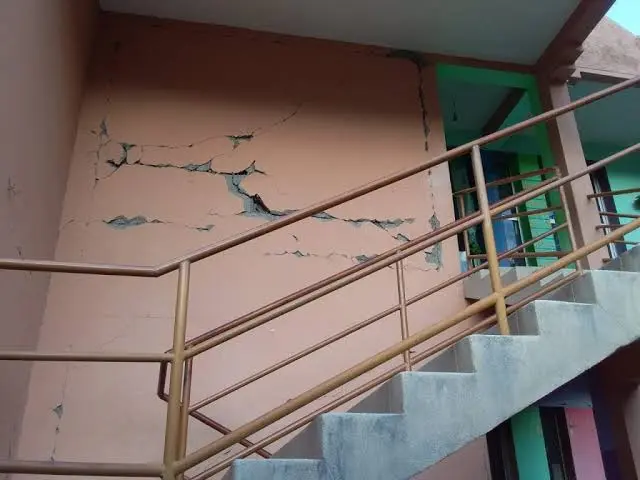
Evacuating by stairs during earthquake is vital to avoid elevator failures and falling debris, as expert Valentina Páez explains emergency kit preparation and structural safety.
Related: Venezuela Hydrocarbon Sector Backs Quake Relief Efforts
Evacuating by stairs during earthquake is essential because it protects people from falling debris, prevents elevator malfunctions that trap occupants, and allows faster evacuation to safe zones. Valentina Páez, a specialist in seismic-resistant engineering, emphasized that maintaining calm during seismic action is the first fundamental recommendation for saving lives.
Evacuating by stairs during earthquake and Venezuela’s seismic reality
Venezuela sits in a seismically active territory and faced a duplet composed of two earthquakes with magnitudes of 7.2 and 7.5 last Wednesday, June 24, according to Páez. The event had an interval of just 39 seconds between the arrival of the first wave and the second seismic action, an exceptional behavior for national history resembling the 1812 panorama.
Páez noted that the recurrence time of major earthquakes in the country is 50 years, with a recent precedent recorded in 1987 in Caracas that affected the Los Palos Grandes sector. The double seismic action generated greater structural demand, affecting the capital where approximately 80% of housing was built with old norms from the 1960s. Páez explained that each earthquake provides a learned lesson to refine the regulatory framework, as occurred in the 1967 earthquake that created the Venezuelan Foundation for Seismological Research (Funvisis) and led to the first 1982 norm.
The specialist urged civil engineering professionals to use the updated 2019 national code, based on Funvisis’s seismic microzonification project that studied sediments in Gran Caracas and other regions to define precise design acceleration. Evacuating by stairs during earthquake becomes critical because old buildings may not withstand modern seismic forces, making rapid evacuation necessary when structural integrity is compromised.
The double earthquake left Caracas with significant damage patterns. 80% of housing constructed under 1960s norms means many buildings lack modern seismic reinforcement, increasing vulnerability when strong ground motion occurs. Páez highlighted that sectors like San Bernardino and Los Palos Grandes suffer more damage because their deep sediments amplify waves, emphasizing the importance of site conditions in seismic risk.
Evacuating by stairs during earthquake and structural vulnerability assessment
Páez advised identifying the construction system where one lives, pointing out that in Caracas the predominant use is frames and beams with filled walls of clay or concrete blocks. She indicated that one must observe whether deep cracks exist in columns and beams, warning that if elements lose integrity, burst, or show steel, they represent a major failure requiring structure evacuation.
Regarding cracks in walls, Valentina Páez clarified that they correspond to non-structural elements, suggesting to finish pouring them if they lose stability to prevent replicas from causing damage during evacuation. Evacuating by stairs during earthquake is crucial because stairways provide the most stable exit route when structural elements may fail, while elevators and other transportation systems become dangerous during seismic events.
Venezuelan constructions resisted the exceptional event due to integral design conception, according to the specialist. She proposed the need to conduct vulnerability studies so that old buildings reach between 70% and 80% compliance with the current regulatory framework. Self-constructed housing in barrios faces extreme vulnerability due to their mixed system of concrete frames and masonry, and while they resisted this event, it does not guarantee their response to future earthquakes.
The expert warned that debris removal and life-saving processes are exclusive tasks for specialized personnel and pertinent bodies. Inadequate handling by untrained people can cause greater harm to trapped individuals, so citizens should collaborate through clothing donations, water, or supporting communication networks instead of attempting rescue operations themselves.
Citizen prevention measures
A preventive approach based on maintaining an emergency kit near the exit with flashlight, water, non-perishable food, radio, and a change of clothes was recommended by the spokesperson. She instructed that, if unable to evacuate the building, people must locate themselves in spaces where they can cover themselves from falling objects.
The expert emphasized that collected data will serve to study what occurred and propose improvements in current codes and local plans by state. She concluded with a call to the architects and engineers guild to join the inspector team. Evacuating by stairs during earthquake remains the primary recommendation because stairways offer the most reliable evacuation path when seismic forces threaten building integrity.
Geopolitical context
Evacuating by stairs during earthquake reflects how seismic safety becomes a matter of public policy, urban planning, and international cooperation in disaster response. Venezuela’s experience with major earthquakes highlights the need for updated building codes, vulnerability assessments, and citizen preparedness programs that protect populations across different socioeconomic levels. For countries with seismic risk, earthquake preparedness is not just individual responsibility but a collective duty requiring government support and professional expertise.
The episode also illustrates how Latin American seismic cooperation continues operating across borders. From Venezuelan engineers to international seismologists, the response suggests that earthquake disasters have activated a wider network of expertise rooted in shared regional experiences of seismic events. In this sense, evacuating by stairs during earthquake education is more than technical advice; it’s part of broader disaster prevention diplomacy.
This situation now sits at the intersection of urban development, public safety, and international humanitarian response. If building codes remain outdated and vulnerability studies are not conducted, critics will likely continue pressing for material improvements and professional accountability. That is why the message about stairway evacuation during earthquakes has become more than technical guidance; it’s a demand for safer infrastructure and prepared communities.
From teleSUR English via This RSS Feed.