

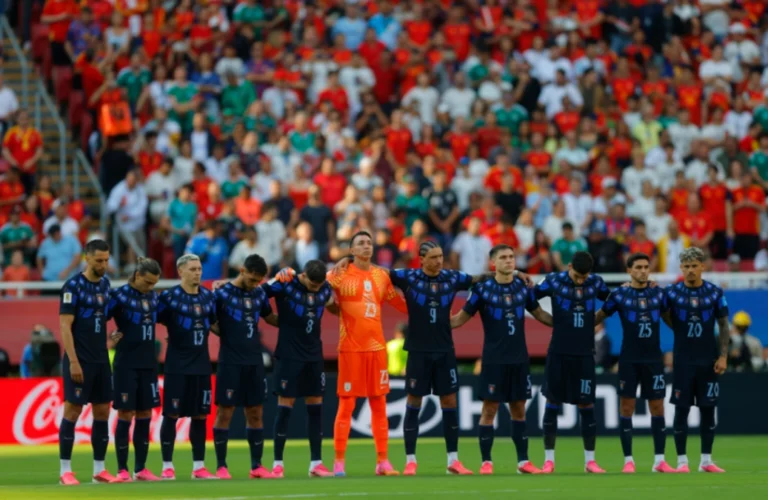
Venezuela solidarity World Cup messages pour in as players, coaches, and fans express support after deadly earthquakes, while FIFA faces calls to act.
Related: Venezuela Reports 243 Rescued in La Guaira After Double Earthquakes
Venezuela solidarity World Cup has become a powerful theme during this tournament as football voices across the globe have sent messages of support to the Venezuelan people following the devastating earthquakes of June 24. A minute of silence in World Cup matches has emerged as the clearest sign of respect, while broadcasters and commentators continue calling for deeper institutional support.
Venezuela solidarity World Cup and the voices of support
“We are with Venezuela” has become the rallying cry from the football world after the terrible earthquakes that struck the South American nation on Wednesday. The sport has not stood apart from the tragedy, as shown on Friday’s edition of teleSUR’s “La pelota no se mancha,” where players, coaches, and journalists highlighted gestures of empathy from across the tournament.
Among the figures mentioned were Argentina coach Lionel Scaloni, Portugal’s Roberto Martínez, Spain coach Luis de la Fuente, Portuguese forward Pedro Neto, and several Panamanian players. Their public words of solidarity reflected a shared sense that football, even at its most competitive, must also acknowledge human suffering.
The program also highlighted the attitude of Ecuadorian players, who, amid the joy of advancing to the second round, took time to send messages of encouragement to the Venezuelan population. Their gesture stood out as an example of how sporting celebration and human solidarity can coexist. Venezuelan professional footballers in the domestic league were also reported to be taking part in search-and-rescue efforts.
Images from Cape Verde showed the embrace of a distant African nation, while from Mexican soil came another wave of empathy, especially meaningful in a country familiar with frequent seismic activity. The emotional response demonstrated that the Venezuelan tragedy has resonated far beyond South America.
Víctor Hugo Morales said this was the most difficult program of his career, noting that although he had worked through other natural disasters before, none had reached this scale. His statement captured the emotional weight of covering a crisis while the World Cup continues.
The journalist also called for an official response from FIFA beyond the usual minute of silence and for the organization to provide concrete aid to Venezuela. He argued that the football body must speak institutionally, not only symbolically, and support the country with real assistance rather than empty protocol.
Venezuela solidarity World Cup and the earthquake aftermath
Guesting on the program, Mexican seismologist Carlos Valdés explained that it is unusual to experience two major earthquakes within less than one minute. He compared the energy released by the disaster to the explosive force of hundreds of atomic bombs, underscoring the extraordinary power of the tremors that hit Venezuela.
Valdés framed the event as a reminder that the Earth itself imposes costs on human life. His summary was stark: “They are the taxes the Earth charges us for living on this planet.” The comparison made clear that the tragedy is not just a local emergency but a massive geological event with human consequences on a devastating scale.
The scale of destruction also explains why football voices have responded so strongly. When a disaster leaves thousands of dead and injured, symbolic gestures are no longer enough for many observers. That is why the minute of silence in World Cup matches, while meaningful, has also become the starting point for broader demands for aid and institutional accountability.
The broadcast also kept the focus on the tournament itself. The hosts said Argentina and France have been the teams leaving the best impression, while also noting Brazil’s recovery. Even so, the emotional center of the program remained Venezuela, and the repeated message was one of support for the country in a painful moment.
- US Geological Survey
- United Nations Office for Disaster Risk Reduction
- Pan American Health Organization
Geopolitical context
Venezuela solidarity World Cup coverage reflects how major sports events become platforms for international humanitarian expression. In times of disaster, football can serve as a public stage where nations, athletes, and institutions show recognition of suffering that might otherwise remain distant from the headlines. That visibility matters when a country is facing a crisis of such magnitude.
The episode also illustrates how Latin American solidarity continues to operate across borders. From South American teams to African supporters and Mexican audiences, the response suggests that Venezuela’s tragedy has activated a wider network of empathy rooted in shared regional and global experiences of disaster. In this sense, the World Cup is acting as more than a sporting event; it is also a space of moral diplomacy.
The situation now sits at the intersection of sport, humanitarian aid, and international responsibility. If FIFA and other football institutions respond only symbolically, critics will likely continue pressing for material support and public action. That is why the message “We are with Venezuela” has become more than a slogan; it is a demand that global sport match compassion with commitment.
From teleSUR English via This RSS Feed.