

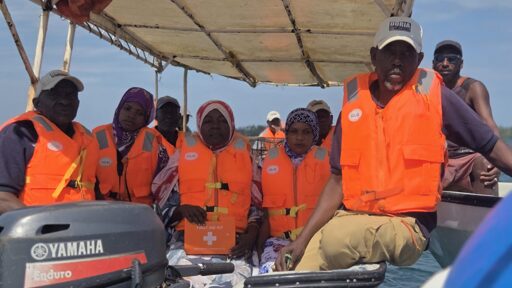
PEMBA, Tanzania — Patrolling the sea is not the kind of work many women on Tanzania’s Pemba Island are traditionally expected to do. Yet, for Amina Gharib Issa, it has become part of her life recently. At 55 years old, Issa has spent years around the sea, including as a fisher. But when fish stocks began dwindling and communities in Pemba introduced temporary closures, periods during which fishing is suspended to allow marine life to recover, she took on the task of helping patrol the waters to ensure the rules were respected. She is part of a seven-member community patrol team that goes out about eight times a month, checking boats, fishing gear and licenses. The work can mean hours on the water, sometimes in rough conditions, for pay of about $8 a day. In much of Pemba, women participate widely in fisheries, but being out on patrol with men is another matter. The community is predominantly Muslim, and gender roles can be closely examined. “Some of the women are not permitted by their husbands,” Ali Said Hamad, a member of the Mwambao team, said, explaining one of the reasons more women do not join. Said has spent decades on these waters — not as an enforcement officer — but helping implement community-led conservation programs. For those women who do patrol the waters, family support can make the difference. Issa said her husband supported her decision to take part. Her work is part of a broader community-led conservation effort supported…This article was originally published on Mongabay
From Conservation news via This RSS Feed.