

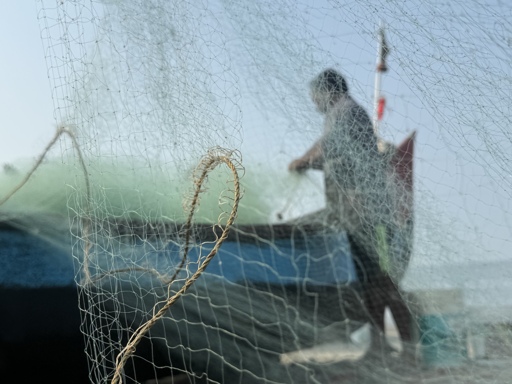
KOCHI, India — In the early light at Thoppumpady fishing harbor in the city of Kochi, coils of blue and green nylon nets lay heaped on the concrete docks, stiff with salt after a long night at sea. Many had been patched and repatched so often that they were barely holding together. Nets too damaged to mend are often cut loose offshore. Once they sink, few are ever recovered. Across India’s west coast, lost fishing gear known as “ghost gear” has become a significant source of marine pollution. Nets vanish whole or in fragments, slipping into the waters of the Arabian Sea where they continue trapping fish, turtles and other marine life long after fishers abandon them. India operates one of the world’s largest marine fishing sectors, supporting an estimated 14.5 million livelihoods along more than 7,500 kilometers (4,660 miles) of coastline. While national estimates are scarce, a 2022 study in the southwestern state of Kerala, where Kochi is located, found that fishers lost, abandoned or discarded about 21% of their fishing gear annually. That’s more than 10 times the global average of 1.82% estimated by another study, which highlights the scale of material entering India’s marine environment. Despite growing concern among researchers and conservationists, India lacks a systematic way to track, retrieve or recycle lost fishing gear, as well as accessible mechanisms to collect and safely dispose of end-of-life nets and other equipment before they are discarded at sea. The government regulates fisheries tightly in many respects — from…This article was originally published on Mongabay
From Conservation news via This RSS Feed.