

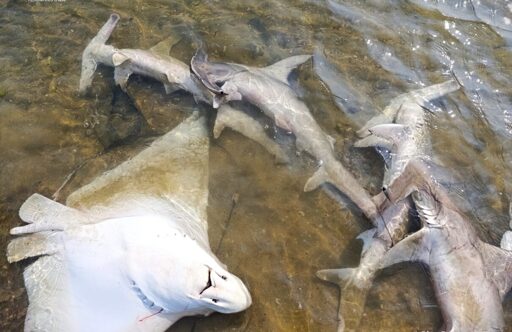
COLOMBO — The majority of 122 marine areas identified across Asia as critical for the survival of sharks, rays and chimaeras remain largely unprotected despite supporting some of the world’s most threatened marine species, according to a new study. Published in Biodiversity and Conservation, the study assessed the network of important shark and ray areas (ISRAs) across 19 Asian countries and territories and found that only 5.4% of their total area overlaps with recognized marine protected areas (MPAs). Just 2.8% falls within fully protected no-take zones where extractive activities are strictly prohibited. Critically endangered sharpnose guitarfish landed from the Palk Bay ISRA are recorded in a fish market in the village of Mathagal, Sri Lanka’s Jaffna district. Fish markets and landing sites are valuable points for fisheries data collection and monitoring. Image courtesy of Blue Resources Trust. Together, these ISRAs cover more than 1 million square kilometers (approximately 386,102 square miles) of ocean and support sharks, rays and chimaeras, also known by the umbrella term elasmobranchs. Nearly three-quarters of these species are listed as threatened with extinction on the IUCN red list, highlighting the urgency of conserving these habitats, said study lead author Adriana Gonzalez-Pestana, a Ph.D. candidate at Charles Darwin University (CDU) in Australia and member of the IUCN SSC Shark Specialist Group ISRA project. IUCN is the global wildlife conservation authority. Critically endangered stripenose guitarfish caught within the Pasikuda & Kalkuda ISRA in Sri Lanka’s east and being sold at a local fishery. Image courtesy of Blue Resources…This article was originally published on Mongabay
From Conservation news via This RSS Feed.