

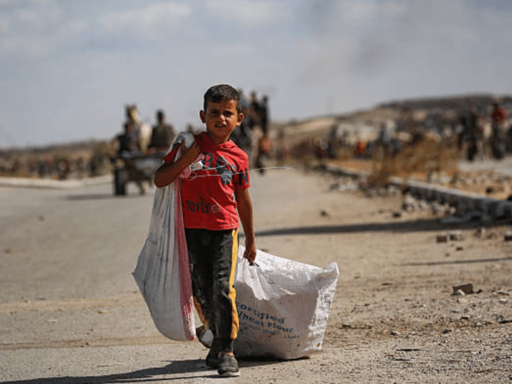
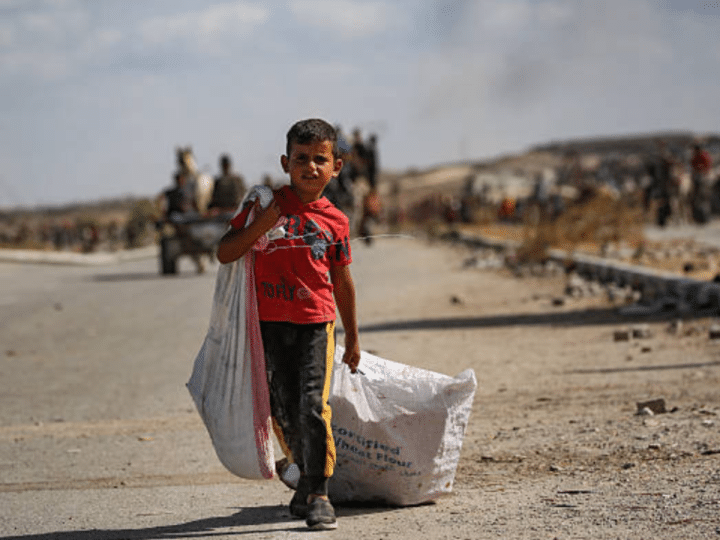
A new report titled Lighting the Path for Orphaned Children in Gaza – A Call to Action, has been published by non-profit organisation Taawon. It lays bare the scale of Gaza’s orphan crisis, and the failure of the system which is meant to be responding to it, but which the Israeli occupation has intentionally shattered during the genocide.
A social worker at a Gaza-based orphan care organisation said in July 2025:
We don’t know if the child sitting in front of us is receiving support from three other organizations or from no one. We have no system to check. We do our assessment, they do theirs, UNICEF does theirs. The family is exhausted, and meanwhile children in Jabalia [northern Gaza] can’t even be reached.
More than 58,550 orphans in Gaza since October 2023
There is no shared registry and no shared system to show who is receiving help and who is still being missed. Despite this, Palestinian society has mobilised significant efforts to support orphaned children as best it can.
By November 2025, the Palestinian Ministry of Health had recorded more than 58,550 children who had permanently lost one or both parents since October 2023. This means around one in every 17 children, equivalent to six percent of all children in the Gaza Strip, are orphans.
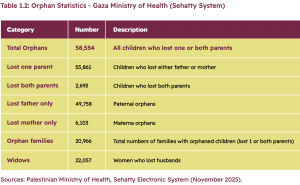
These figures are not only about children losing parents. Stability, routine, and any sense of safety have also disappeared during this humanitarian catastrophe, along with their childhood.
Gaza’s rate of orphanhood has created ‘unprecedented urgency’
Conflicts across the Middle East have produced large numbers of children who have lost one or both parents. But, according to the report, Gaza’s rate of orphanhood is one of the most accelerated and concentrated in the world. It points out that:
Gaza’s context- 58,554 orphaned children concentrated in 365 km² within two years, total system collapse, and complete isolation – creates unprecedented urgency.
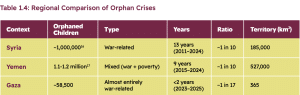
The report claims “the orphan crisis has penetrated Gaza’s social fabric.” Around one in every 10 to 15 families now cares for orphaned children.
Palestinian society has responded to this crisis with huge commitment. Civil society groups, faith-based institutions, international agencies, and extended families all provide support for these children. Some organisations give cash assistance, others provide education, healthcare, social services or shelter. Zakat funds are also being channelled through religious institutions.
Caregivers facing trauma themselves
More than 22,050 Palestinian women have been widowed by the occupation’s genocide. They have been trying to raise children while facing grief, displacement, and the collapse of economic support. And, so too have the families taking in orphaned relatives.
But although the commitment is there, the response is fragmented. According to Taawon, there is no unified registry or shared intake system. Families are assessed repeatedly by different organisations. There is also no way of knowing which child has already received support, which has been counted twice, or which is being missed altogether. Those children in inaccessible areas, those with disabilities, those with chronic illnesses, and older teenagers do not fit neatly into emergency child protection programmes. They are the easiest to miss.
A seven-year-old orphan girl in Khan Younis, who has lost both her parents, is mentioned in the report. A faith-based organization provides $50 monthly cash assistance, although the child suffers from trauma and needs counselling. Another nearby organisation that offers psychological support does not know this child exists. The school the child attended no longer functions. The local clinic lacks pediatric care. The Ministry of Social Development’s office has been destroyed, and the case was never registered in any government system. This is an example of a “supported” child, but one who is still falling through gaps, because her needs cannot be met.
Israel has caused this devastation
According to the report, the current response cannot even be fully mapped. When the claimed coverage of major orphan programmes is added together, it exceeds 80,000 children. This is more than the total number of documented orphans, because different organisations are counting different categories. Some may include separated children, children with disabilities, or other vulnerable children. This is happening, not because people in Gaza do not care. It is because the Israeli occupation has intentionally shattered the system as part of its genocidal campaign against Palestinians.
The Ministry of Social Development is supposed to be in charge of orphan care, but its capacity has been badly damaged. ‘Israel’ has bombed and demolished its offices and displaced its staff. Its records have been lost or destroyed. The same has happened to civil registry offices and other government buildings.
Crisis is humanitarian, legal and bureaucratic
As a result, thousands of children have no documentation to show who they are or who their families were. The humanitarian crisis then also becomes a legal and bureaucratic one. Without relevant identification many problems await Gaza’s orphans. And they may end up lacking any form of protection. Accessing services, securing guardianship, claiming inheritance, or securing long-term protection all need paperwork.
No cross-border evacuation, international fostering, or geographic dispersal is available for Gaza’s orphans. At the same time, government services, family networks, legal systems, and economic safety nets have all been intentionally targeted and disabled by the occupation. So any response needs to be built locally, quickly, and from almost nothing.
Taawon has proposed the Orphan Care 360 Framework, which it says will turn this fragmented emergency relief into a structured care system. The framework needs several things if it is to hold together in the long term. Namely, a shared registry linking the Ministry of Social Development, the Palestinian Central Bureau of Statistics, and service providers would stop children being counted twice or missed altogether.
Restoring the Ministry’s ability to function properly is just as important, because Palestinian ownership depends on Palestinian institutions being able to lead, with trained social workers and case managers in place. The report also says the existing care programmes need to grow, with extended families supported, financial aid tied to health and education, and psychological support treated as part of normal care rather than an optional extra.
Orphan Care 360 Framework aims for co-ordination
These ideas sit inside the Orphan Care 360 framework, to which there are five pillars. Every orphaned child should be registered and known to the system. Family-based care should be strengthened, not replaced. Children need more than cash. They need education, healthcare, psychological support, and stability. The different actors should work together instead of competing. And orphan care should be funded as social protection, not left as temporary charity.
Children who lost their parents in 2023 are now two years older. Their needs are no longer only those of immediate survival, but long-term needs tied to identity, schooling, healing. and adulthood. What was once an emergency response now has to become a long-term system of care.
The current disconnected projects cannot protect a generation, however much compassion there is in Gaza. The report argues that the Orphan Care 360 Framework will enable existing programmes to see the big picture, the whole child, coordinate their efforts, and collectively ensure no child falls through gaps.
Featured image via the Canary
By Charlie Jaay
From Canary via This RSS Feed.