

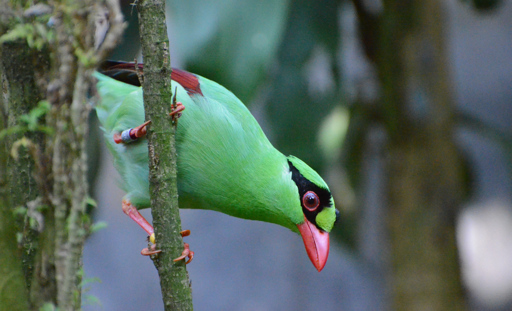
Teetering on the brink of extinction, Indonesia’s Javan green magpie may have a conservation lifeline after national and international conservation NGOs launched an action plan to preserve it in the wild. Javan green magpies (Cissa thalassina) are endemic to the upland forests of West Java province, but have been assessed as critically endangered, with as few as 50 of the birds remaining in the wild. Habitat loss and poaching for the songbird trade have greatly reduced their numbers and led to local extinctions in some areas. “Very few have ever been recorded in the wild,” says Andrew Owen, head of birds at Chester Zoo in the U.K. “The fact that the Javan green magpie is now so rare is also a reason why some people want to catch them and keep them.” In recent years, the Javan green magpie has barely appeared in markets, experts say, though that’s likely due to its increasing rarity in the wild. Surveys carried out between 2018 and 2021 across 12 previously inhabited sites recorded no birds, raising the alarm. “We must assume that excessive trade has pushed this once reasonably widespread but perhaps never common species to the very brink of extinction,” the authors wrote in a 2023 study. These birds, known locally as ekek geling for their unique call, are sought after as so-called master birds in the songbird trade. Master birds rarely compete and instead are used to “train” competition birds. Javan green magpies received official protected status in 2019. With the…This article was originally published on Mongabay
From Conservation news via This RSS Feed.