

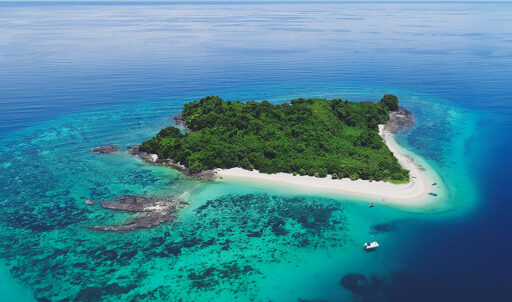
MOMBASA — At the Our Ocean conference in Mombasa, Kenya, a message echoed across sessions: Effective marine protected areas (MPAs) are critical to safeguarding oceans. The Blue Park Awards, instituted by the U.S.-based Marine Conservation Institute, shine a light on MPAs that are delivering on their promise. This year, six of them made the cut: the Banc-des-Américains Marine Protected Area in Canada; Rapa Nui Marine Protected Area in Chile; Kawawana Indigenous Community Heritage Area in Senegal; and Nosy Hara National Park, Sahamalaza- îles Radama National Park, and Nosy Tanihely (also spelled Tanikely) National Park in Madagascar. The conference held in Mombasa from June 16-18 saw more than 6,000 delegates from governments, nonprofits, the private sector, and other institutions gather to talk ocean conservation. Kawawana ICCA members in Senegal. Image courtesy of the Fishermen Association of the Rural Community of Mangagoulack. Under the Kunming-Montreal Global Biodiversity Framework adopted by parties to the U.N. Convention on Biological Diversity in 2022, countries agreed to protect 30% of the world’s land, freshwater and marine areas by 2030, in what’s known as the 30×30 target. “This cohort of Blue Parks is a powerful reminder of what the 30×30 goal actually requires,” Lance Morgan, president of the Marine Conservation Institute, said at the awards announcement in Mombasa on June 16. “These six MPAs, protecting different places in the ocean under different governance models, show that effective marine protection is achievable across cultures, geographies and political systems.” The six sites represent an array of governance models and…This article was originally published on Mongabay
From Conservation news via This RSS Feed.