

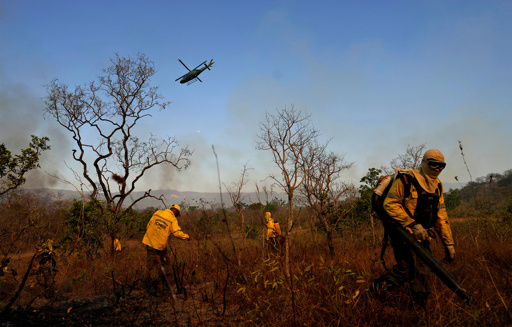
In 2025, fires were responsible for a significant spike in forest loss in three territories in Brazil that are home to Indigenous peoples living in voluntary isolation, according to Global Forest Watch data analyzed by Mongabay. Indigenous leaders from the Alto Turiaçu, Uru-Eu-Wau-Wau, and Apiaká do Pontal e Isolados Indigenous territories, told Mongabay that fire is a growing threat to their way of life and the isolated Indigenous people who share the same lands. It affects their productive practices and destroys the biodiversity and vegetation they depend on for hunting and gathering, thereby leading to food insecurity. Damage to health, such as respiratory problems caused by the smoke, is another impact frequently mentioned by sources Mongabay spoke to. “The communities suffer from health problems caused by the smoke, difficulties in mobility, and food insecurity because several planting areas are affected,” Almir Narayamoga Suruí, a Paiter Suruí Indigenous community member from the Sete de Setembro Indigenous Territory that straddles the Amazonian states of Rondônia and Mato Grosso, told Mongabay via WhatsApp. “Culturally, the impact is also very strong because the forest for us is not just a natural resource; it is part of our spirituality, our history, and our identity. When an area of the forest is destroyed, we also lose part of our memory and the traditional knowledge transmitted by our ancestors.” Mongabay looked at forest loss and its dominant drivers across territories in Brazil with recognized isolated Indigenous peoples, using Global Forest Watch (GFW) drivers data that rely on…This article was originally published on Mongabay
From Conservation news via This RSS Feed.