

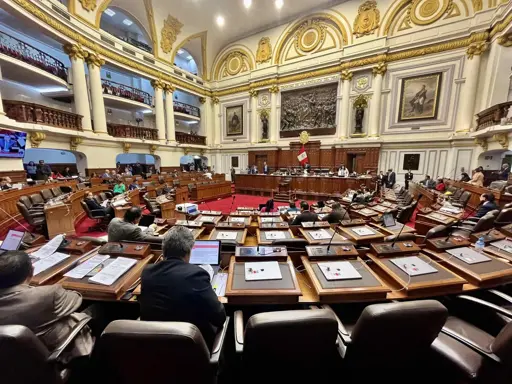
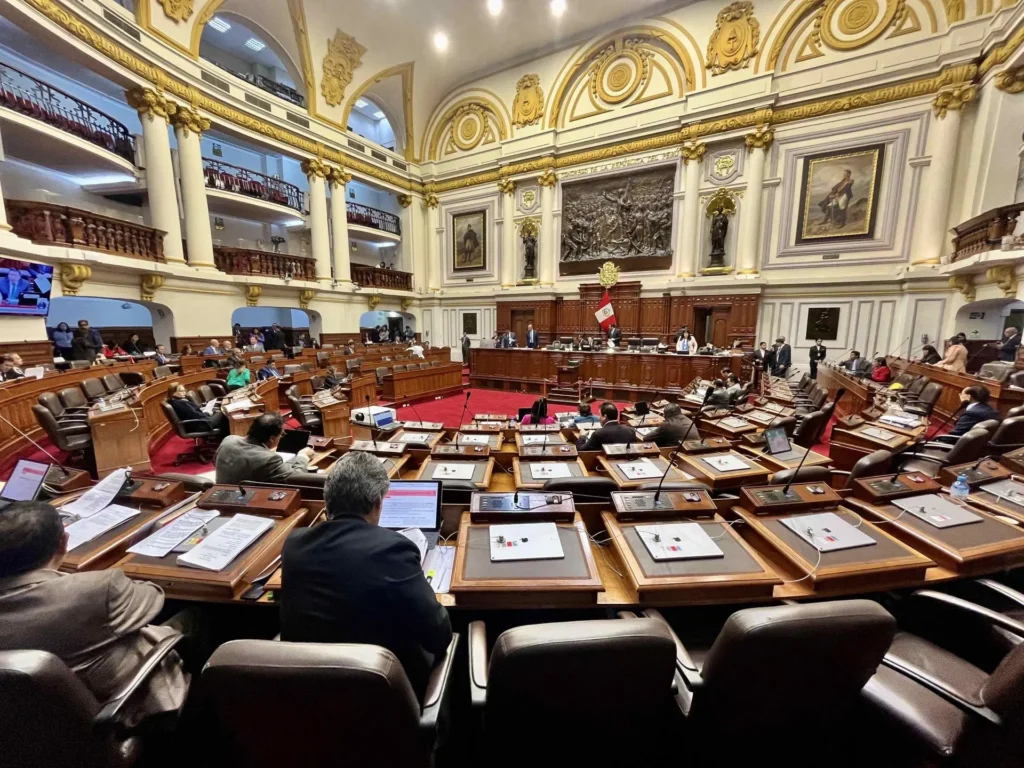
Peru’s Congress approved a contentious reform on Tuesday, in a second vote with 52 in favor and 43 against, that modifies the Military Police Penal Code to remove members of the armed forces and police from ordinary civilian jurisdiction when they commit crimes in the line of duty, disregarding explicit warnings from the UN High Commissioner for Human Rights.
The reform, promoted by the Fujimorista bloc on behalf of hundreds of personnel prosecuted for abuses committed during Alberto Fujimori’s regime or during the 2022 and 2023 popular protests, compels ordinary judges to immediately archive any cases already under military review for actions taken during states of emergency. The measure also prevents final rulings from being handed down in civilian courts and establishes a penal assimilation mechanism.
RELATED: Peru’s Roberto Sanchez Denounces Fraud and Vows Not to Recognize Fujimori
The National Coordinator for Human Rights described the development as concerning, arguing that military justice was systematically used in the 1980s and 1990s to bury cases of torture, extrajudicial executions, and disappearances.
In a complementary move, the Parliament also approved legislation incorporating crimes against humanity into the Penal Code, specifying that offenses such as murder, torture, forced disappearance, or sexual assault will only be classified as crimes against humanity if proven to be part of a widespread or systematic attack on civilians. Lacking that threshold, such acts will be prosecuted as ordinary crimes under current law, with retroactive application for cases predating 2002, when the Rome Statute entered into force in Peru.
Although the new law carries penalties from 20 to 30 years in prison and life imprisonment for collaboration with criminal groups resulting in death, the Democratic Bloc, through several legislators, attempted to block the ruling via a motion for reconsideration, which was ultimately rejected amid firm opposition from right-wing lawmakers. One critic charged that the initiative distorts the definition of official duties to shield military and police personnel from ordinary justice, while another elected deputy labeled it a new police impunity law.
The legislation now proceeds to the Presidency, where President José María Balcázar has 15 days to either promulgate it or return it with objections.
The approval coincides with a tightly contested presidential election, where Keiko Fujimori currently holds a razor-thin lead of 50.115% to 49.885% over Sánchez, with 99.798% of tally sheets counted, according to the latest official data.
From teleSUR English via This RSS Feed.