

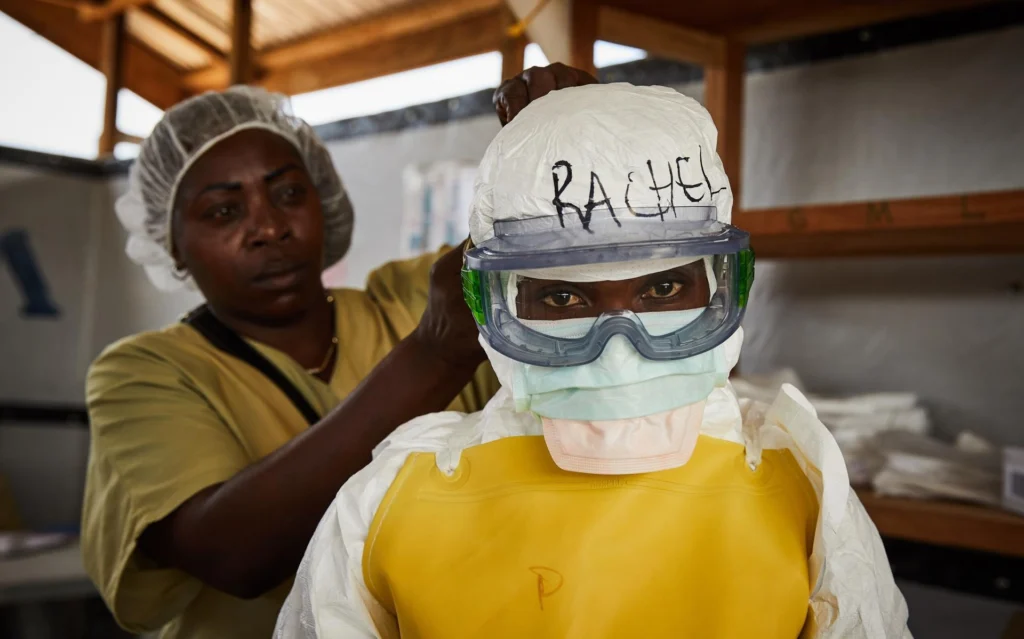
The Democratic Republic of the Congo has recorded 277 deaths and 1,094 confirmed Ebola cases since the outbreak was declared on May 15 in the eastern province of Ituri, with health authorities warning that community transmission is actively accelerating across three provinces and has already spilled into neighboring Uganda.
The outbreak has affected 34 of the 104 health zones across Ituri, North Kivu, and South Kivu, with Ituri remaining the epicenter and accounting for over 90% of infections and more than 80% of fatalities. The case-fatality rate currently stands at 25.3%, according to the latest figures released by the National Institute of Public Health.
RELATED: Ebola Outbreak in DRC Reaches 1,048 Cases as Active Transmission Continues
At least 387 patients are hospitalized or in isolation, while 115 individuals have recovered. Contact tracing has reached nearly 73% of identified exposures. However, authorities acknowledge persistent difficulties in providing early medical care and ensuring access to health services, alongside growing concern over possible new cases surfacing in currently unaffected zones, which could signal further geographic spread requiring deeper investigation.
Across the border, Uganda has detected 20 confirmed infections, 15 of which are considered imported from the DRC, with two deaths recorded there.
Ebola is spreading at unprecedented speed in eastern DR Congo, with 1,048 confirmed cases and 267 deaths as of Monday — the highest number of confirmed cases in the first month of an Ebola outbreak in Africa.https://t.co/j933HKNI40
— UN News (@UN_News_Centre) June 23, 2026
The outbreak is caused by the Bundibugyo strain, a virus variant with a fatality rate ranging between 30% and 50%, for which no licensed vaccine or targeted treatment exists. The World Health Organization has classified the epidemic as a public health emergency of international concern, estimating that the virus had already been circulating in Ituri for roughly two months before the official declaration. The WHO assesses the risk of regional spread across sub-Saharan Africa as high, while the global risk remains low.
By historical measure, the current epidemic now ranks as the third deadliest Ebola outbreak on record, trailing only the 2014–2016 West Africa epidemic, which claimed roughly 11,000 lives across 28,000 cases, and the 2018–2020 outbreak in eastern DRC, which resulted in 2,299 deaths and 3,481 infections.
Ebola spreads through direct contact with bodily fluids of infected humans or animals and manifests as severe hemorrhagic fever, accompanied by vomiting, diarrhea, and internal bleeding.
From teleSUR English via This RSS Feed.