

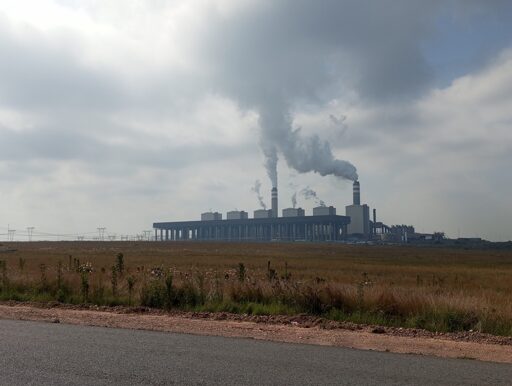
eMALAHLENI, South Africa — Elisabeth Moutloang, 49, lives in the shadows of Duvha Power Station, a 3,600-MW coal-fired power station owned and operated by Eskom, South Africa’s national energy provider. Between it and her community of Masakhane, in the south of eMalahleni, is a coal mine where she used to work twenty years ago as a weighbridge clerk, monitoring the weight of coal-laden vehicles entering and exiting the mine, before it was abandoned. She left the job after seven months but in that time had developed a serious lung problem, which was detected because the mine conducts a health screening before starting employment and when an employee leaves. “When I went to have my exit medical done, I was told that I have a hole on my left lung. That’s when I started having sinus problems, that’s when I started having chest problems. At one stage I had bronchitis,” Moutloang says. “I thought I was going to die.” At the time, she had health insurance from her employer and was able to get the right medicine for the condition. Hers is not a unique story for a resident of eMalahleni (which translates to “place of coal”) located in South Africa’s eastern province of Mpumalanga, 130 kilometers (81 miles) east of Johannesburg. The town lies in the heart of the Highveld Priority Area (HPA), spanning 31,100 km encompassing 12 municipalities, which was designated in 2007 as a priority area for tackling air pollution, because the air quality was very poor. A…This article was originally published on Mongabay
From Conservation news via This RSS Feed.