

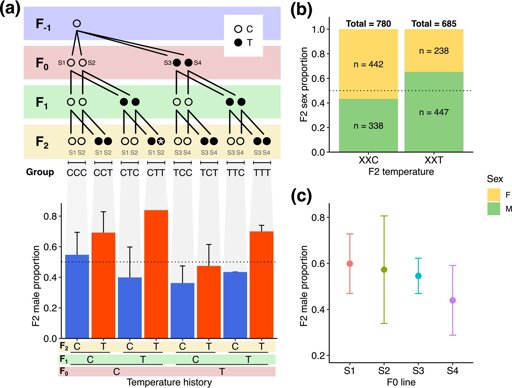
In many fish species, water temperature determines the sex of the fry. This biological mechanism threatens to wipe out entire populations because of a shortage of females in the face of global warming. However, an international study conducted in Spain, France and Brazil has found that this well-known masculinization effect can be offset over generations. In a 10-year experiment involving more than 3,000 European seabass (Dicentrarchus labrax), scientists observed that the initial high proportion of male births under intense heat was reversed by the third generation, with more females being born.
From Biology News - Evolution, Cell theory, Gene theory, Microbiology, Biotechnology via This RSS Feed.
You must log in or # to comment.