

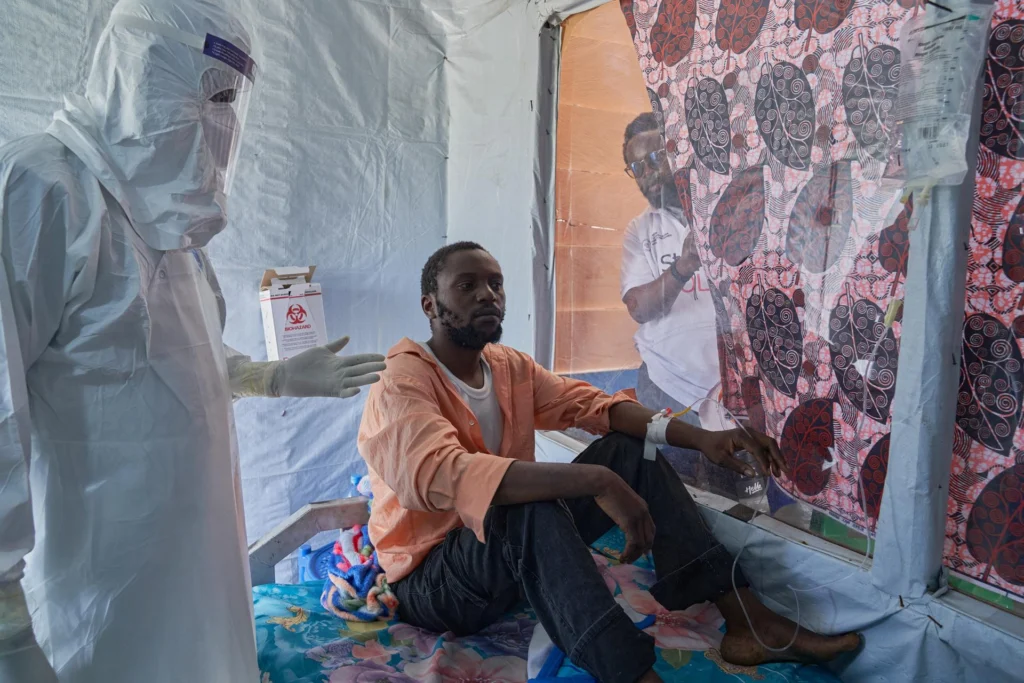
The Eastern Democratic Republic of the Congo (DRC) epidemic accumulates 267 deaths amid active community transmission, establishing itself as the third worst Ebola outbreak in history.
The Democratic Republic of the Congo confirmed this Tuesday 1,048 Ebola cases and 267 deaths in the eastern region, where health authorities warned about active community transmission and geographic expansion risks.
This health crisis, officially declared on May 15, continues to escalate rapidly across the eastern territories of the country.
RELATED: W.H.O. Warns Over Spreading Ebola Outbreak in East Africa
The Ministry of Communication of the African nation published its latest epidemiological bulletin, revealing that the overall lethality rate currently stands at 25.5%. Health officials detected active infections in 34 of the 104 health zones that comprise the three affected Congolese provinces, showing the wide spatial distribution of the disease.
According to the detailed official report, at least 371 individuals remain in hospitals or under strict isolation protocols to prevent further community transmission. Meanwhile, specialized medical teams increased the contact tracing rate to 70.8%, while 112 patients recovered from the disease in parallel with the intensification of epidemiological surveillance efforts across the affected regions.
POINT DE SITUATION EBOLA – 21 JUIN 2026
La riposte contre Ebola se poursuit dans les provinces de l’Ituri, du Nord-Kivu et du Sud-Kivu.
1 048 cas confirmés
— Ministère de la Santé RDC (@MinSanteRDC) June 23, 2026
Active Community Transmission
The National Institute of Public Health of the African nation reiterated that the rising weekly numbers of confirmed cases translate directly into active, uninterrupted transmission. The institution warned that a rapid geographic expansion of the epidemic remains a highly probable scenario if sanitary containment measures do not consolidate immediately.
The Ituri province, bordering Uganda and South Sudan, serves as the epicenter of this health emergency. Ituri concentrates 91% of all cases and 80.9% of total registered deaths. Furthermore, the disease extended its reach toward neighboring Kivu del Norte and Kivu del Sur, threatening more vulnerable populations in these eastern territories.
The epidemic crossed national borders, spreading directly into Uganda, where medical authorities detected 19 confirmed cases. Among these infections, epidemiologists identified 14 imported cases from Congolese territory, resulting in two fatalities. This cross-border movement underscores the high regional vulnerability to infectious diseases during active outbreaks.
#Ebola update: more than 1000 confirmed cases have been reported in #DRC, including 254 deaths. 100 patients have recovered so far, which shows that for many, the virus can be stopped with timely health care.
In the past month, @WHO, @AfricaCDC and partners have supported… pic.twitter.com/4PGKSbVnE2
— Tedros Adhanom Ghebreyesus (@DrTedros) June 23, 2026
Regional Expansion Risks
Local health authorities confirmed that the current outbreak corresponds specifically to the Bundibugyo strain. This particular variant presents a high lethality rate ranging between 30% and 50%. The World Health Organization (W.H.O.) indicated that there is currently no approved vaccine or specific clinical treatment for this strain, classifying the expansion risk as high in sub-Saharan Africa and low globally.
W.H.O. estimated that the virus began circulating weeks before its official declaration in mid-May. Consequently, the organization declared this epidemic a public health emergency of international concern. It represents the third worst Ebola outbreak in history, following the 2014–2016 West African crisis and the 2018–2020 epidemic in the eastern Congo.
From teleSUR English via This RSS Feed.