

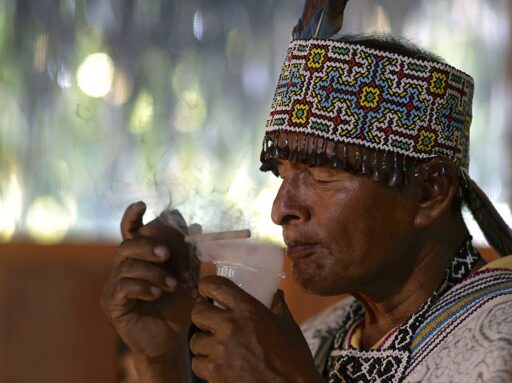
“One of the world’s largest pharmacies is being destroyed,” says Benki Piyãko, a leader of the Ashaninka Indigenous people in the Brazilian state of Acre. The warning points to multiple threats advancing on the Amazon but also to growing debate surrounding one of the so-called forest medicines: ayahuasca. This Indigenous beverage with psychedelic properties is usually prepared from two native plants: the caapi vine or mariri (Banisteriopsis caapi) and the leaves of the chacrona plant (Psychotria viridis). According to Indigenous leaders and experts, these species are facing increasing pressure and signs of scarcity in some areas. Called kamarãpe by the Ashaninka people, ayahuasca has been used by Indigenous peoples across the Amazon for centuries. It has crossed borders for decades, ceasing to circulate exclusively in its original contexts. Today, it can be found in urban religious centers, therapeutic retreats, and international psychedelic tourism circuits. Scientists and pharmaceutical companies are also turning their attention to this ancestral beverage, which already shows evidence of therapeutic potential for different mental health disorders such as depression and substance addiction. But increasing global interest is also creating concerns. As demand grows, so has the ayahuasca supply chain, without a corresponding growth in management or oversight. In different parts of the Amazon, there are signs of pressure on the species used to prepare the beverage, often collected without planning. At the same time, increasing consumption in nontraditional contexts raises concerns about ancestral knowledge being commodified for the market. The main problem seems to lie in how…This article was originally published on Mongabay
From Conservation news via This RSS Feed.