

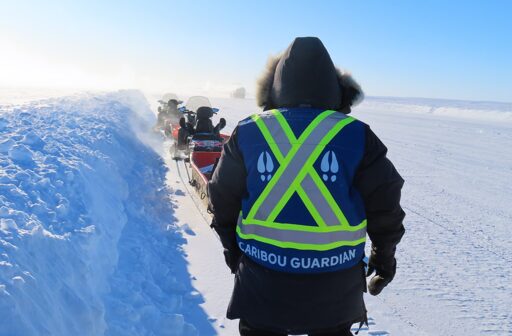
For years, Wayne Mercredi spent hours driving the Tibbitt to Contwoyto winter road. Leaving early in the morning to take advantage of limited daylight, he’d travel the road’s 400-kilometer length (250-mile length) — built atop frozen lakes, to connect the territorial capital of Yellowknife to diamond mines farther north — before turning around at the end and driving back home. On those 19-hour days, Mercredi, a North Slave Métis Alliance guardian, kept his eyes peeled. “I would see caribou off in the distance, avoiding the ice road.” As caribou appeared on the snowy expanse, he’d record their information. Occasionally, he’d come across an increasingly rare sight: A large herd of caribou, navigating the landscape. “It’s such a beautiful thing, it would just fill my heart.” The Canadian Arctic is home to once-monumental herds of caribou. These caribou undertake the longest terrestrial migrations on the planet, congregating in large groups at their calving grounds along the way. Historically, caribou existed in the millions, but in the last several decades, their numbers have declined dramatically; the Bathurst herd, for example (whose name derives from their traditional calving grounds in Bathurst Inlet, Nunavut) numbered nearly half a million caribou in the 1980s but has shrunk to just 3,600 in 2025. The reasons for this decline are multifaceted, including climate change, industrial development and, in some cases, overharvesting. But many of these forces intersect around roads, which block migrations and expose caribou to more hunting. Concern over the impacts of roads have promoted Indigenous…This article was originally published on Mongabay
From Conservation news via This RSS Feed.