

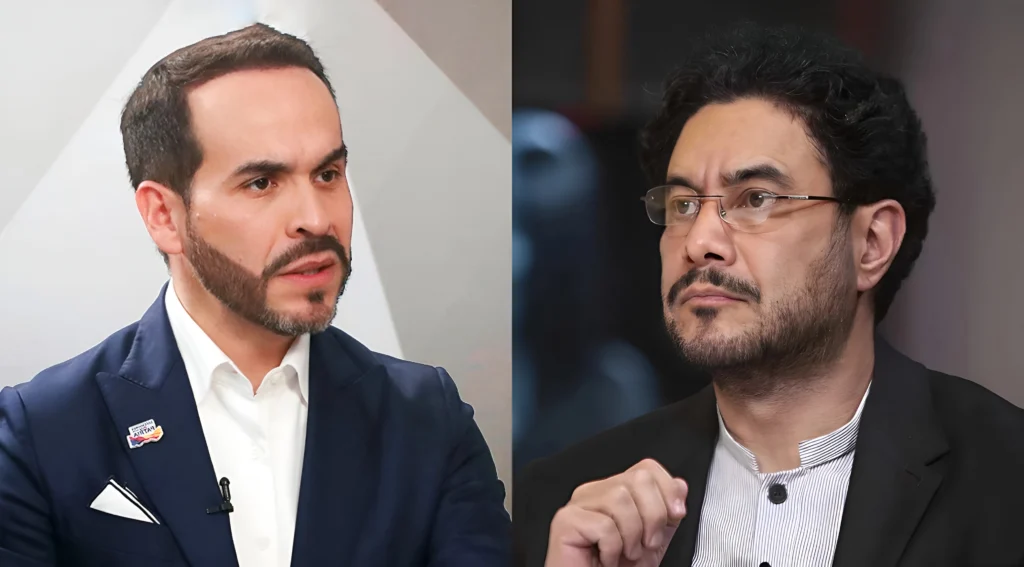
Both candidates claim confidence as the National Electoral Register undertakes a legally binding scrutiny that could overturn the narrow preliminary margin.
On Sunday, the 2026 presidential runoff produced Colombia’s tightest electoral margins to date, with a difference of just 250,830 votes between the two candidates.
The preliminary results, which gave a narrow lead to right-wing candidate Abelardo de la Espriella over the progressive Iván Cepeda, have triggered immediate legal challenges and cast uncertainty over the outcome.
RELATED:
Colombian President Petro Demands Thorough Investigation Into Electoral Process
The election marks a pivotal moment for Latin America, occurring at the conclusion of Gustavo Petro’s four-year term as the country’s inaugural leftist president. Voters had to decide between two options: a return to conservative governance with a hardline security and austerity agenda, or the continuation of the Pacto Histórico’s structural reforms focused on social equity and negotiated peace.
Beyond the ballot count, the margin of victory is so narrow as to suggest a highly divided electorate, which naturally gives rise to urgent questions about the integrity of the vote consolidation process.
The final resolution, whether through judicial scrutiny or political negotiation, will carry immediate consequences for Colombia’s peace talks with armed groups, land redistribution efforts, and its transition away from fossil fuels.
Colombia faces political uncertainty after a razor-thin presidential election result, with the narrow margin and challenges to the vote highlighting deep divisions over the country’s future. pic.twitter.com/HxSarOq35b
— Al Jazeera English (@AJEnglish) June 23, 2026
The Clash of Two Colombias
De la Espriella’s campaign, from “Defensores de la Patría,” was based on a stringent fiscal model and a robust security policy. His platform included a proposed 40% reduction in state spending, the construction of mega-prisons to deter crime, a reversal of current restrictions on resource extraction, and the dismantling of the newly established Ministry for Equality.
In contrast, the progressive platform was led by Iván Cepeda, a veteran senator and prominent human rights advocate representing the Pacto Histórico. Cepeda’s campaign focused on the continuation of the structural reforms initiated under the Petro administration, with a particular emphasis on social equity and environmental preservation.
The three weeks leading up to the June 21, 2026, runoff election were characterized by communication strategies and highly polarized public discourse. Abelardo de la Espriella implemented a digital-first campaign that relied on large-scale social media distributions, systematically avoiding face-to-face presidential debates with Iván Cepeda.
This strategic decision enabled the “Defensores de la Patria” platform to deliver direct policy statements to voters, emphasizing a clear choice between national security and what it described as institutional decline.
The campaign narrative consistently linked the progressive platform with regional economic crises, drawing on historic anti-communist frameworks to influence middle-class voters.
At the same time, traditional political structures, including factions aligned with former President Álvaro Uribe, deliberately avoided public campaign rallies. This was done to reinforce De la Espriella’s narrative as an anti-establishment outsider.
This strategic positioning enabled the conservative alliance to consolidate traditional institutional backing while appealing to an electorate seeking decisive governance reforms.
The US has stolen the elections in Colombia. The left’s defeat in Colombia is not an isolated crisis, it’s the latest move in Washington’s agenda for absolute control over Latin America & the Caribbean. The US does not distinguish between shades of left governments; it targets…
— Manolo De Los Santos (@manolo_realengo) June 22, 2026
The Election Booth Under Fire
On June 21, 2026, the Registraduría Nacional del Estado Civil reported an unprecedented voter turnout of approximately 63% for the second-round ballot. The initial fast-count results in Abelardo de la Espriella securing 49.66% of the vote, representing 12,959,542 ballots, compared to 48.70% for Iván Cepeda, who obtained 12,708,712 ballots.
The two candidates were separated by a margin of 250,830 votes, making this election one of the most closely contested in recent Colombian electoral history. Additionally, the electoral authority recorded 426,848 blank votes and 220,763 null ballots.
The results of the vote were indicative of a highly divided country, as demonstrated by geographic voting patterns. In the Registraduría, Pague demonstrated that De la Espriella obtained significant margins in Norte de Santander, Boyacá, Tolima, and Casanare, where communities placed a high priority on hardline security measures.
Conversely, Cepeda obtained substantial majorities in the Pacific coast departments, parts of the southwestern rural interior, reflecting strong support from traditional social movements, Afro-descendant communities, and urban progressive bases.
Following the publication of the fast-count data, the Pacto Histórico coalition formally raised systemic concerns regarding the electoral process. Cepeda and his legal team submitted official challenges requesting a comprehensive audit and a detailed recount during the final scrutiny stage, which holds legal binding authority over the pre-count.
The progressive coalition has documented alleged irregularities across approximately 33,000 polling stations nationwide. These include inconsistent tally sheets (actas E-14), suspicious shifts in localized polling dynamics, and instances of structural pressure exerted by employers and local elites on agricultural workers in rural municipalities.
A Nation Fractured: The Domestic Shockwaves
The release of the initial voting figures prompted swift domestic responses, highlighting the profound institutional and social divisions that exist across Colombia. In major urban business centers such as northern Bogotá and Medellín, corporate associations and financial markets responded positively to the prospect of a De la Espriella administration, citing a projected return to market-friendly policies and a reduction in state regulatory frameworks.
Conversely, in rural and marginalized regions, particularly within Afro-descendant, Indigenous, and rural farming communities in departments like Cauca and Chocó, the narrow outcome generated widespread apprehension regarding the potential rollback of social programs and the intensification of militarized security strategies.
Outgoing President Gustavo Petro and candidate Iván Cepeda emphasized that a definitive winner cannot be legally recognized until all challenged ballots are fully verified by electoral judges. This position has prolonged political uncertainty.
In his post-election address, De la Espriella adopted a more moderate campaign tone, appealing for democratic stability and national unity while concurrently warning against any public mobilizations that could disrupt public order.
This dual messaging coincided with localized street demonstrations in major cities, where civic organizations and trade unions organized peaceful vigils to demand transparency in the final vote count.
Supporters of Ivan Cepeda rallied in Bogota as Colombia awaits final vote verification in a tight presidential race. The leftist candidate says he will wait for full tally checks before acknowledging a likely narrow defeat, as tensions rise in a deeply divided political climate. pic.twitter.com/xnFkeKS3wg
— Al Jazeera English (@AJEnglish) June 22, 2026
International Reactions and Future Outlook
Following the announcement of the preliminary results, United States President Donald Trump took the initiative to formally recognize the outcome, issuing a brief statement via social media declaring the victory of Abelardo de la Espriella.
U.S. Secretary of State Marco Rubio held a direct telephone conversation with De la Espriella to confirm bilateral alignments. Rubio has publicly stated that the Trump administration is eager to collaborate closely with the incoming administration to enhance regional security cooperation, address illegal immigration to the United States, and strengthen economic ties.
The preliminary results also signaled a reversal of Colombia’s recent foreign policy shifts in the Middle East. While the outgoing President, Gustavo Petro, and candidate, Iván Cepeda, had both adopted a stance of considerable criticism towards Israel, De la Espriella ran on an explicit campaign pledge to renew the strategic alliance with the State of Israel.
The Israeli government, under the leadership of Netanyahu, has viewed the preliminary outcome as a diplomatic shift in South America. This is due to De la Espriella’s public commitments to defend Judeo-Christian principles as the foundation of Western civilization.
Regionally, the narrow vote count accelerated a broader right-wing realignment across Latin America. Argentine President Javier Milei has expressed his approval of the announcement, using the metaphor of a roaring lion and a roaring tiger to associate his own political brand with De la Espriella’s nickname.
Similar early endorsements were provided by Ecuadorian President Daniel Noboa, Paraguayan President Santiago Peña, and conservative factions in Peru, who all portrayed the preliminary victory as a significant rollback of progressive influence in the hemisphere.
In contrast, progressive and left-led governments in the region adopted a cautious, defensive posture, refusing to issue formal diplomatic congratulations until the National Electoral Council completes the legally binding judicial scrutiny.
Sources: teleSUR – RTVC – Radio Nacional Colombia – La Silla Vacía – Vorágine – RUMS – Insight Crime – Registraduría Nacional – France 24 – El Orden Mundial – Volcánicas – El Tiempo – El Espectador
From teleSUR English via This RSS Feed.