

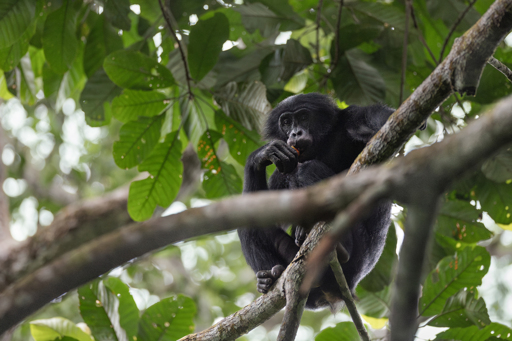
Founder’s Briefs: An occasional series where Mongabay founder Rhett Ayers Butler shares analysis, perspectives and story summaries. In Salonga National Park in the Democratic Republic of Congo, researchers and trackers are working to habituate a group of about 60 bonobos. The aim is to help the great apes accept a limited human presence, first for research, and later for carefully managed tourism. The process is slow. Trackers may leave camp around 3 a.m. to reach the previous night’s nesting site before the bonobos (Pan paniscus) wake. They then follow the group through the forest until the endangered apes build new nests in the evening. “The whole idea of habituation is that you meet the group every day in a very friendly, non-interactive way so they accept you as part of the forest,” Felix Bofeko, an assistant researcher in the program, told Mongabay’s David Akana. Habituation requires the same people, same restraint, and same routine, repeated long enough for the animals to stop treating human presence as a threat. When the work began, the bonobos fled at the sight of people. Now, Bofeko says, researchers can sometimes remain with them for two or three hours. Two visitors may be tolerated. Three or four may still be too many. The work has value even before tourism begins. Habituated animals can be observed more closely. Researchers can collect fecal and urine samples for genetic, pathogen, and diet analysis. Salonga is part of the Bonobo Diversity Project gathering standardized data across the DRC. Camera…This article was originally published on Mongabay
From Conservation news via This RSS Feed.
Why do you want to see these animals in the wild? Donate the cost of the trip to a fund to protect these animals. They don’t want to see YOU, that’s for sure. Leave them alone, ffs.
