

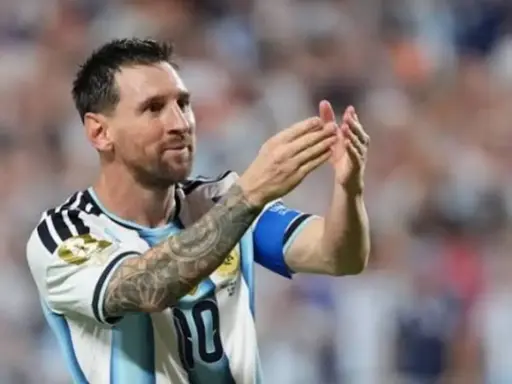
A few years ago, the idea of a player taking part in six World Cups seemed closer to fantasy than reality. Throughout its history, the tournament — held every four years — has been known to bring the careers of even the greatest stars to an end before they had considered playing in a sixth edition, let alone a seventh.
Yet Lionel Messi remains at the heart of this debate. With Messi having shone so far during his participation in the 2026 World Cup, it begs the question: could the Argentina captain continue playing until the 2030 World Cup?
At the 2026 World Cup, Messi not only led Argentina to a strong start, but also continued to make history. He scored five goals in his first two matches to become the all-time leading World Cup goal scorer with 18 goals.
Messi also cemented his record as the player with the most World Cup appearances, reaching his 28th match.
The question is not just about the player’s age — he will be 43 by then — but about the changes that modern football has undergone, and the way in which Messi’s own career has evolved over the past decade.
Messi: A physical force to a playmaker
When Messi made his debut at the 2006 World Cup, his most notable strengths were pace, dribbling and his ability to find space in tight areas. Today, however, after more than 20 years at the top, the nature of his role has clearly changed.
The Argentine player is no longer required to run constantly or win every physical duel. Instead, his influence now lies in reading the game, creating chances and making decisions at the right moment.
This shift has given Messi an advantage that many players, whose value depends solely on physical ability, do not possess. Talent linked to vision and experience usually stands the test of time better.
Football has changed too
That said, it is not just Messi who has changed; the game itself has become better at extending players’ careers. Nutrition, rehabilitation and physical conditioning programmes have advanced. It has become commonplace to see stars continuing to compete at the highest level after turning 40.
For this reason, the idea of an older player continuing his career is no longer as shocking as it was in previous decades.
However, that does not mean the road to the 2030 World Cup will be an easy one.
Between Messi’s ability and his desire
The real challenge facing Messi may be less physical than it is mental.
By 2030, he will have spent nearly a quarter of a century within the Argentine national team system, having experienced every conceivable kind of pressure, victory and defeat that football has to offer.
This raises the most important question: what could possibly motivate a player who has won the World Cup and every major title to carry on for another four years?
His motivation might be a new challenge, or it might simply be the desire to remain part of the national team’s project. Or maybe it is the exact opposite, if he feels the time has come to pass the baton to a new generation.
More than just participation
If Messi makes it to the 2030 World Cup, the event will not be defined solely by the number of tournaments he has played in.
The talk will be of a player whose World Cup journey spanned from Germany 2006 to the 2030 edition — a full 24 years.
During that time, entire generations will have come and gone in the tournament, whilst one name has remained a constant presence on the scene.
That is why the story of a seventh World Cup does not seem merely a debate about the future but a fresh test of one of football’s greatest players’ ability to redefine the limits of what is possible.
And whilst no one has a definitive answer today, the very fact that the question is being asked reveals just how exceptional Messi is in the history of the game.
Featured image via the Canary
By Alaa Shamali
From Canary via This RSS Feed.